
Steampunk wind chimes are worth choosing by sound first and style second: the best ones look like small Victorian machines, but they still need to hang well, move easily, and make a tone you actually enjoy. If you are buying, check the size, metal, and outdoor durability before falling for the gears. If you are making your own, build a solid chime first, then add the steampunk details.
What makes wind chimes steampunk?
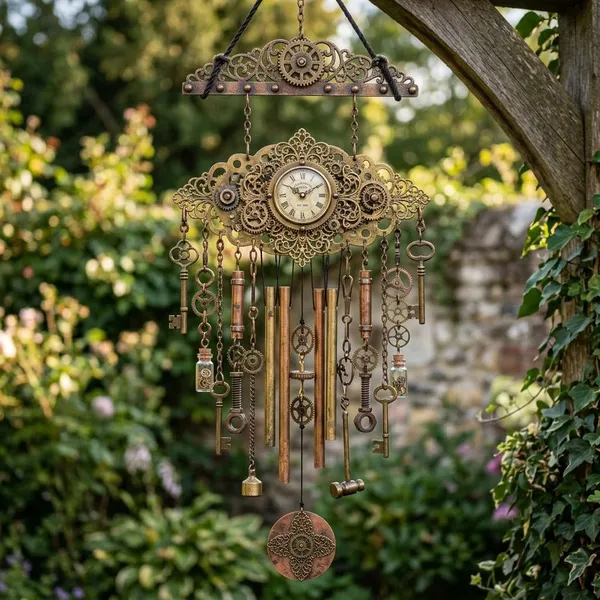
A wind chime starts to feel steampunk when it combines sound, aged metal, visible hardware, and a sense of old machinery. Copper tubes, brass keys, chain, clock gears, blackened steel, and salvaged fittings all fit the look, but they should not be piled on randomly. The strongest designs feel intentional: part ornament, part working object.
Victorian industrial styling
Victorian industrial styling gives the chime its "antique invention" mood. Look for curved brackets, rivet-like details, dark metal, warm brass, copper, or shapes that could belong in an old workshop rather than a modern garden aisle.
Gears and mechanical parts
Gears, cogs, springs, washers, bolts, and clock parts are the fastest visual signal of steampunk style. They add texture and make the chime look engineered rather than simply decorated.
Use them mainly as accents. Pipes, rods, or keys usually make better sound than loose gears. Too many hard parts hitting each other can turn a soft chime into a constant clank.
Aged metal finishes
Antique brass, oxidized copper, dark bronze, blackened steel, and natural patina all help a chime look timeworn. A bright new metal can still work, but it usually needs contrast from darker chain, old keys, or weathered hardware.
- Warm look: copper and brass suit gardens, porches, and rustic wood.
- Darker look: blackened steel or iron-style finishes suit industrial patios and workshop corners.
- Outdoor caution: a finish that looks aged is not always weatherproof, so check whether it is sealed or likely to rust.
Keys, chains, and found objects
Old keys and chains make steampunk wind chimes feel collected rather than factory-perfect. Keys give a light, bright sound; chain gives the piece weight and a stronger industrial line.
Decorative moving elements
Small propellers, swinging pendants, rotating gear clusters, and layered metal pieces can make the chime interesting even when there is not much wind. They turn the piece into a little kinetic sculpture.
Keep the moving pieces light enough to respond to a breeze and placed where they will not trap the clapper. If a decorative part keeps twisting into the sound tubes, it is decoration working against the chime.
Popular steampunk wind chime styles
The right style depends on where the chime will live. A bold gear-heavy piece can be perfect across a garden where it is mostly seen from a distance. Near a chair, bedroom window, or apartment balcony, a lighter sound is usually easier to live with.
Mechanical gear chimes
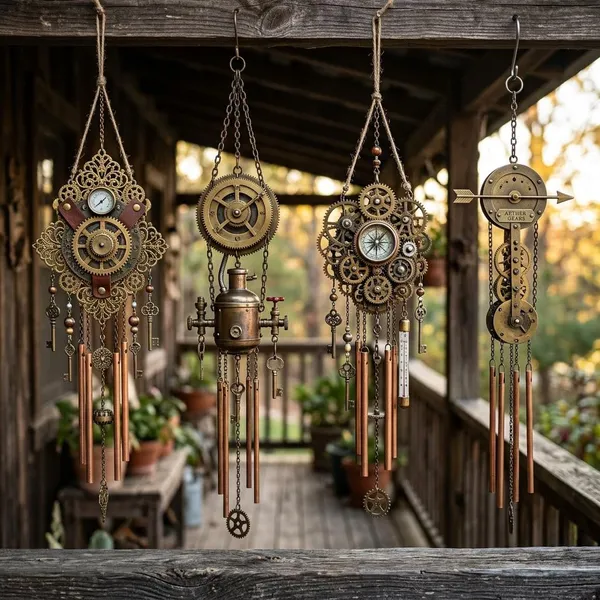
Mechanical gear chimes are the most obvious steampunk choice. They often use clock parts, cogs, washers, and visible hardware around metal rods or tubes.
Vintage key chimes
Vintage key chimes are lighter, smaller, and usually brighter in sound. They suit balconies, covered porches, kitchen windows, or indoor spots near an open window where a deep, loud chime would be too much.
Copper pipe chimes
Copper pipe chimes are often the safest choice if you want both steampunk style and a pleasant tone. Copper has the right warm color, pairs well with brass or black chain, and can sound fuller than loose scrap metal.
- Good for long-term outdoor use: choose solid pipe, strong hanging points, and a finish you are happy to let age.
- Good for sound: different pipe lengths create more variation than a row of identical pieces.
- Good for decorating: add gears and keys around the frame without blocking the pipe movement.
Mixed-media art chimes
Mixed-media chimes combine metal with wood, glass, leather, beads, watch parts, or other found objects. They can look more personal and artistic than a standard tube chime.
Place them more carefully. If the piece includes leather, untreated wood, delicate paint, or glued details, a covered porch is a better choice than an exposed garden hook. For a summer-only decorative spot, mixed media can be lovely; for year-round weather, all-metal construction is usually less troublesome.
Moving sculpture chimes
Moving sculpture chimes focus as much on motion as on sound. They may have rotating arms, vanes, layered plates, or suspended shapes that shift like an imaginary machine.
How to choose steampunk wind chimes
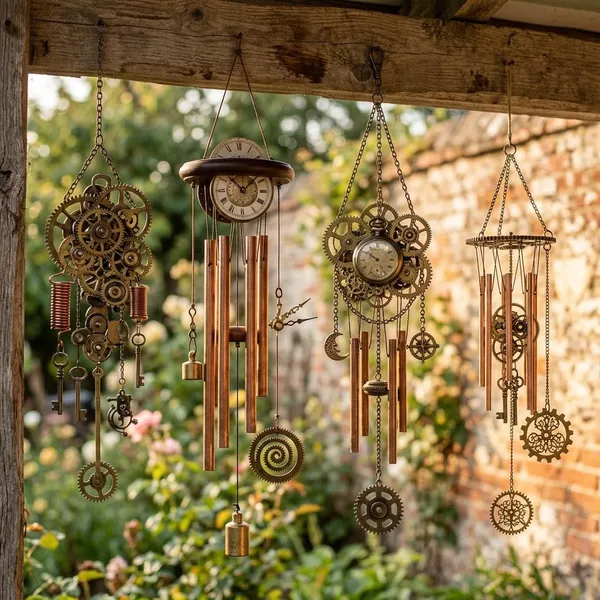
Start with the practical checks: sound, size, materials, weather exposure, and build quality. Style matters, but a beautiful chime becomes annoying if it is too loud for the spot, too heavy for the hook, or too fragile for the weather.
Choose the sound you prefer
Sound should be the first filter. Copper pipes and metal tubes usually give clearer, more resonant notes. Keys, chains, and small found objects make lighter taps and irregular metallic sounds.
Match the size to the space
A large chime needs room to swing without hitting a wall, railing, plant stand, or window. Small chimes are better for apartments, narrow balconies, and covered corners where wind movement is limited.
Check the material quality
Good material quality shows up in the small parts: the top hook, chain, jump rings, drilled holes, wire, and connection points. Thin decorative metal can look fine in photos but bend quickly once it moves every day.
- Check the top support first: it carries the whole weight.
- Look for secure holes or loops: glue alone is a weak point outdoors.
- Avoid sharp drilled edges: they can cut cord or wire over time.
- Tap the sound pieces: dull, flimsy parts rarely improve after assembly.
Consider outdoor durability
Outdoor durability depends on both the metal and the climate. Copper and brass usually age attractively, while untreated iron or cheap steel may rust quickly in damp places. Coated parts can last well, but the coating needs to be intact.
For year-round outdoor use, choose stronger metal, fewer delicate extras, and a sheltered location if possible. In coastal, snowy, or very wet areas, bringing the chime inside during rough weather is a sensible habit rather than overcare.
Compare handmade and factory-made options
Handmade chimes usually have more character and better found-object detail. Factory-made chimes are often easier to compare because the size, materials, and sometimes sound samples are listed more clearly.
If you care most about a predictable tone, a well-made factory chime with proper tubes may be the safer choice. If you want the piece to look like a one-off object with personality, handmade fits the steampunk mood better.
How to make steampunk wind chimes
When making your own, build in this order: support, sound pieces, spacing, clapper, then decoration. That order keeps the project from becoming a good-looking bundle of metal that barely moves or sounds harsh.
Choose a strong hanger
Use a metal ring, sturdy bracket, horseshoe, thick wire frame, drilled plate, or strong gear-shaped base. The hanger must hold the full weight without bending, especially if the chime will be outside.
A reclaimed bracket or large gear can add instant style, but do not sacrifice balance for looks. If the top support tilts before the chimes are attached, the finished piece will be harder to tune.
Arrange the metal pieces
Lay everything on a table before attaching it. Put heavier or longer pieces opposite each other, then fill gaps with lighter keys, washers, or decorative accents.
Attach the chimes securely
Use strong wire, small chain, or outdoor-suitable cord. If you drill copper pipe, keys, or metal tags, smooth the holes afterward so they do not cut through the hanging material.
Leave space between strands. A crowded design may look rich in your hand, but once it is hanging, it can deaden the sound or knot itself in a breeze.
Add gears and decorations
Add decorative gears, watch parts, chain loops, and pendants after the basic chime rings properly. Treat them like seasoning, not the main structure.
- Add one detail at a time: then test the swing.
- Keep the clapper path clear: decoration should not block the strike point.
- Repeat one metal tone: brass, copper, or blackened steel keeps the design cohesive.
Balance the clapper
The clapper controls how often and how firmly the chime rings. A small key chime may only need a light washer or pendant, while longer copper pipes may need a slightly heavier central piece.
Height matters as much as weight. Move the clapper up or down until it reaches the main sounding pieces evenly. If the chime barely responds, lighten the moving parts or use a larger wind sail; if it clangs constantly, reduce clapper weight or increase spacing.
Test and adjust the sound
Hang the chime where it can move freely and nudge it by hand before calling it finished. Listen for one piece that dominates, parts that never get struck, or strands that tangle.
Small changes often fix the problem: shorten one strand, remove a heavy decoration, widen the spacing, or change the clapper. A homemade chime rarely comes out perfect on the first hang, and that adjustment stage is where it starts to feel intentional.
Conclusion
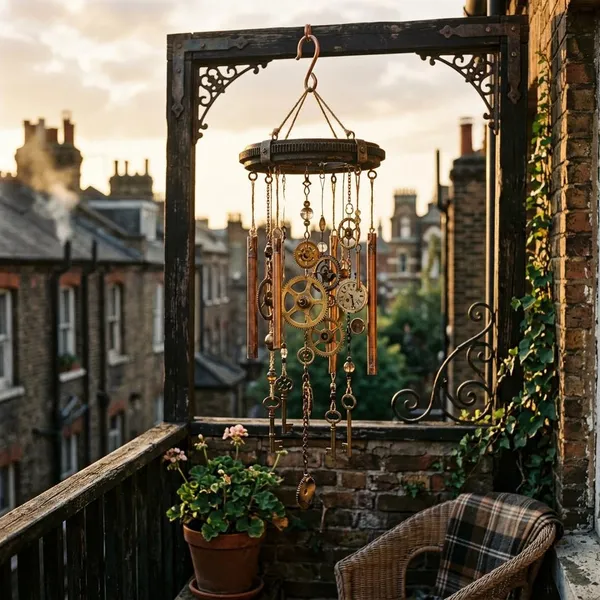
The best steampunk wind chimes are not the ones with the most gears; they are the ones where the metal, movement, and sound all work together. For buying, choose the tone and outdoor strength before the decorative details. For making, get the hanger, spacing, and clapper right first, then add enough aged hardware to give the piece character without weighing it down.
FAQ
Can you make steampunk wind chimes from old keys?
Yes, old keys work well for small steampunk chimes. They sound lighter than tubes, so mix in copper pipe or rods if you want a fuller tone.
Which metal produces the deepest sound?
Larger, longer tubes usually sound deepest. Copper is popular for steampunk designs, but tube length, width, and thickness affect the tone more than the style label.
How do you make wind chimes move in a light breeze?
Use a light, balanced layout and a wind sail large enough to catch air. If the decoration is heavy, the chime may look good but stay almost still.
Can steampunk wind chimes stay outside all year?
Some can, especially all-metal designs made with copper, brass, or coated steel. Mixed-media pieces and untreated iron are better kept under cover or brought in during harsh weather.
Can you make steampunk wind chimes from old keys?
Yes, old keys work well for small steampunk chimes. They sound lighter than tubes, so mix in copper pipe or rods if you want a fuller tone.
Which metal produces the deepest sound?
Larger, longer tubes usually sound deepest. Copper is popular for steampunk designs, but tube length, width, and thickness affect the tone more than the style label.
How do you make wind chimes move in a light breeze?
Use a light, balanced layout and a wind sail large enough to catch air. If the decoration is heavy, the chime may look good but stay almost still.
Can steampunk wind chimes stay outside all year?
Some can, especially all-metal designs made with copper, brass, or coated steel. Mixed-media pieces and untreated iron are better kept under cover or brought in during harsh weather.