
If you want a steampunk mirror that looks intentional rather than costume-like, check three things first: the frame shape, the metal finish, and how heavy the design feels in the room. The best pieces mix Victorian detail with industrial hardware, but they still need to function as a real mirror. If the frame is too shiny, too crowded, or too weak for its weight, it will usually look less convincing once it is on the wall.
What makes a mirror steampunk
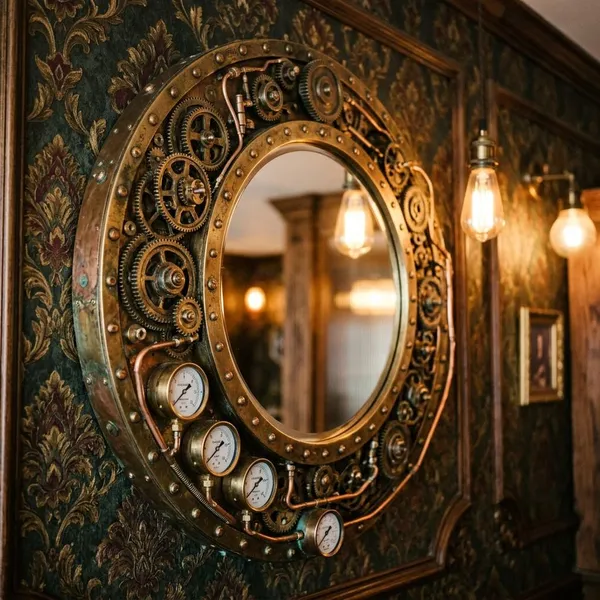
A mirror starts to feel steampunk when it combines an old-fashioned shape with machine-inspired details. One cue is rarely enough. A dark wood frame may look antique, and a plain black metal frame may look industrial, but the steampunk look usually appears when ornate lines, aged metal, exposed hardware, and a slightly invented feel work together.
Victorian shapes and ornament
Victorian influence gives the mirror its historic base. Oval, arched, and softly rectangular frames work especially well because their curves offset harder materials like iron, brass, and pipe-style trim.
Look for carved borders, scrollwork, raised trim, or layered edging if you want the mirror to feel elegant rather than purely industrial. For a hallway or bedroom, this is often the better direction: a shaped frame with restrained metal details feels decorative without turning the whole room into a theme set.
Gears, pipes, and exposed hardware
Gears, rivets, bolts, brackets, and pipe details are the most obvious steampunk signals, but they need to be placed with discipline. Corners, side edges, and one stronger top detail usually look better than covering the entire frame.
- Good sign: repeated bolts or gear clusters that follow the frame shape.
- Risky sign: large parts attached where they interrupt the mirror surface or make cleaning awkward.
- Best use: mechanical details that add rhythm without making the mirror feel heavy on one side.
Brass, copper, and dark metal
Brass and copper add warmth, while blackened steel, antique iron, and oil-rubbed bronze create contrast. These finishes usually suit steampunk better than bright chrome, which can look too modern and polished.
If your room already has metal accents, choose one dominant finish to repeat. For example, an office with black shelving can handle a blackened frame with small brass highlights, while a living room with warm wood may look better with aged brass or copper details.
Distressed and aged finishes
An aged finish should suggest history, not neglect. Rubbed edges, darkened corners, muted shine, and subtle patina can make new materials look more believable.
Be cautious with distressing that looks dirty, flaky, or artificially orange. A finish that feels slightly worn is easier to live with than one that looks like a stage prop, especially in a main room where you see the mirror every day.
Where to place a steampunk mirror
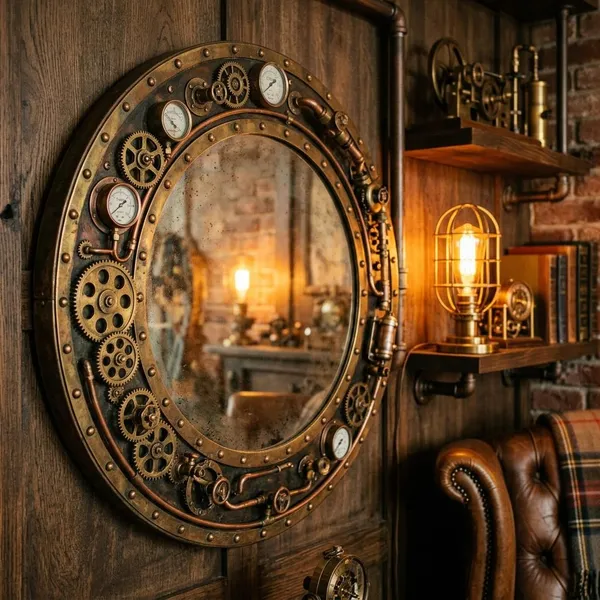
Placement matters because this kind of mirror usually carries more visual weight than a simple frame. Before choosing a wall, check what the mirror will reflect, how much light reaches that spot, and whether the surrounding furniture can balance the frame. A bold mirror facing clutter rarely looks as good as a simpler mirror reflecting a lamp, artwork, window, or clean architectural line.
Use the room's purpose as the deciding factor. In a daily-use bathroom, durability comes first. In a bar or themed lounge, atmosphere can come first. In an entryway, the mirror needs to give impact without blocking movement.
Entryways for a strong first impression
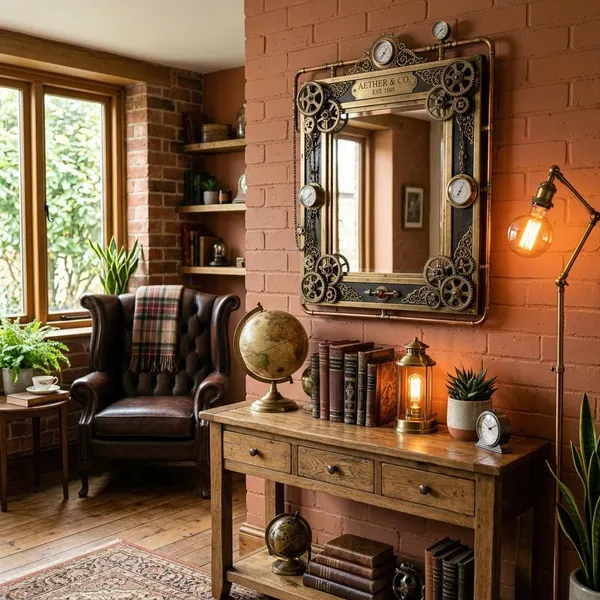
An entryway is one of the easiest places to use a steampunk mirror because guests see it quickly, and the space often benefits from extra reflected light. A medium mirror above a slim console usually works better than an oversized piece that crowds coats, doors, or shoe storage.
Living rooms for a bold focal point
In a living room, the mirror can anchor a fireplace, sideboard, or large wall behind a sofa. This is where a thicker frame or stronger silhouette can work, because the room usually gives you more viewing distance.
If the room already has patterned wallpaper, open shelving, or many collectibles, choose a cleaner steampunk design. If the room is quite minimal, a more ornate frame can bring the character you are missing.
Offices for an industrial mood
A home office suits a quieter version of the style: dark metal, aged brass, wood, and structured lines rather than oversized gears everywhere. A mirror on a side wall can bounce window light and make a compact workspace feel less boxed in.
If the mirror appears behind you during video calls, choose one that looks deliberate from a distance. Tiny decorative parts may disappear on camera, while a clear arched shape or strong dark frame will read better.
Bathrooms with moisture-safe materials
A bathroom is possible, but only if the materials can handle humidity and cleaning. Sealed wood, protected metal, moisture-resistant backing, and secure mounting matter more here than decorative detail.
- Better choice: sealed brass, powder-coated metal, or properly finished wood.
- Avoid: raw steel, weak glued-on trim, or deep rough grooves that trap moisture and dust.
- Check first: ventilation, splash distance, and whether the frame blocks good vanity lighting.
Bars and themed rooms for added character
Bars, game rooms, libraries, and themed lounges can handle the most dramatic versions. A mirror behind a home bar, for example, can reflect bottles, glassware, and warm sconces, making the space feel deeper and more atmospheric.
How to style a steampunk mirror
Styling should make the mirror feel connected to the room, not surrounded by matching props. The easiest approach is to repeat a few materials: one metal finish, one wood tone, one warm lighting style, and a calm wall color. That gives the mirror support without making the space feel like a themed display.
Repeat the same metal finish
Choose one metal from the mirror and echo it nearby. Antique brass might appear in a lamp, drawer pull, picture frame, or wall sconce. Blackened metal might show up in shelving, curtain rods, or table legs.
You do not need an exact match, but the temperature should feel related. Warm brass and copper usually sit well together; cool chrome beside aged brass often looks accidental unless the whole room is very modern and controlled.
Pair it with wood and leather
Wood and leather keep a metal-heavy mirror from feeling cold. Dark walnut, reclaimed wood, weathered oak, brown leather, and matte faux leather all support the Victorian-industrial mood without shouting for attention.
For a renter or a temporary room update, this is a low-risk way to make the mirror work: use an existing wood console, add a leather tray or book stack, and repeat the frame's metal once. You get the effect without repainting walls or buying a full set of themed furniture.
Add warm industrial lighting
Warm lighting brings out patina, aged edges, and copper or brass highlights. Cage sconces, shaded wall lights, pipe-style lamps, and warm bulbs can all support the look, but the lighting still needs to be useful.
Beside a bathroom vanity, place lights so they illuminate your face rather than only the frame. In a hallway or bar area, softer side lighting can be more atmospheric and make the mirror feel deeper.
Keep nearby decor simple
A detailed mirror needs breathing room. Instead of surrounding it with clocks, extra gears, vintage signs, and small metal objects, choose one strong lamp, a tray, a few books, or a simple plant.
- Small space: keep the surface below the mirror mostly clear.
- Large wall: use fewer but heavier objects so the mirror does not look stranded.
- Busy room: let the mirror be the only strongly themed piece.
Use dark or neutral wall colors
Deep green, charcoal, navy, warm gray, taupe, and greige all work well with steampunk finishes. Darker walls make brass and copper glow; warmer neutrals are better if the room has limited daylight.
If you are unsure, test the mirror against the wall before committing to paint or wallpaper. A blackened frame may disappear on a very dark wall, while a brass-heavy mirror can look too loud on bright white.
How to make a DIY steampunk mirror
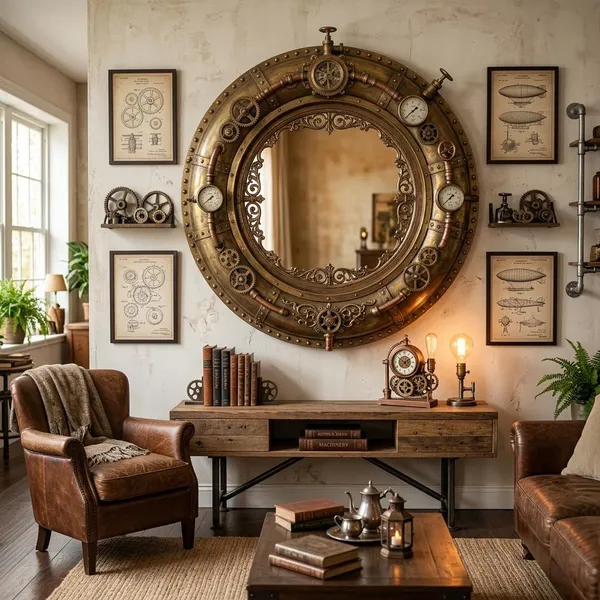
A DIY version can look excellent if you treat it like a design project, not a place to attach every interesting part you find. Start with a solid frame, plan the layout before gluing anything, and keep the final weight in mind from the beginning. The main mistake is adding too much decoration before checking whether the mirror can still be handled, cleaned, and safely mounted.
Start with a sturdy mirror frame
Choose a wood or metal frame with firm corners and a stable backing. Thin plastic frames are usually not worth the effort because heavy trim and metal pieces can pull away over time.
A medium-size mirror is often better for a first project. It gives enough room for detail without becoming so heavy that hanging becomes the hardest part of the job.
Plan the mechanical details
Lay the parts on the frame before attaching them. Step back a few feet and check whether the design still looks balanced from normal viewing distance, not just up close.
- Use repetition: similar bolts, matching gears, or repeated corner brackets.
- Leave space: empty areas make the decorated sections look more deliberate.
- Protect function: keep hardware clear of hangers, edges, and the reflective surface.
Attach gears, pipes, and trim
Use fixings that suit the materials and weight. Light trim may work with strong adhesive, but heavier metal pieces may need screws, epoxy, or a combination. If you are drilling into wood, pre-drill small holes to reduce splitting.
Check the balance as you build. A frame that becomes much heavier on one side can hang crooked or put extra stress on the backing.
Add paint and aged texture
Paint is what makes separate parts look like one finished object. A simple layered finish often works best: matte black or dark bronze as a base, then dry-brushed brass, copper, or antique gold on raised details.
Test the finish on scrap material first. Metallic paint can turn too bright quickly, and a small test helps you avoid a mirror that looks plastic, orange, or overly glossy.
Seal and mount the mirror
Seal the finish if the mirror will sit in a humid room, near a kitchen, or anywhere it will be touched and cleaned often. Use a clear coat that is compatible with your paint and materials.
- Measure the wall, mirror, and likely finished weight.
- Arrange all parts before attaching anything.
- Secure heavy details with hardware or strong bonding methods.
- Unify the frame with one aged finish direction.
- Let coatings cure fully before hanging.

Conclusion
A steampunk mirror works best when it feels like a strong design choice, not a pile of decorative parts. Choose the room first, then match the weight of the frame, the durability of the materials, and the amount of ornament to that space. If the mirror is safe to hang, easy enough to live with, and supported by a few warm industrial details, it can add character without taking over the whole room.
FAQ
Can a steampunk mirror work in a modern room?
Yes. Use it as the main character piece and keep the rest of the room clean-lined, with one repeated metal finish so the contrast feels intentional.
Are steampunk mirrors suitable for small spaces?
Yes, if the frame is not too deep or crowded. In a small hallway or powder room, an arched shape with subtle metal detail usually works better than a heavy gear-covered frame.
Can you hang a steampunk mirror in a bathroom?
Yes, but only with moisture-safe materials and secure mounting. Avoid unfinished metal, unsealed wood, and fragile glued-on details near regular steam or splashes.
How do you safely hang a heavy steampunk mirror?
Use hardware rated above the mirror's finished weight and anchor into studs whenever possible. If the frame is very heavy or unusually shaped, a French cleat is often more stable than a single hook.