
A steampunk guitar is usually a normal electric guitar with a strong retro-futurist look, not a separate kind of instrument. The design can be dramatic, but the first thing to judge is simple: does it still play comfortably, stay reliable, and make sense as a guitar rather than just as a display piece?
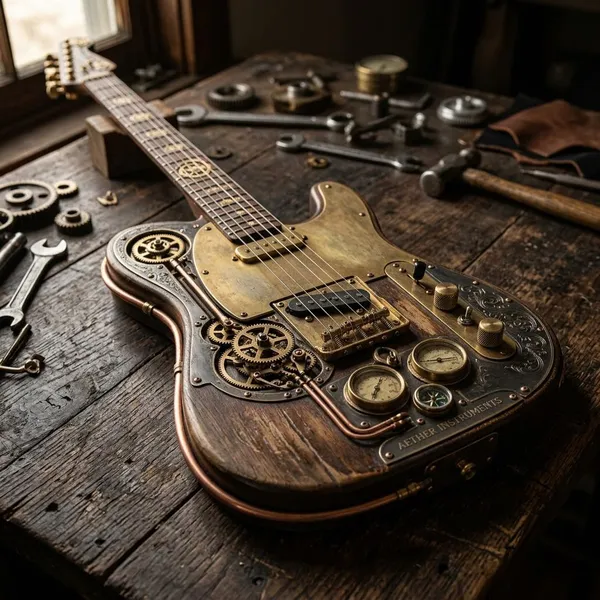
Key steampunk guitar design features
The steampunk look comes from a mix of antique materials, machine-like details, and a clear visual story. A good build might suggest an airship control panel, a Victorian workshop, or a weathered industrial machine. A weaker one often looks like a regular guitar with random gears glued onto it.
Brass copper and aged metal
Brass and copper are two of the most recognizable steampunk materials because they move the guitar away from a modern factory look. They work well on control plates, pickup surrounds, knobs, trim pieces, engraved panels, and small mechanical accents.
The finish matters more than simply using the metal. Brushed, darkened, oxidized, or lightly patinated surfaces usually feel more convincing than bright new brass unless the whole guitar is meant to look polished and luxurious. Too much metal can also add weight, so the best builds use it to frame the design rather than cover every open space.
Worn wood and antique finishes
Dark stained wood, amber tones, satin finishes, softened edges, and visible grain all help create the antique workshop feel. The aging should look believable: wear near contact points, color that fits the hardware, and distressing that does not look randomly scratched on. A guitar can look old without looking abused.
Pipes gauges gears and rivets
Pipes, gauges, gears, and rivets are the easiest details to recognize, but they are also the easiest to overuse. They work best when they support the guitar's shape or theme, such as a gauge-style control plate or rivets that visually follow the edge of a body panel.
- Near the bridge: avoid raised parts that block palm muting.
- Around the knobs: leave enough room for quick volume and tone changes.
- On the arm contour: keep pipes, plates, and rivets low and smooth.
Vintage controls and exposed hardware
Vintage-style knobs, engraved labels, switch plates, visible screws, and exposed brackets can make the guitar feel like a working machine. The trick is neatness. Exposed hardware should look deliberately engineered, not unfinished or loose. If screws are crooked, plates rattle, or brackets feel sharp, the design loses credibility fast.
Details built around one clear theme
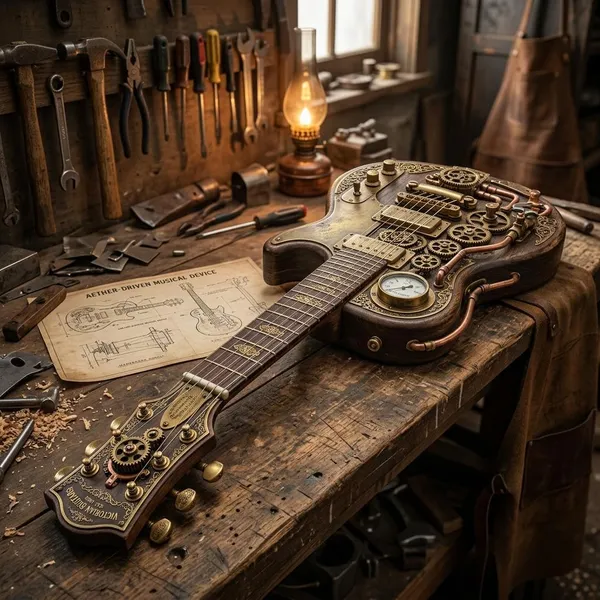
A convincing steampunk guitar has one main idea. It might lean elegant and Victorian, darker and industrial, or more fantasy-driven, but the materials should still agree with each other. The metal tones, wood finish, control layout, and decorative shapes should feel planned from the headstock to the strap button.
This is where a custom build starts to feel expensive even before you know the price. Consistency makes the guitar look designed; inconsistency makes it look assembled from leftover parts.
Does steampunk styling change the sound
Steampunk styling usually does not change the sound by itself. Brass plates, aged finishes, decorative rivets, and faux gauges are mostly visual choices. The amplified tone still comes mainly from the pickups, electronics, strings, setup, amp, and the way the guitar is played.
The feel can change, though. Added parts may make the guitar heavier, shift the balance, create rattles, or get in the way of your picking hand. That is why a stage player should judge comfort more strictly than someone buying a wall display or occasional conversation piece.
Cosmetic details usually leave the tone unchanged
Engraved plates, antique finishes, decorative gears, and surface aging normally leave the amplified tone close to what it was before. If the pickups, bridge, wiring, scale length, and setup stay the same, the guitar should still sound like the same instrument in practical use.
Pickups and electronics shape the amplified sound
If a steampunk-themed guitar sounds brighter, darker, louder, or noisier than expected, look at the electronics first. Pickups, pots, capacitors, switching options, shielding, and soldering quality matter far more than the decorative theme.
For a custom order, separate the visual brief from the sound brief. You can ask for an antique machine look while still choosing pickups suited to blues, punk, ambient playing, classic rock, or heavier gain.
Added parts can affect weight and balance
Extra metal is the practical issue many people underestimate. A small trim piece may not matter, but thick plates, tubes, heavy knobs, or headstock decorations can make the guitar tiring during a long rehearsal.
| Use situation | What to check first |
|---|---|
| Display or occasional home use | Theme, finish quality, and basic playability may be enough. |
| Regular practice or recording | Check weight, seated comfort, noise, and control access. |
| Live playing on a strap | Test balance, neck dive, cable access, and sharp edges before buying. |
Poor modifications can reduce playability
Bad modifications can make a good guitar worse. Watch for sharp plate corners, blocked switches, rattling ornaments, awkward cable routing, poor shielding, and decoration placed where your forearm or picking hand needs to move.
- Mock up the layout first. Tape parts in place before drilling or gluing.
- Mark contact zones. Protect the bridge area, forearm rest, controls, jack, and strap path.
- Check balance early. Hold the guitar on a strap before adding more metal.
- Finish with a setup. A themed guitar still needs clean action, intonation, and quiet electronics.
How to spot a well-made steampunk guitar
A well-made steampunk guitar should pass the same basic checks as any good electric guitar before the decorative work gets credit. Start with comfort, safe edges, stable hardware, usable controls, clean fretwork, and dependable electronics. After that, judge whether the theme is strong.
Consistent materials and finishes
Look for materials that age in the same visual direction. Warm brass, darker copper, stained wood, aged plastic, and softened metal can work beautifully together. Bright chrome, random black plastic, and fake rust can also work, but only if the contrast feels intentional rather than accidental.
Secure parts with no sharp edges
Run the practical inspection you would use on a working instrument: no loose plates, no proud screw tips, no rough corners near the picking arm, and no parts that rattle when the guitar vibrates. Rugged styling is fine; unsafe finishing is not.
Easy access to controls and hardware
The volume knob, tone knob, pickup selector, output jack, bridge, saddles, and truss rod access should still be usable without fighting the design. A decorative cover that looks clever but makes string changes painful is not clever in daily use.
For a beginner or casual player, blocked controls may simply be irritating. For a gigging player, they can become a real problem because quick volume changes, cable swaps, and tuning fixes need to happen without hesitation.
Comfortable weight and balance
Try the guitar seated and standing if possible. Some steampunk builds feel fine on the lap but hang badly on a strap because the added parts are concentrated near the headstock, upper horn, or outer body edge.
- Standing test: let go carefully and see whether the neck drops.
- Forearm test: strum for a minute and notice any hard edges.
- Control test: change volume and pickup position without looking.
Craftsmanship beyond decorative gears
The real quality shows in the details that are not immediately "steampunk": fret ends, nut slots, neck pocket fit, soldering, routing, finish transitions, shielding, and setup. Decorative gears may catch the eye, but clean guitar work decides whether the instrument is worth owning.
Conclusion
A steampunk guitar works best when the visual idea supports the instrument instead of competing with it. Choose or build one by checking playability first, then theme consistency, then decorative detail. If it feels comfortable, sounds reliable, and looks like one coherent machine-inspired design, the style becomes a strength rather than a compromise.
FAQ
Is a steampunk guitar a type of instrument?
No. It is usually a standard electric guitar with steampunk-inspired styling, not a separate technical category.
Does a steampunk guitar sound different?
Not because of the look alone. If it sounds different, the likely causes are pickup choice, wiring, setup, strings, or changed hardware.
Can you modify a standard electric guitar?
Yes, but start with reversible or low-risk changes if you are unsure. Knobs, plates, finish accents, and cosmetic hardware are safer than cutting wood or moving functional parts.
Is steampunk or industrial the better label?
Use steampunk when the design feels antique, brass-heavy, Victorian, or retro-futurist. Use industrial when it feels darker, rougher, more utilitarian, or closer to factory machinery.
Is a steampunk guitar a type of instrument?
No. It is usually a standard electric guitar with steampunk-inspired styling, not a separate technical category.
Does a steampunk guitar sound different?
Not because of the look alone. If it sounds different, the likely causes are pickup choice, wiring, setup, strings, or changed hardware.
Can you modify a standard electric guitar?
Yes, but start with reversible or low-risk changes if you are unsure. Knobs, plates, finish accents, and cosmetic hardware are safer than cutting wood or moving functional parts.
Is steampunk or industrial the better label?
Use steampunk when the design feels antique, brass-heavy, Victorian, or retro-futurist. Use industrial when it feels darker, rougher, more utilitarian, or closer to factory machinery.