
Choose a steampunk walking stick by deciding first whether it is for style, collecting, gifting, or real support. If you need it for balance, comfort, shaft strength, tip grip, and height matter more than gears or brass trim. If it is for cosplay or display, you can be bolder with decorative details as long as the piece is safe to carry and allowed at the venue.
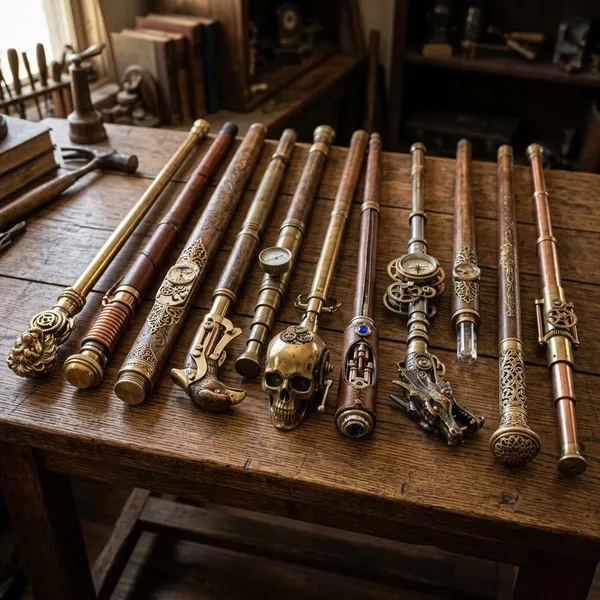
What gives a walking stick its steampunk look
Steampunk style usually comes from a mix of Victorian shape and industrial detail. The strongest designs do not simply cover a cane in gears; they make the handle, shaft, hardware, color, and finish feel like they belong together.
Victorian-inspired handles and shapes
Handles set the tone first. Derby handles, crook handles, knob tops, carved pommels, bird-head shapes, and ornate caps all suggest older dress-cane styling before any mechanical detail is added.
For a convention costume, a dramatic skull or clockwork handle can work well. For regular walking, avoid handles that are narrow, sharp-edged, or awkwardly angled; they may look impressive in photos but become uncomfortable after a few minutes of pressure.
Brass-toned gears and hardware
Brass-tone collars, rivets, gear motifs, small plates, and metal bands are the most recognizable steampunk accents. Use them as visual punctuation rather than covering every surface.
Dark wood and leather details
Dark wood stains such as walnut, mahogany, espresso, or black-brown finishes give the stick a vintage base, while leather wraps add warmth and texture. Brown leather with brass hardware is a classic combination because it feels aged without looking too busy.
If the stick will be handled often, check that the leather is firmly attached and the wood finish is sealed. Peeling faux leather or tacky stain can make even a good-looking design feel cheap very quickly.
Aged industrial finishes
An aged finish should suggest use and history, not damage. Rubbed metallic highlights, darker edges, muted brass effects, and controlled distressing usually look better than heavy scratches or flaky paint.
Types of steampunk walking sticks
Most buying mistakes happen when the purpose is unclear. A stick made for a photo shoot, a collector's shelf, or a daily walk may all share the same look, but they should not be judged by the same standards.
Costume props for cosplay and LARP
Costume props are mainly about character. They can be lighter, larger, and more theatrical because they are usually carried for appearance rather than leaned on for balance.
For an all-day convention, weight and venue rules matter as much as looks. Avoid sharp ends, hidden compartments, heavy metal heads, or anything that could be treated as a weapon by event staff.
Display pieces for collectors
Collector pieces are judged more by craftsmanship, theme, and visual balance. Engraved metalwork, sculpted handles, unusual wood tones, and airship or clockwork details can make sense here because the stick is not expected to handle daily pressure.
Still, ask how fragile parts are attached and how the finish should be stored. A display stand and a dry room can prevent scratches, leaning damage, and moisture problems.
Custom designs for gifts
A custom walking stick can be a memorable gift when it matches the recipient's real use. Initials, favorite colors, leather choices, symbols, or a small engraved plate can feel personal without making the design overloaded.
Support canes for daily use
A functional steampunk cane should start as a real support aid, with styling added carefully afterward. Look for a dependable shaft, comfortable handle, secure rubber tip, suitable height, and clear seller information about intended use.
Daily use is where restraint often looks better and works better. A dark shaft, leather grip, and a few brass-tone accents can feel steampunk without making the cane top-heavy or uncomfortable.
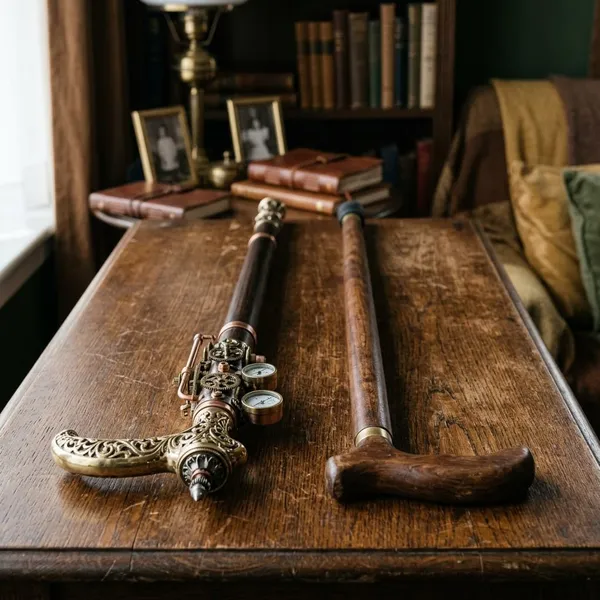
How decorative and functional walking sticks differ
Decorative and functional sticks can look similar online, but they are built for different risks. A decorative piece only needs to look convincing; a functional cane must handle repeated pressure, stay stable on different surfaces, and remain comfortable in the hand.
| Part to check | Decorative warning sign | Better for support |
| Shaft | Hidden joins, hollow novelty build, fragile sleeves | Solid, aligned, load-ready construction |
| Handle | Sharp, narrow, slippery, or top-heavy | Comfortable shape with secure connection |
| Tip | Metal cap or small hard end | Replaceable rubber tip with good grip |
| Seller claims | Only says "sturdy" or "premium" | Clearly states support use and materials |
How to customize a steampunk walking stick
A DIY steampunk walking stick works best when you design around the stick's purpose. A cosplay staff can be light and dramatic; a cane that may support body weight needs a much stricter approach.
Start with a plain cane or staff
Begin with a clean base that already suits the final use. For cosplay, a lightweight staff may be enough. For walking support, start with a cane already made for support rather than trying to turn a novelty prop into one.
Check height before decorating. A practical cane usually feels best when the handle sits around wrist level while your arm hangs naturally, but personal comfort and professional fitting advice matter if you rely on it for mobility.
Add lightweight gears and trim
Lightweight trim is usually smarter than real heavy clock parts. Thin craft metal, resin pieces, faux rivets, small collars, and painted details can create the same visual effect without making the stick tiring or unbalanced.
Keep decoration away from the main grip and the ground-contact area. Those are the two places where style most often gets in the way of actual use.
Secure every decorative part
Loose gears and bands are not just annoying; they can scratch the finish, snag clothing, or fall off during an event. Match adhesives to the materials, clean and lightly prepare surfaces, and reinforce larger parts with wraps, pins, screws, or fitted collars when appropriate.
After attaching parts, carry the stick around the room and gently rotate it. Rattling, lifting edges, or shifting trim are signs to fix the piece before sealing the finish.
Apply an aged finish
Layer the finish slowly. A dark base, small metallic highlights, softened edges, and a sealed topcoat usually look more convincing than one heavy coat of bronze paint.
- Test first on a hidden area or scrap material.
- Seal handled areas so color does not transfer to skin or gloves.
- Keep grip surfaces usable rather than glossy and slippery.
Protect all load-bearing areas
Do not drill deep holes, cut channels, or add bulky parts where the handle connects, where the hand grips, or where the tip fits. Those areas carry force and should stay clean, strong, and easy to inspect.
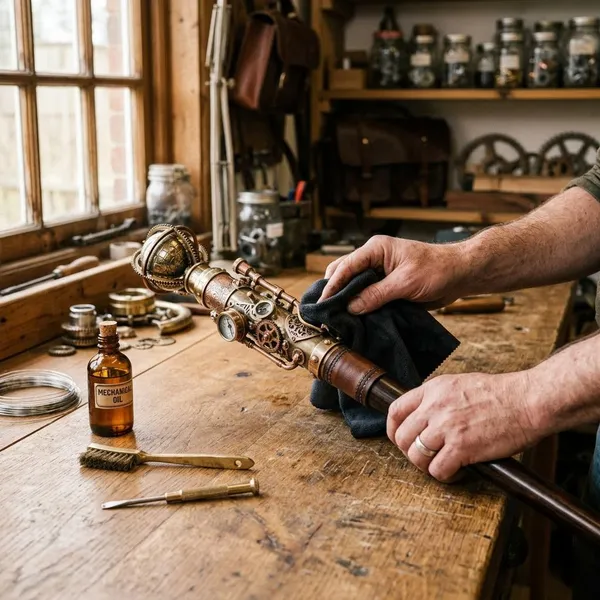
How to care for a steampunk walking stick
Steampunk walking sticks often combine wood, metal, leather, paint, and adhesive, so care is really about preventing small mixed-material problems from growing. A quick inspection after travel, outdoor use, or a long event day is usually enough to catch loose trim, worn tips, or finish damage early.
Clean each material correctly
Use a soft dry cloth for regular dusting. For wood, a barely damp cloth followed by immediate drying is safer than soaking the surface. Metal accents should be wiped gently so you do not remove an intentional patina.
Leather wraps need mild care. Avoid spraying cleaner directly onto mixed-material areas; apply it to a cloth first so liquid does not creep under collars, wraps, or glued trim.
Tighten loose fittings
Fix small movement early. A loose collar, screw, cap, or decorative band can start as a rattle and later chip the finish or strain nearby parts.
If the handle connection or shaft feels loose, stop using the stick for support until it is repaired. That is one of the few problems where "I'll check it later" is not worth the risk.
Repair worn grips and tips
Replace worn rubber tips before they become smooth or uneven. The tip is cheap compared with the consequences of a slip, especially on polished floors, entryways, and wet pavement.
Grip wear matters too. A leather wrap that twists, cracks, or becomes slick should be rewrapped or replaced so the stick stays predictable in the hand.
Store it somewhere cool and dry
Heat can soften adhesives, humidity can affect wood and metal, and direct sun can fade leather or paint. Store the stick upright in a stable stand or flat where it will not roll, warp, or be knocked over.
For a daily-use cane, keep it in the same easy-to-reach place rather than leaning it in random corners. That reduces drops and makes regular checks more likely.
Conclusion
The right choice comes down to purpose before decoration. Go bold if the stick is for cosplay or display, but choose a support-ready cane with a comfortable handle, dependable shaft, proper height, and grippy tip if you plan to lean on it. Steampunk details are at their best when they add character without making the stick harder or less safe to use.
FAQ
Is a steampunk walking stick the same as a cane?
Not always. A cane is usually meant for walking support, while a steampunk walking stick may be a prop, display item, gift, or functional cane with themed styling.
Can a decorative walking stick support body weight?
Assume it cannot unless the maker clearly says it is built for support. Decorative sticks may have hollow shafts, fragile handles, glued ornaments, or tips that are not safe for weight-bearing use.
Are steampunk walking sticks allowed at cosplay events?
Often they are, but each venue sets its own prop rules. Check for restrictions on sharp ends, heavy metal parts, hidden compartments, or anything that could be treated as a weapon.
Is a steampunk walking stick the same as a cane?
Not always. A cane is usually meant for walking support, while a steampunk walking stick may be a prop, display item, gift, or functional cane with themed styling.
Can a decorative walking stick support body weight?
Assume it cannot unless the maker clearly says it is built for support. Decorative sticks may have hollow shafts, fragile handles, glued ornaments, or tips that are not safe for weight-bearing use.
Are steampunk walking sticks allowed at cosplay events?
Often they are, but each venue sets its own prop rules. Check for restrictions on sharp ends, heavy metal parts, hidden compartments, or anything that could be treated as a weapon.