
If you want a steampunk lighter you will actually enjoy using, choose the mechanism before you choose the decoration. A soft-flame butane model is usually the safest everyday pick, a torch is better outside, a wick lighter gives the strongest vintage feel, and an electric model is easiest if you dislike fuel refills. Decorative pieces can be great gifts, but only if you are honest about whether they are meant to be used or displayed.
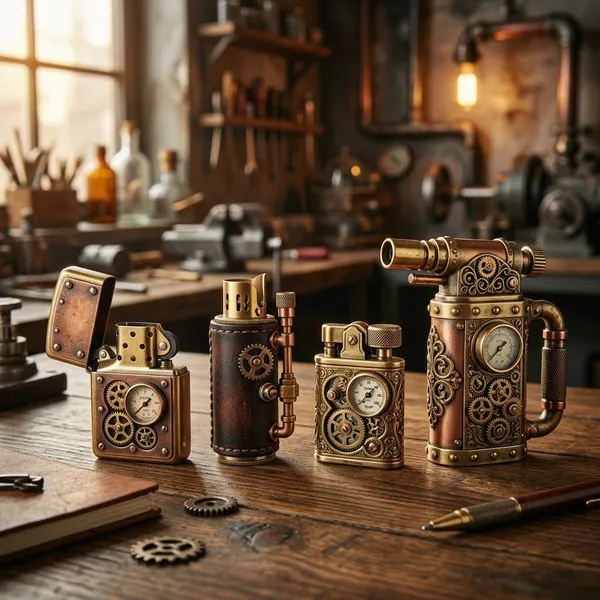
Main steampunk lighter types
Most steampunk lighters fall into one of five groups. The outside may be all brass tones, gears, rivets, and Victorian-style engraving, but the inside still matters more for daily use. Start with the flame or ignition type, then judge whether the design is practical enough for your habits.
| Type | Best for | Watch out for |
|---|---|---|
| Soft-flame butane | Everyday indoor use | Weak performance in wind |
| Butane torch | Outdoor or breezy conditions | Too intense for delicate tasks |
| Wick and liquid fuel | Vintage feel and ritual | Fuel evaporation and more upkeep |
| Rechargeable electric | Simple charging and no fuel smell | Battery quality and charging port durability |
| Decorative display | Gifts, shelves, collections | May be bulky or less reliable |
Which lighter type suits your needs
The right choice depends less on the word "steampunk" and more on where the lighter will live. A lighter used twice a month for candles has different priorities from one carried daily or used outside in summer wind.
- Check use first: indoor, outdoor, daily carry, gift, or display.
- Check upkeep next: refill butane, add liquid fuel, replace flints, or recharge.
- Check comfort last: size, weight, grip, lid strength, and pocket fit.
Soft flame for everyday use
For regular indoor use, a soft-flame butane lighter is usually the most sensible pick. It gives enough control for candles or incense without the heat and intensity of a torch.
Torch flame for windy conditions
Choose a torch flame if the lighter will be used outside more than once in a while. A balcony smoker, patio user, or someone lighting items during outdoor gatherings will usually appreciate the extra wind resistance.
- Good fit: breezy patios, camping-style use, outdoor seating areas.
- Not ideal: delicate indoor lighting, small candles, or anyone nervous around a strong jet flame.
- Before buying: check whether the flame can be adjusted down.
Wick design for vintage appeal
A wick design makes sense when the experience matters as much as the flame. It feels more mechanical and period-inspired, which suits the steampunk theme better than many modern push-button models.
It is less suitable if the lighter may sit untouched for weeks and then needs to work instantly. In that case, evaporation and flint wear can make a wick lighter less dependable than butane or electric options.
Electric ignition for easy charging
Electric ignition is the low-mess option. It is a good match for a household user who already charges devices regularly and wants a lighter for candles, incense, or occasional indoor use.
The weak point is not fuel, but electronics. If reviews mention short battery life, loose charging ports, or weak arcs after a few weeks, the decorative case is not enough to make it a good buy.
Decorative models for gifts and display
For gifts, decorative models often make the strongest impression because the recipient sees the design before they ever test the flame. They work especially well for someone who likes vintage accessories, mechanical art, fantasy décor, or unusual desk pieces.
If the recipient is practical, choose a working soft-flame or torch model with tasteful styling. If they are a collector, a heavier display piece or limited-looking design may be more satisfying than a lighter built for pocket use.
Steampunk lighter price and value
Price only makes sense when compared with the job you expect the lighter to do. A cheap display piece can be perfectly fine on a shelf, while the same build quality would be frustrating for daily ignition.
Entry-level models for occasional use
Entry-level models are fine for light use, first-time buyers, or a themed gift where the visual effect matters more than years of service. The risk is inconsistency: one low-cost lighter may work well enough, while another may have thin metal, rough edges, or unreliable ignition.
Mid-range models for regular use
Mid-range is usually the best place to start if you want a functional steampunk lighter rather than a novelty. You are more likely to get better hinges, smoother ignition, cleaner finishing, and decoration that feels built into the case.
For someone lighting candles every evening or carrying the lighter often, this level is often worth it. The lighter does not need to be luxurious; it just needs to feel solid every time it opens and ignites.
Premium models for better craftsmanship
Premium models should justify the price with better materials, tighter assembly, detailed engraving, reliable internal parts, or a finish that looks good up close. A higher price is not enough by itself, so look for clear photos, material details, and owner feedback about long-term use.
Collectible models for display value
Collectible models are priced more for design identity than simple function. Unusual shapes, limited themes, presentation boxes, and artistic metalwork can matter more than pocket comfort.
How to care for a steampunk lighter
Care is mostly about avoiding small problems before they become annoying: wrong fuel, dirty ignition parts, scratched finishes, and poor storage. The more decorative the lighter is, the more gentle handling matters.
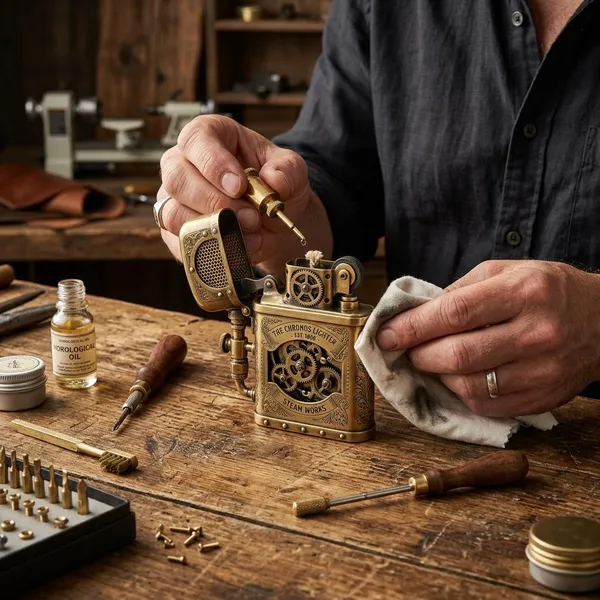
Use the correct fuel or charger
Use the fuel or charger meant for that specific lighter type. Butane models need butane, wick lighters need liquid lighter fuel, and electric versions need a compatible charging cable and safe power source.
Do not overfill fuel-based lighters. If you notice strong odor, wetness near the valve, sputtering, or inconsistent ignition after filling, stop and let the lighter settle before trying again. For electric models, avoid forcing a loose cable into a weak charging port.
Keep the ignition area clean
Pocket lint, dust, and carbon residue can make a lighter seem worse than it is. Use a dry cloth or soft brush around the nozzle, flint wheel, arc contacts, or ignition opening, and avoid poking delicate parts with metal tools.
Wipe metal surfaces after use
A quick wipe with a soft cloth helps protect brass-tone, antique, polished, or plated surfaces from fingerprints and moisture. Avoid harsh cleaners unless the maker specifically recommends them, because they can strip the aged finish that gives many steampunk designs their character.
Store it away from heat and moisture
Store the lighter somewhere cool and dry, not in a hot car, damp bathroom, direct sun, or near steam. Heat can affect fuel pressure or batteries, while moisture can dull finishes and encourage corrosion. If a fuel-based lighter will sit unused for a long time, check the maker's storage advice rather than leaving it filled without thought.
Conclusion
The best choice is the one that matches your real use, not just the most dramatic design. Pick soft flame for easy indoor use, torch for wind, wick for vintage ritual, electric for simple charging, and decorative models when gift or display value matters most. If the lighter feels comfortable, uses a fuel or charging method you will actually maintain, and looks good beyond the product photo, it is far more likely to stay enjoyable after the novelty wears off.
FAQ
Are steampunk lighters usually refillable?
Many are refillable, especially butane and wick-style models. Some cheap novelty pieces may not be practical to refill, so confirm the refill method before buying.
What fuel does a steampunk lighter use?
It depends on the mechanism: soft-flame and torch models usually use butane, wick models use lighter fluid, and electric models use a rechargeable battery. Match the fuel to the exact product, not just the design style.
Is a steampunk lighter a good gift?
Yes, if the recipient likes vintage, mechanical, or collectible objects. For someone who will use it often, choose reliability first; for a collector, presentation and finish may matter more.
Are steampunk lighters usually refillable?
Many are refillable, especially butane and wick-style models. Some cheap novelty pieces may not be practical to refill, so confirm the refill method before buying.
What fuel does a steampunk lighter use?
It depends on the mechanism: soft-flame and torch models usually use butane, wick models use lighter fluid, and electric models use a rechargeable battery. Match the fuel to the exact product, not just the design style.
Is a steampunk lighter a good gift?
Yes, if the recipient likes vintage, mechanical, or collectible objects. For someone who will use it often, choose reliability first; for a collector, presentation and finish may matter more.