
Choose steampunk fabric by matching the material to the job first, then building the mood with color, texture, and hardware. Brocade may look perfect for a waistcoat but awkward on a daily-use bag, while plain canvas can look convincingly steampunk once it has the right trims. Start with the piece you want to make, decide whether it needs drape, structure, durability, or easy sewing, and then pick the fabric that supports that purpose.
What makes fabric look steampunk
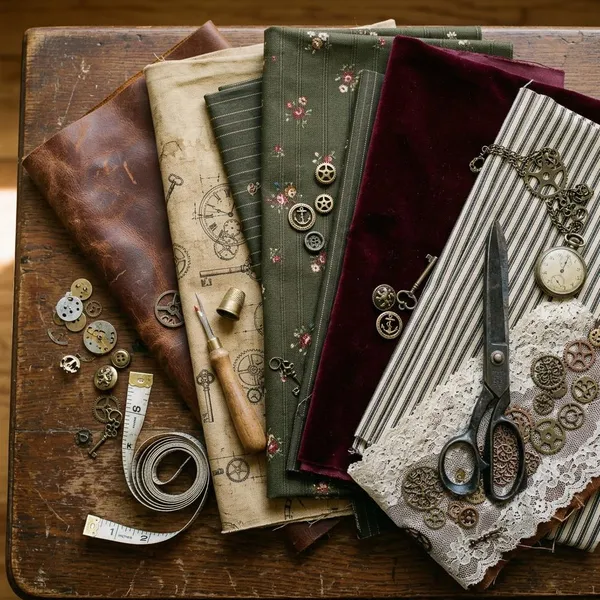
Fabric starts to look steampunk when it feels Victorian, aged, mechanical, or handmade rather than sleek and modern. The strongest results usually come from a mix of dark color, visible texture, old-metal details, and one clear design direction.
- Check color first: muted shades are easier to combine.
- Check texture second: flat fabric often needs layering or trim.
- Check scale: large prints can overwhelm small projects.
- Check finish: antique, matte, or softly worn surfaces usually feel more natural than shiny modern ones.
Dark Victorian colors
Deep brown, black, burgundy, rust, charcoal, olive, cream, bronze, and antique gold are dependable steampunk colors because they suggest old leather, wood, tailored clothing, machinery, and Victorian interiors. If you are unsure where to start, choose two main shades and one accent instead of collecting every interesting fabric you see.
Rich layered textures
Texture gives steampunk projects most of their depth. Velvet absorbs light, brocade catches it, lace breaks up solid areas, canvas adds utility, and faux leather brings structure. Even a simple pouch or skirt can look more finished when one plain fabric is paired with one textured accent.
Industrial printed motifs
Gears, clocks, maps, faded script, engineering drawings, stripes, tickets, and compass prints can all fit the style. They are strongest when used with restraint: a lining, pocket, collar, cuff, journal cover, or small panel often looks better than an entire outfit in a loud all-over print.
Aged and metallic details
Brass, bronze, copper, pewter, and tarnished silver usually look more steampunk than bright chrome. The same rule applies to fabric finishes: weathered faux leather, muted metallic brocade, and darkened buttons tend to feel more convincing than glossy vinyl or mirror-shiny trim.
Best fabrics for steampunk projects
The best fabric is not always the most dramatic one. A formal garment can justify brocade or velvet, but a bag, apron, or convention accessory needs strength and clean seams first. If the item will be handled often, worn all day, or carry weight, choose a practical base fabric and add the steampunk details afterward.
Cotton for crafts and simple sewing
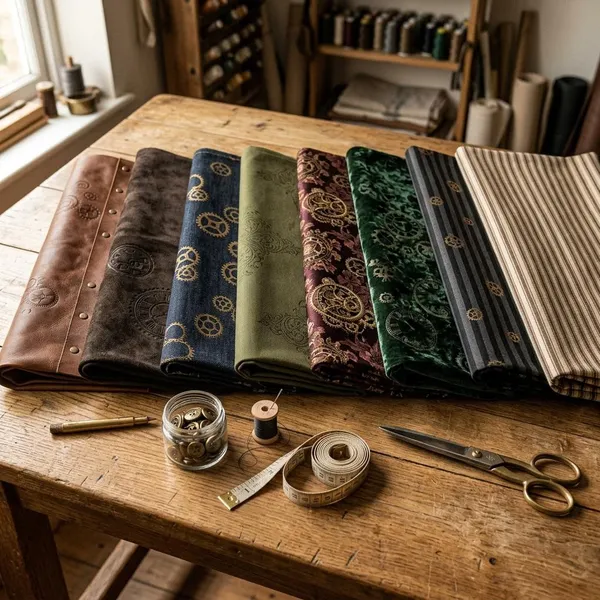
Cotton is the easiest starting point for steampunk crafts, linings, bunting, pouches, simple skirts, patchwork, and decorative panels. It cuts cleanly, presses well, and comes in solids, stripes, florals, faded script, maps, and gear prints.
Brocade for corsets and waistcoats
Brocade is a strong choice for corsets, waistcoats, bodices, vest fronts, and structured panels because the woven pattern gives instant Victorian richness. Watch for fraying and bulky seams; it is often worth using for visible statement areas rather than every layer of a project.
Velvet for dramatic clothing
Velvet works best when you want softness, shadow, and movement. It suits capes, collars, lapels, skirts, jacket panels, cuffs, and dramatic costume pieces, especially in burgundy, black, deep green, or brown.
Faux leather for structured accents
Faux leather gives belts, cuffs, straps, harness details, flaps, pocket trims, and gauntlets a mechanical edge. Choose matte, pebbled, or weathered finishes when possible, and test your machine on scraps before sewing through several layers.
- Good use: strap ends, buckle tabs, reinforced corners, cuffs.
- Risky use: tight full garments with little breathability.
- Best check: bend the fabric and see whether it creases naturally or looks plastic.
Canvas for bags and durable pieces
Canvas is ideal for satchels, totes, aprons, pouches, organizers, covers, and sturdy decor. It brings a workshop feel without needing much decoration, especially in olive, brown, black, rust, or tea-stained beige. Add antique hardware or leather-look tabs if the base fabric feels too plain.
Lace for layered details
Lace adds the Victorian side of the style and softens heavier fabrics. Black, ivory, tea-dyed cream, burgundy, and dark brown lace are useful for cuffs, collars, overlays, hems, ruffles, insets, and small panels.
Use it as a detail rather than the main fabric unless you intentionally want a gothic or romantic look. A little lace on a canvas pouch or cotton skirt can do more than a large amount used without contrast.
Best steampunk fabric for each project
Choose by use case before appearance. A costume for one photo shoot can be heavier and less practical, but an outfit for a full convention day needs movement, comfort, and seams that can handle walking, sitting, and carrying accessories.
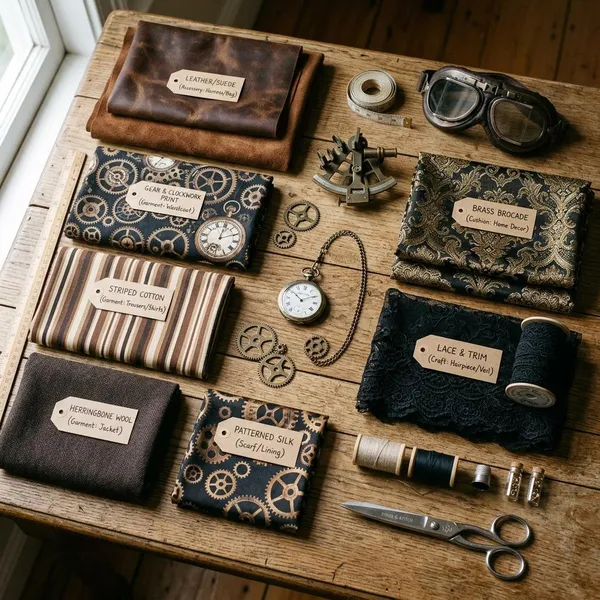
| Project type | Best starting fabric | Practical reason |
|---|---|---|
| Formal clothing | Brocade or velvet | Strong Victorian mood and visual depth |
| Cosplay worn for hours | Twill with faux leather accents | More durable and easier to move in |
| Bags and accessories | Canvas with cotton lining | Stable, strong, and easy to reinforce |
| Small crafts | Quilting cotton | Affordable, easy to cut, and print-friendly |
| Home decor | Upholstery fabric | Heavy enough for cushions, panels, and covers |
How to make plain fabric look steampunk
Plain fabric can absolutely look steampunk if the styling is controlled. The safest route is to keep the palette muted, add one or two contrasting textures, and use metal details where they make visual sense. Random gears and mismatched trims can make a project look busy rather than intentional.
For a budget project, start with cotton, twill, canvas, or a linen blend in a dark neutral color. Then add interest in layers: lace at an edge, faux leather at a stress point, or antique buttons near a closure. For a long-term piece such as a bag or room accessory, prioritize durability before decoration.
Use brown black and burgundy tones
Brown, black, and burgundy are reliable because they create contrast without looking too modern. Brown suggests aged leather and wood, black adds structure, and burgundy gives richness. If your fabric feels too plain, add one of these shades through trim, lining, ribbon, buttons, or straps instead of replacing the whole material.
Layer lace leather and textured fabric
Layering works best when each material has a role. Lace softens, faux leather structures, and textured woven fabric fills the base. A canvas pouch with leather tabs and one lace inset can look more balanced than a project covered in every trim available.
- Soft base: add faux leather or metal for definition.
- Heavy base: add lace or braid to break up the surface.
- Plain base: add one patterned panel instead of several competing prints.
Add buckles rivets and metal trims
Buckles, rivets, eyelets, chains, and metal buttons work when they look attached to the function of the piece. Rivets make sense on bag corners, buckles make sense on straps and cuffs, and buttons make sense near closures. Sprinkling hardware everywhere usually makes the project heavier without making it better.
Distress the surface carefully
Distressing should look like age, not damage. Tea dye, diluted paint, light sanding, edge fraying, waxy marks, or softened seams can work on cotton, canvas, and some faux leather. Test on scraps first, especially with brocade or lace, because aggressive distressing can weaken delicate fibers or ruin raised patterns.
Keep the materials visually consistent
Lay every fabric, trim, button, and metal piece together before sewing. If one item looks brand-new, plastic-bright, or from a completely different color family, it will probably stand out even more in the finished project.
Repeat at least one element across the piece, such as antique brass hardware, burgundy accents, black lace, or brown leather-look trim. That repetition is what makes mixed materials feel deliberate rather than random.
Conclusion
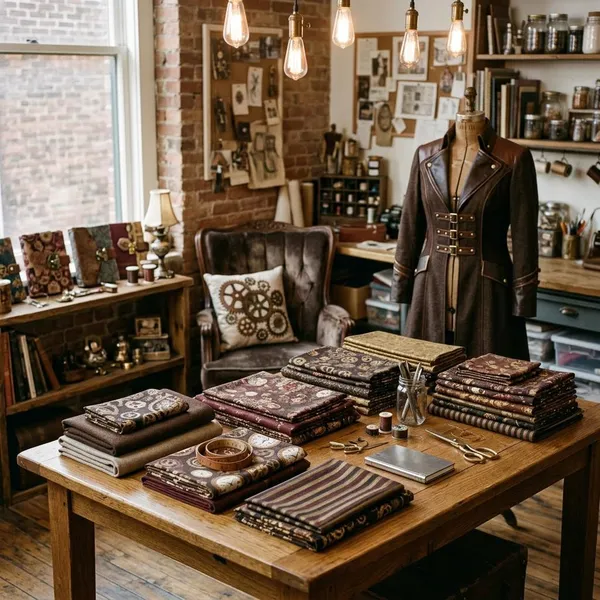
The right choice is usually the fabric that handles the project well before it looks decorative. Use brocade and velvet when drama matters, twill and faux leather when wearability matters, cotton and canvas when ease or durability matters, and upholstery fabric when the piece belongs in a room rather than on the body. Once the base is right, a restrained palette, layered texture, and a few well-placed aged details will do more than a pile of themed trims.
FAQ
What fabric works best for steampunk clothing?
For clothing, brocade, velvet, twill, and cotton blends are the safest choices. Pick brocade or velvet for formal pieces, and choose twill or cotton blends if comfort and easier sewing matter more.
Is printed cotton suitable for steampunk projects?
Yes, printed cotton works well for crafts, linings, pockets, and small accessories. Keep the print muted or use it in smaller areas if you want the project to look more polished than novelty-themed.
Can upholstery fabric be used for costumes?
Yes, but use it selectively. Upholstery fabric can work for vests, panels, collars, and dramatic outer pieces, while full garments may feel too heavy or stiff for long wear.
What colors are common in steampunk fabric?
Brown, black, burgundy, rust, olive, charcoal, cream, bronze, and antique gold are common. If you add brighter colors, keep them as accents so they do not overpower the aged industrial mood.
What fabric works best for steampunk clothing?
For clothing, brocade, velvet, twill, and cotton blends are the safest choices. Pick brocade or velvet for formal pieces, and choose twill or cotton blends if comfort and easier sewing matter more.
Is printed cotton suitable for steampunk projects?
Yes, printed cotton works well for crafts, linings, pockets, and small accessories. Keep the print muted or use it in smaller areas if you want the project to look more polished than novelty-themed.
Can upholstery fabric be used for costumes?
Yes, but use it selectively. Upholstery fabric can work for vests, panels, collars, and dramatic outer pieces, while full garments may feel too heavy or stiff for long wear.
What colors are common in steampunk fabric?
Brown, black, burgundy, rust, olive, charcoal, cream, bronze, and antique gold are common. If you add brighter colors, keep them as accents so they do not overpower the aged industrial mood.