
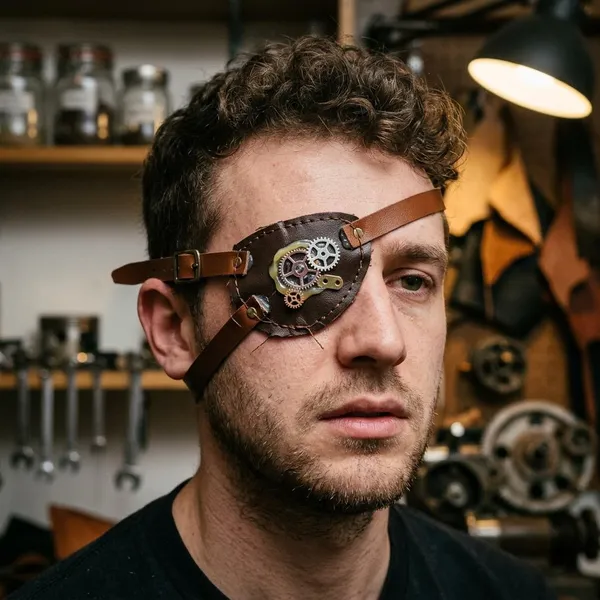
The best steampunk eye patch is the one that looks like part of your character without becoming annoying to wear. Start with fit, strap comfort, smooth backing, and weight; decoration comes after that. For a quick photo look, you can go bolder, but for a convention, party, or full evening costume, a lighter patch with one strong design idea usually works better.
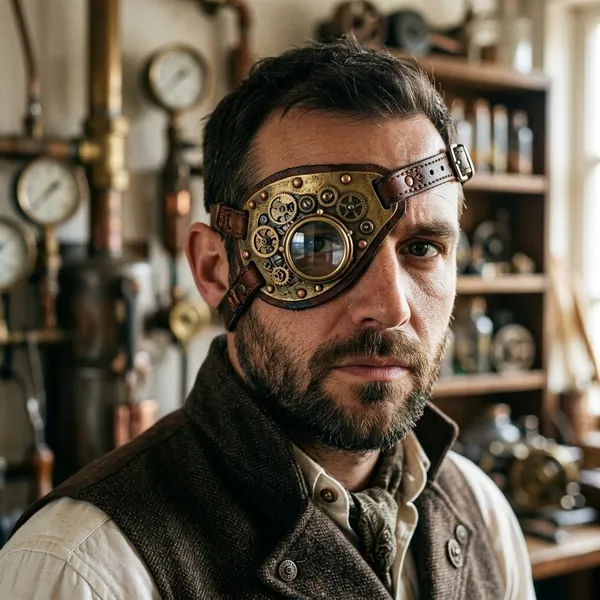
What makes an eye patch steampunk?
A patch starts to feel steampunk when it mixes Victorian styling with aged, mechanical, gothic, or industrial details. It does not need to be covered in gears. A shaped leather base, antique metal tone, dark finish, or carefully placed rivet can be enough if the design feels deliberate.
Victorian-inspired shapes
Victorian-inspired shapes make the patch feel designed rather than generic. Instead of a basic oval, look for a curved, pointed, asymmetrical, or mask-like outline. A softer shape suits a formal noble or inventor; a sharper shape feels better for a gothic character, pirate, or villain.
Leather and aged fabric
Leather and faux leather are the easiest materials for a convincing steampunk look because they already suggest belts, boots, travel cases, and handmade gear. Faux leather is often lighter and easier for a beginner to cut, while real leather can look richer if the edges are finished well.
- Use leather or faux leather for pirate, explorer, military, or simple everyday costume looks.
- Use velvet, brocade, canvas, or dark cotton for gothic or softer Victorian styling.
- Avoid shiny plastic-looking fabric unless the whole character is intentionally theatrical.
Brass and copper details
Brass, copper, bronze, and aged gold tones are classic choices because they echo machinery, instruments, buckles, and old metal trim. One small plate, corner piece, stud, or trim line can make a plain patch feel much more intentional.
Keep the metal light. A small brass accent near the outer edge usually wears better than several heavy pieces stacked on the front.
Gears, chains, and rivets
Gears, chains, and rivets work best as accents, not as proof that the patch is steampunk. Tiny gears can suggest an inventor; rivets create a tougher industrial feel; a short chain can suit a pirate or explorer. Real hardware is often heavier than it looks, so craft pieces, thin metal-look parts, resin, or foam details are usually more comfortable.
Gothic and industrial finishes
Finishing is what stops the patch from looking like a new craft-store object. Distressed edges, matte black paint, antique wax, smoky color, dry-brushed bronze, or slightly weathered leather can make the materials feel connected.
Glossy finishes are risky. They can look costume-shop cheap unless the rest of the outfit is equally polished. For most steampunk outfits, matte or aged surfaces are safer.
Popular steampunk eye patch styles
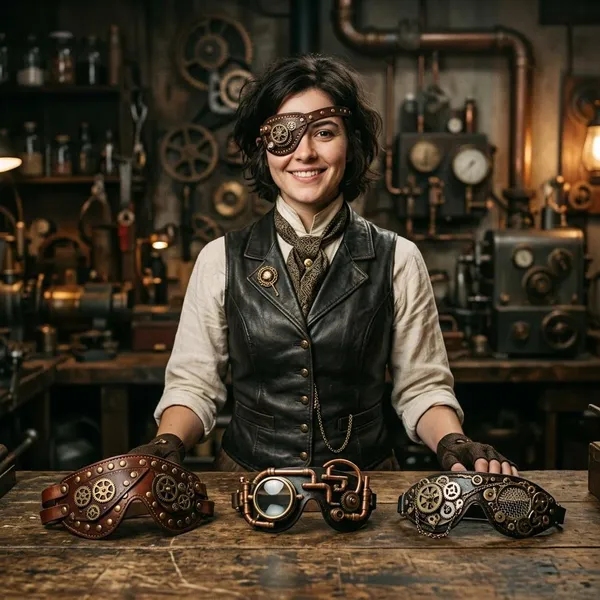
Different patch styles suit different characters, and choosing the style first makes the rest of the outfit easier to build. A pirate patch, gothic patch, and mechanical goggle patch all belong in steampunk, but they send very different signals.
Pirate eye patches
A pirate-style patch is the easiest starting point if you want something recognizable. Worn leather, a dark strap, brass studs, and a slightly rough finish work well for airship captains, smugglers, navigators, or treasure-hunter costumes.
Victorian gothic patches
Victorian gothic patches lean into dark elegance. Think black velvet, lace, embossed leather, filigree, deep red, purple, oxblood, or antique jewelry details. They suit characters such as occult scholars, mourning nobles, mysterious inventors, or theatrical aristocrats.
The main styling risk is overload. If the patch is ornate, keep at least one nearby area calmer, such as simpler earrings, a cleaner collar, or less decoration on the hat brim.
Military explorer designs
Military explorer designs look practical and field-ready. Brown leather, tan fabric, olive tones, stitched edges, small buckles, rivets, and map-like details suit officers, archaeologists, desert explorers, and expedition leaders.
- Best with: satchels, structured coats, utility belts, boots, gloves, and muted brass.
- Less ideal with: very shiny lace, neon colors, or decorations that feel too delicate for travel gear.
Mechanical goggle patches
Mechanical goggle patches are the boldest option. They may include a faux lens frame, vent shapes, tubing, screws, or gear details, making them a strong choice for engineers, machinists, artificers, and mad scientist characters.
Simple leather patches
A simple leather patch can look more believable than a heavily decorated one. Black, brown, oxblood, or deep green leather with neat stitching or a single rivet is enough for many outfits.
This is usually the best option for long wear, beginner cosplay, or anyone who wants the patch to support the costume rather than dominate the face.
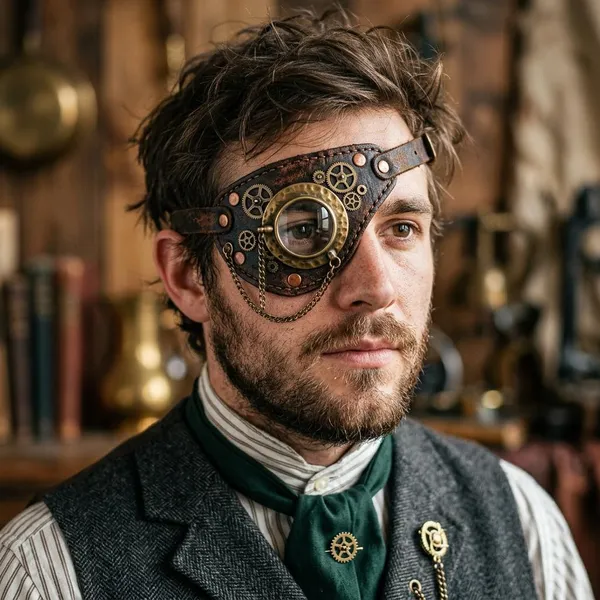
How to choose a steampunk eye patch
Choose in this order: fit first, comfort second, decoration third. A patch that looks impressive but rubs, slips, or blocks too much side vision will not feel worth wearing after an hour.
| Use situation | Better choice | What to avoid |
|---|---|---|
| Short photo shoot | Bolder shape, larger decoration, stronger character detail | Anything sharp near the skin or eye |
| Convention or all-day event | Lightweight base, soft backing, adjustable strap | Real metal hardware and tight elastic |
| Glasses or goggles involved | Flat patch, low side profile, flexible strap | Bulky side pieces and thick knots behind the ear |
| Hot venue or summer wear | Breathable backing, smooth edges, minimal weight | Stiff materials that trap sweat or scrape skin |
Match it to your character
Decide what the patch says before you buy or make it. A sky pirate may need rough leather and brass. A gothic noble may need velvet and filigree. A mechanic may look better with a goggle-inspired front and smaller gear details.
Choose a comfortable material
The outside can be dramatic, but the inside should be calm: smooth, soft, and free from hard glue, gritty paint, exposed stitching, or scratchy trim. A thin felt, fabric, or foam backing can make a large difference for long wear.
Check the strap adjustment
A good strap should hold the patch without squeezing your head. Thin elastic can dig in, especially behind the ear, while a wider covered elastic, soft ribbon, adjustable cord, or small buckle often feels better.
Test it with your actual hairstyle, hat, wig, or glasses. A strap that stays still on short hair may slide on smooth hair, and a band that feels fine alone may pinch once a hat is added.
Inspect the edges and backing
Run a finger around every edge and across the inside surface. If your finger catches on a corner, dried glue, rough stitch, or decorative backing, your skin will probably notice it faster.
- For bought patches: look for close-up photos of the inside, not only the decorated front.
- For DIY patches: sand, line, seal, or cover rough areas before decorating the front.
Consider weight and wear time
Weight decides whether the patch stays put. A light patch needs less strap pressure and usually feels better over several hours. A heavy patch may tilt forward, pull the band, or shift every time you turn your head.
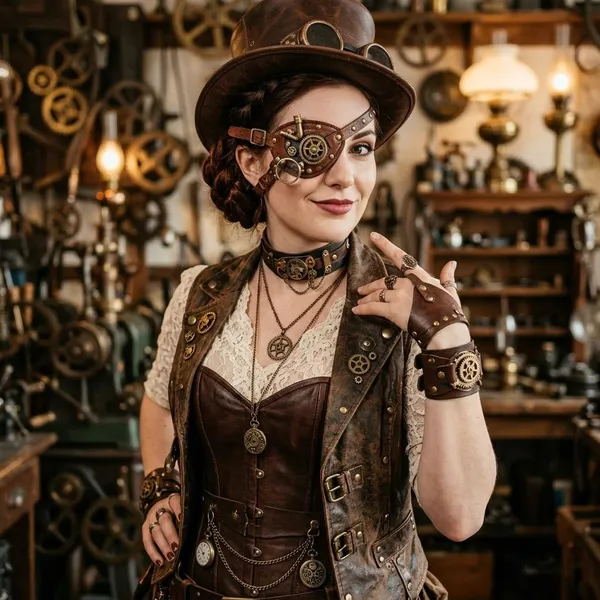
How to style a steampunk eye patch
A patch works best when it feels connected to the outfit around it. You do not need to match every piece, but the color, metal tone, material, and character mood should point in the same direction.
Match the metal tones
If the patch has brass, repeat brass somewhere else: buttons, buckles, jewelry, watch chains, goggle frames, or small bag hardware. The same idea works for copper, bronze, gunmetal, or aged gold.
Pair it with a hat
A hat frames the patch and quickly explains the character. A tricorn leans pirate, a top hat leans formal, a bowler can feel city-Victorian, and an explorer helmet or military cap supports an expedition look.
- Dramatic patch: choose a simpler hat shape or fewer hat decorations.
- Plain patch: let the hat carry more detail through goggles, trim, feathers, or a band.
Add goggles or eyewear
Goggles pair well with an eye patch when they are not fighting for the same space. Wearing goggles on a hat, forehead, or around the neck usually looks cleaner than crowding both eyes.
Balance it with the outfit
Balance is mostly about choosing one or two focal points. A rugged leather patch can handle detailed belts and boots. An ornate gothic patch may need calmer jewelry. A mechanical patch often looks better when the rest of the outfit includes workshop details, tools, or goggle shapes.
Keep nearby details minimal
The area around the eye gets crowded quickly. Large earrings, heavy bangs, hat straps, facial jewelry, feathers, and oversized goggles can all compete with the patch.
A simple trick is to move some detail away from the face. Put extra decoration on the opposite shoulder, hatband, belt, gloves, or bag instead. The patch stays visible, and the outfit looks more intentional.
Steampunk eye patch mistakes to avoid
Most bad eye patches fail for practical reasons, not style reasons. They are too tight, too heavy, too rough inside, or too large for safe movement. A costume accessory still has to behave well on your face.
Choosing an uncomfortable strap
A tight strap can leave marks, create ear pressure, or give you a headache. A loose strap makes the patch slide and forces constant adjusting.
Adding heavy decorations
Real gears, thick plates, large rivets, and layered metal can make the patch front-heavy. Once it starts pulling forward, the strap has to be tighter, which makes the whole piece less comfortable.
Blocking too much vision
A costume patch should not cover more than it needs to. If it extends too far toward the nose or cheek, walking through crowds, stairs, dim rooms, or uneven ground can feel awkward.
- Check side vision by turning your head and walking around the room.
- Check nose clearance so the inner edge does not press or rub.
- Check movement with the hat, wig, glasses, or goggles you plan to wear.
Using rough materials
Rough leather edges, scratchy fabric, hard plastic corners, dried glue, and exposed decorative backs can irritate the skin near the eye very quickly. The hidden side matters as much as the decorated side.
Line the inside, soften the edge, and seal any painted or cut surfaces. If the patch is handmade, do this before adding the final decorations so you can still fix the shape easily.
Treating a costume patch as medical gear
A steampunk costume patch is for styling, cosplay, photos, theatre, or themed events. It should not replace medical eye protection, recovery products, or anything recommended by an eye-care professional.
Conclusion
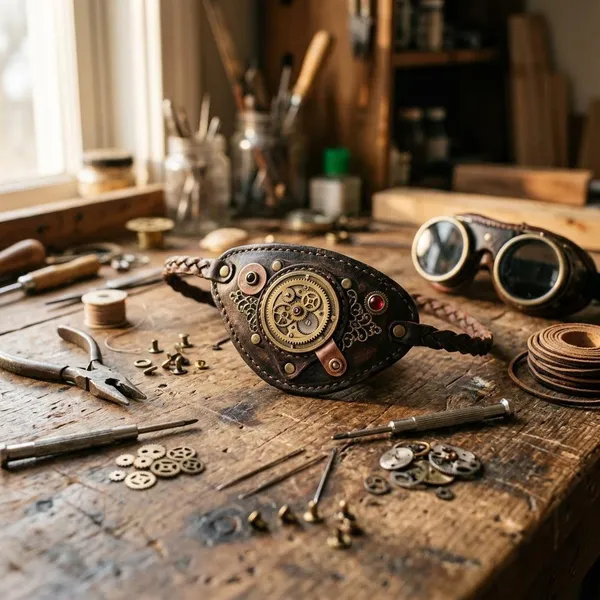
A strong patch is not the one with the most gears; it is the one that fits the character, stays comfortable, and looks connected to the outfit. If you are unsure, choose a lighter leather or faux leather base, add one or two aged metal details, and test the strap before committing to decoration. That usually gives you a patch that looks good in photos and still feels wearable after the first hour.
FAQ
Can you wear a steampunk eye patch all day?
Yes, but only if it is light, smooth inside, and adjustable. For all-day wear, avoid heavy front decorations and take breaks if you feel pressure, heat, or rubbing.
Can you wear glasses with a steampunk eye patch?
Yes, a flat patch with a thin or flexible strap usually works best. Test it with your glasses before the event because bulky side details can push the frames out of place.
Which side should a costume eye patch cover?
Either side is fine unless you are copying a specific character. Choose the side that works better with your hairstyle, hat angle, photos, and remaining field of view.
Can you wear a steampunk eye patch all day?
Yes, but only if it is light, smooth inside, and adjustable. For all-day wear, avoid heavy front decorations and take breaks if you feel pressure, heat, or rubbing.
Can you wear glasses with a steampunk eye patch?
Yes, a flat patch with a thin or flexible strap usually works best. Test it with your glasses before the event because bulky side details can push the frames out of place.
Which side should a costume eye patch cover?
Either side is fine unless you are copying a specific character. Choose the side that works better with your hairstyle, hat angle, photos, and remaining field of view.