
A steampunk desk should do two jobs at once: give your workspace that dark, vintage-mechanical character and still leave you with a comfortable place to work. Start with size and build quality before decorative details, because pipes, gears, and brass accents only look good if the desk fits your room and your daily routine.
What makes a desk steampunk
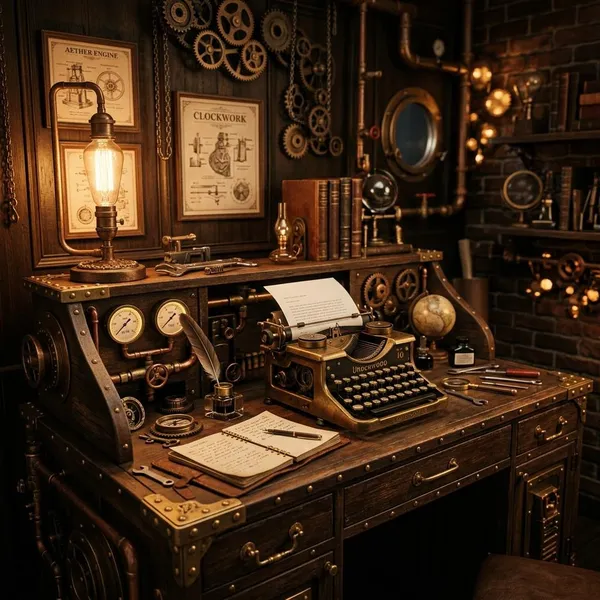
A desk feels steampunk when it blends old-world furniture with mechanical-looking details. Think dark wood, aged metal, brass hardware, visible fasteners, and hints of Victorian design rather than a clean modern office look.
Dark wood and aged metal
Dark wood is usually the visual base. Walnut, mahogany, espresso, stained oak, or weathered wood tones give the desk weight and warmth. Pairing that with aged brass, black iron, bronze, or gunmetal creates the mechanical contrast that makes the style recognizable.
For everyday use, muted finishes are easier to live with than glossy ones. A slightly worn metal handle or matte dark surface hides small marks better than bright chrome or high-shine lacquer.
Brass pipes gears and rivets
Brass pipes, gear shapes, and rivets work best as accents, not as the whole design. A pipe-style frame, gear drawer knobs, or riveted trim can be enough to suggest the look without making the desk feel like stage furniture.
- Good use: pipe legs, brass handles, small gear details, corner brackets.
- Easy to overdo: oversized gears, sharp protruding pieces, random fittings with no visual purpose.
- Practical check: make sure decorative parts do not catch cables, block drawers, or hit your knees.
Victorian-inspired details
Victorian influence is what separates a steampunk desk from plain workshop furniture. Curved legs, paneled drawers, carved edges, cup pulls, label holders, and shaped brackets add a more historical, study-like feeling.
Visible mechanical accents
Visible bolts, crank-style handles, metal braces, pipe fittings, and wheel-like knobs give the desk its engineered character. These details should look intentional and sturdy, not simply glued on.
Practical features within a bold design
A bold desk still needs the boring basics: stable legs, enough surface depth, comfortable legroom, useful storage, and a layout that can handle modern devices. For a laptop-only setup, a smaller desk may work well. For dual monitors, speakers, a drawing tablet, or paperwork, the desktop needs to be wider and deeper than the photos may suggest.
How to choose a steampunk desk
Choose the desk in this order: space, work needs, construction, storage, then style details. That order prevents the most common mistake, which is buying the most dramatic-looking piece and discovering later that it is too cramped or awkward to use.
Measure the available space
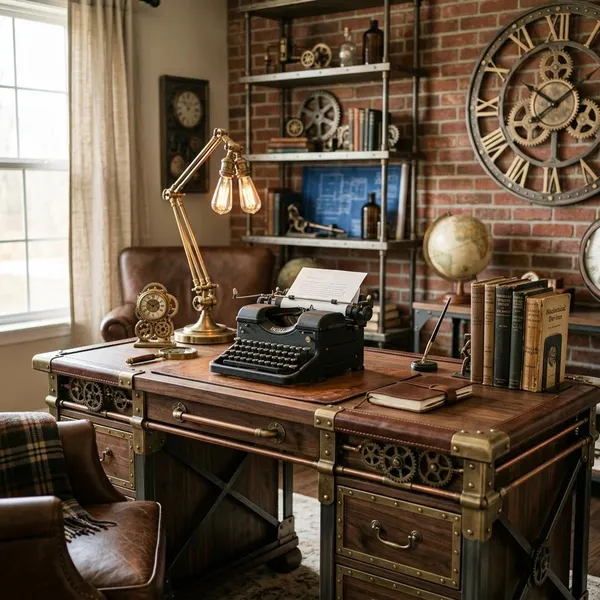
Measure the width, depth, and height of the area before you shop. Leave room for the chair to move back, drawers to open, and people to walk past. A steampunk desk often feels visually heavier than a simple white or glass desk of the same size, especially when it has dark finishes or pipe-style side frames.
Match the size to your work
The right size depends on what stays on the desk every day. A laptop, notebook, and lamp need far less space than two monitors, a microphone, speakers, and open documents.
| Typical use | What to prioritize |
|---|---|
| Laptop, writing, light admin | Compact width, comfortable chair clearance, one small drawer or tray |
| Daily office work with monitor | More depth, stable top, cable route behind or under the desk |
| Gaming, design, or creative projects | Wider surface, stronger frame, storage that keeps tools off the desktop |
Check materials and construction
Look past the finish and check how the desk is built. Solid wood is attractive and durable, but good engineered wood with a thick veneer can also work if the frame is stable. Metal parts should feel supportive, not thin or decorative only.
Compare storage and cable management
Storage should match your habits. Drawers are useful for stationery, chargers, and paperwork; open shelves work better for books and display pieces. Closed storage is usually better if you want the desk to look clean most of the time.
Cables need a plan too. Check whether cords can pass behind the desk, under the top, or through a gap without being pulled across the surface. Steampunk styling already has a lot of visual texture, so loose wires can make the whole setup look messy quickly.
Set a realistic budget
Set a budget for the full workspace, not only the desk. A good chair, warm lamp, storage box, or shelf may do more for the final look than spending everything on the desk itself.
- Lower budget: choose a solid plain desk and add hardware or lighting later.
- Mid-range budget: look for better materials, stronger storage, and restrained metal accents.
- Higher budget: consider custom sizing, real wood, and handcrafted metal details.
How to turn a regular desk into a steampunk desk
A regular desk can become convincing if the shape is sturdy and the proportions already work for your space. Focus on the parts people notice first: handles, lighting, visible hardware, and finish.
For a rental, temporary setup, or small room, use reversible changes like lamps, handles, trays, and clamp-on accessories. For a long-term desk you plan to keep, staining, painting, and adding fixed brackets can make the transformation feel more permanent.
Add aged metal hardware
Start with antique brass, bronze, or blackened metal hardware. Corner plates, small brackets, label holders, and trim pieces can change the tone of a plain desk without affecting how it works.
Fit decorative pipes and brackets
Decorative pipes and brackets can strengthen the mechanical look, but placement matters more than quantity. Add them along the sides, under shelves, or near the frame where they look like part of the structure.
- Keep knee space clear.
- Avoid sharp edges near your chair path.
- Do not block drawers or cable access.
- Use fewer, better-placed pieces in small rooms.
Replace modern handles and knobs
Modern chrome bars or plastic knobs can make the whole desk feel too current. Swap them for cup pulls, label-frame handles, dark metal knobs, or gear-inspired pulls.
If the old screw holes do not match the new hardware, use backplates to cover the marks neatly. This small fix often looks more intentional than trying to hide filled holes with stain or paint.
Use warm vintage-style lighting
Warm lighting changes the mood immediately. Brass task lamps, cage shades, swing-arm lamps, or Edison-style bulbs can make dark wood and aged metal look richer.
Apply a worn wood or metal finish
A darker stain, matte metal paint, aging wax, or light edge distressing can remove the factory-new look. Test any product on a hidden area first, especially on veneer or laminate, because some finishes do not absorb stain like real wood.
How to style a steampunk desk setup
The setup around the desk decides whether the style feels finished or random. Use a few matching materials across the chair, lighting, storage, and accessories, then leave enough empty space for the desk itself to stand out.
Pair it with a leather chair
A brown, oxblood, dark tan, or distressed black leather chair pairs naturally with dark wood and aged metal. If you use the desk daily, comfort should win over perfect styling. A supportive modern office chair in leather or leather-look upholstery can be a better choice than a beautiful vintage chair you cannot sit in for long.
Add brass or cage lighting
Brass lamps, cage shades, exposed-bulb designs, and warm wall lights all support the steampunk mood. If the desktop is small, use a floor lamp or wall-mounted light instead of giving up valuable surface space.
Use matching shelves and storage
Shelves and storage should repeat the desk's main materials. Wood-and-metal shelves, dark drawer units, trunk-style boxes, or storage with aged handles can pull the room together without needing everything to match perfectly.
Choose vintage desk accessories
Pick accessories that earn their place. A leather desk pad, brass clock, metal pen cup, old-style notebook, magnifier, or small globe can add character, but too many small objects make the desk look cluttered rather than curated.
- Useful first: lamp, tray, pen holder, cable box, desk pad.
- Decorative second: clock, globe, bookend, small mechanical accent.
- Skip if crowded: novelty gears, fake props, anything that steals working space.
Keep the surface free from clutter
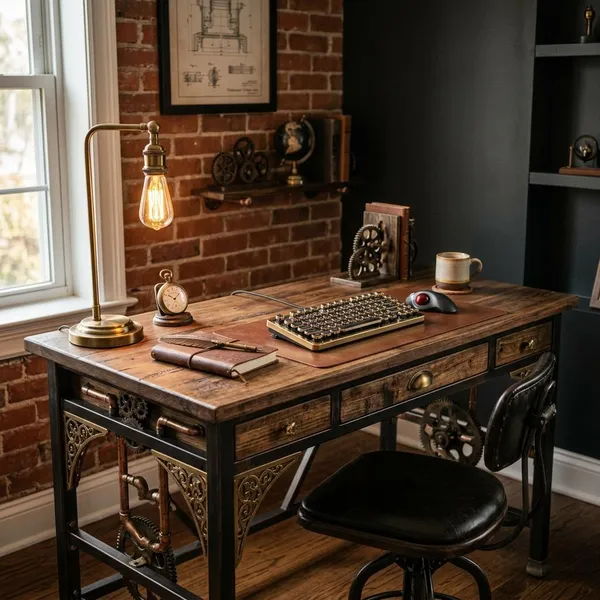
A steampunk desk already has strong materials and details, so empty space is part of the styling. Keep only the items you use often on the desktop and move chargers, loose papers, and small tools into drawers, trays, or boxes.
Conclusion
A good steampunk desk is not the one with the most gears; it is the one that fits your room, supports your work, and uses dark wood, aged metal, and vintage details with restraint. If you get the size and comfort right first, the styling becomes much easier to build around without turning the workspace into clutter.
FAQ
Are steampunk desks practical for everyday work?
Yes, if the desk has enough surface depth, legroom, stability, and storage for your routine. The style becomes impractical only when decorative parts get in the way or the desk is chosen for looks alone.
What materials suit a steampunk desk?
Dark wood, stained veneer, black iron, steel, brass, bronze, leather, and aged metal finishes all suit the look. For daily use, choose materials that feel stable and easy to clean, not just decorative in photos.
How is a steampunk desk different from an industrial desk?
An industrial desk is usually simpler, rawer, and more workshop-like. A steampunk desk uses some of the same wood and metal ideas but adds Victorian shapes, brass accents, and more imaginative mechanical detail.
Are steampunk desks practical for everyday work?
Yes, if the desk has enough surface depth, legroom, stability, and storage for your routine. The style becomes impractical only when decorative parts get in the way or the desk is chosen for looks alone.
What materials suit a steampunk desk?
Dark wood, stained veneer, black iron, steel, brass, bronze, leather, and aged metal finishes all suit the look. For daily use, choose materials that feel stable and easy to clean, not just decorative in photos.
How is a steampunk desk different from an industrial desk?
An industrial desk is usually simpler, rawer, and more workshop-like. A steampunk desk uses some of the same wood and metal ideas but adds Victorian shapes, brass accents, and more imaginative mechanical detail.