
If you are choosing a steampunk coffee maker, decide first whether you want a real daily brewer, a slow coffee ritual, or a dramatic display piece. The look matters, but the brewing method matters more once the machine is sitting on your counter. Check function, cleaning access, food-safe parts, and size before being swayed by copper pipes, gauges, or gears.
Main types of steampunk coffee makers
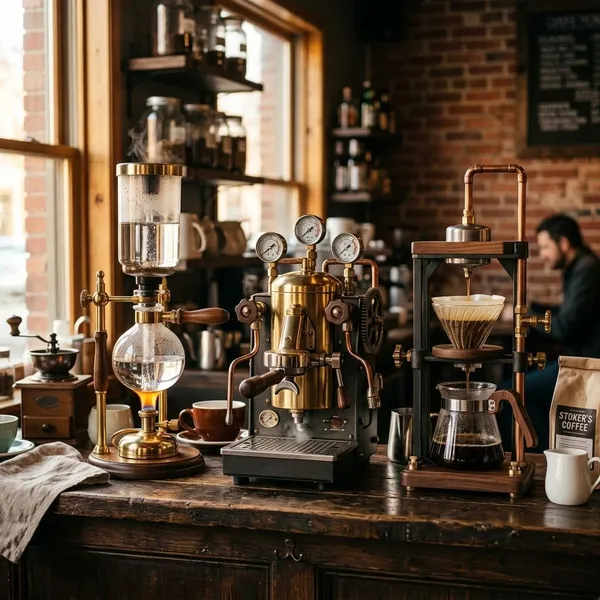
Steampunk coffee makers usually fall into two groups: functional brewers with vintage-industrial styling, and decorative builds that are mainly made to create atmosphere. A practical machine should still be judged like any other coffee maker: how it brews, how easy it is to clean, and whether the parts that touch water and coffee are suitable for regular use.
Espresso machines for pressure brewing
Espresso machines are the best match if you want strong coffee quickly and expect to use the machine often. Many steampunk-style espresso units hide modern pumps, boilers, thermostats, and safety controls behind copper panels, brass fittings, analog gauges, or lever-style details.
Siphon brewers for visual brewing
A siphon brewer suits people who enjoy the brewing process as much as the cup. Water moves between glass chambers through heat and vapor pressure, which gives the whole setup a laboratory feel that naturally fits steampunk design.
Cold drip towers for slow extraction
Cold drip towers are made for patient brewing. Water falls slowly through coffee grounds over several hours, creating a chilled brew that is usually smoother and less sharp than hot coffee poured over ice.
They make the most sense if you drink iced coffee often, especially in warm weather or in a home bar setup. If you only want one hot cup before work, a cold drip tower is better as a second brewer than as your main machine.
French presses for simple daily use
A French press is the easiest way to get the steampunk look without taking on complicated equipment. It has no pump, no wiring, and fewer parts to fail, so it works well for beginners, small kitchens, and anyone who wants a low-commitment daily brewer with brass, copper, wood, or antique-style details.
Decorative machines for display
Some steampunk machines are mostly visual objects. They may have pipes, gears, gauges, reclaimed metal, and dramatic frames, but that does not automatically mean they brew coffee safely or well. Treat them as decor unless the seller can clearly explain how the brewing system works.
- Actual function: Does it brew coffee, heat water, or only imitate a machine?
- Food-contact safety: Are the internal water and coffee paths made from suitable materials?
- Service access: Can seals, filters, glass parts, or fittings be replaced without rebuilding the piece?
Which brewing style suits your needs
The right choice depends on your routine, not just your taste in décor. A large copper-and-glass machine may look perfect in photos, but it can become annoying if it takes too long to clean or does not fit under your cabinets.
| Best fit | Choose this style | Be careful if |
|---|---|---|
| Fast strong coffee | Espresso | You dislike adjusting grind, dose, and cleaning small parts |
| Slow presentation | Siphon | You need coffee quickly every morning |
| Cold coffee batches | Cold drip | You mostly drink hot coffee on demand |
| Simple home brewing | French press | You want café-style espresso drinks |
| Themed interior impact | Display build | You expect it to perform like a normal appliance |
How to care for a steampunk coffee maker
Care has two sides: keeping the brewing path clean and protecting the decorative finish. Coffee oils affect taste, mineral scale affects performance, and moisture can mark copper, brass, wood, or plated details.
Use the maker's instructions first, especially for machines with heat, pressure, electricity, or custom parts. When instructions are vague, be cautious around anything that touches water, coffee, steam, or food-contact surfaces.
Clean the brewing parts after use
Clean the parts that touch coffee after each use. Grounds, oils, and fine sediment can turn stale quickly, especially in filters, baskets, screens, glass chambers, and French press plungers.
- Rinse early: Coffee residue is easier to remove before it dries.
- Separate function from decoration: Clean brewing parts thoroughly, but treat exterior finishes gently.
- Watch hidden corners: Gauges, frames, and brackets can trap splashes near the brew area.
Descale the internal system regularly
Any brewer that heats water can develop mineral buildup. Hard water and daily use usually mean more frequent descaling, while occasional use with filtered water may need less attention.
Use a descaler and process suitable for the actual brewing system, not just the outer material. Narrow tubes, valves, boilers, and custom pathways can be more sensitive than they look, so avoid improvised chemicals unless the maker says they are safe.
Protect copper and brass finishes
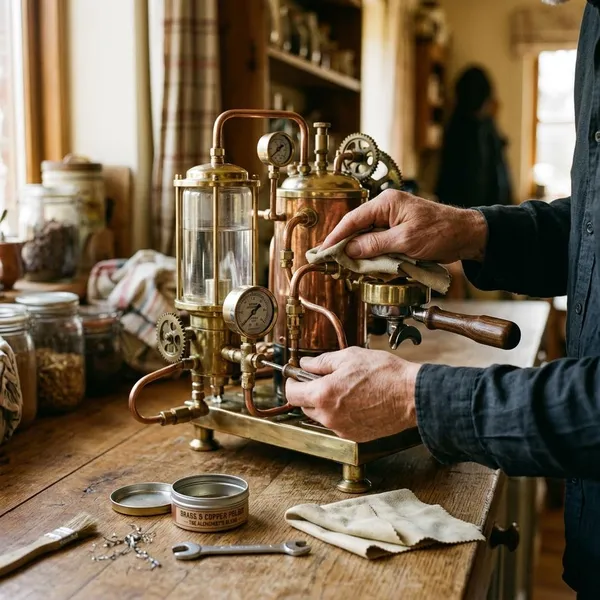
Copper and brass can look polished, aged, or lightly patinated, but moisture often creates uneven marks if you ignore it. Wipe exterior metal after steamy brewing sessions and dry it fully around seams, handles, and decorative fittings.
Before using metal polish, find out whether the surface is raw, plated, lacquered, or only copper-colored. Keep polish away from any area that touches water or coffee unless the product is clearly meant for that use.
Check seals valves and fittings
Seals, valves, and fittings deserve attention because steampunk styling often makes these parts visible. Look for drips, loose joints, pressure loss, wobbling frames, or changes in flow. Small leaks are easier to deal with early than after they stain wood, damage metal, or affect brewing.
Keep decorative parts dry and secure
Decorative parts may not change the taste of the coffee, but they decide how well the machine ages. Wood trim, ornamental gauges, exposed screws, brackets, and reclaimed metal should stay dry, firmly attached, and away from constant steam when possible.
If the machine is moved often or used in a busy kitchen, do a quick stability check every few weeks. Tighten only what is meant to be tightened, and avoid forcing old or decorative fittings that may be fragile.
Conclusion
The best choice is the one that matches how you actually drink coffee: espresso for fast strong cups, siphon for a showy ritual, cold drip for planned chilled coffee, French press for simple daily use, and display builds for atmosphere first. If a machine looks wonderful but is hard to clean, unsafe to brew with, or too large for your space, it is probably better treated as decor than as your main coffee maker.
FAQ
Do steampunk coffee makers make good coffee?
Yes, if the brewing system underneath is good. The steampunk exterior does not improve flavor by itself; temperature control, grind, filtration, pressure, and cleanliness do the real work.
Are steampunk coffee makers expensive?
They can be. A styled French press may be affordable, while a handmade espresso machine, cold drip tower, or custom display build can cost much more because of metalwork, glass, and small-batch construction.
Are copper coffee machines safe to use?
They can be safe when the water and coffee path uses suitable food-contact materials. Be more cautious with handmade or decorative pieces, and ask exactly which parts touch hot water or brewed coffee.
Can a steampunk machine use modern technology?
Yes. Many of the most usable designs combine vintage-looking exteriors with modern heating, pumps, thermostats, and safety features, which is usually better for regular brewing than a purely ornamental build.
Do steampunk coffee makers make good coffee?
Yes, if the brewing system underneath is good. The steampunk exterior does not improve flavor by itself; temperature control, grind, filtration, pressure, and cleanliness do the real work.
Are steampunk coffee makers expensive?
They can be. A styled French press may be affordable, while a handmade espresso machine, cold drip tower, or custom display build can cost much more because of metalwork, glass, and small-batch construction.
Are copper coffee machines safe to use?
They can be safe when the water and coffee path uses suitable food-contact materials. Be more cautious with handmade or decorative pieces, and ask exactly which parts touch hot water or brewed coffee.
Can a steampunk machine use modern technology?
Yes. Many of the most usable designs combine vintage-looking exteriors with modern heating, pumps, thermostats, and safety features, which is usually better for regular brewing than a purely ornamental build.