
A steampunk chair is worth choosing for more than its gears, leather, and antique-metal look. The right one should match how you actually sit: quick meals, long workdays, reading sessions, or occasional display seating. Start with purpose, size, and comfort first, then decide how dramatic the design should be.
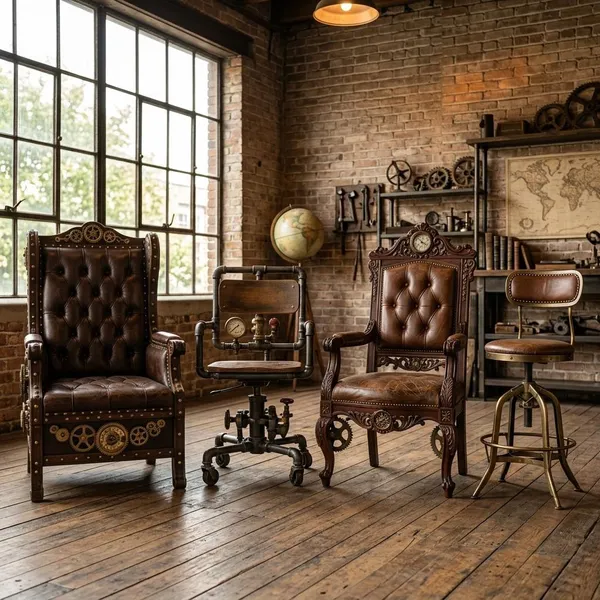
Popular steampunk chair styles
Steampunk seating can be subtle or theatrical, but the best style depends on where the chair will live. A dining chair needs different proportions from a lounge chair, and a desk chair has to work harder than a decorative accent piece.
Accent chairs
Accent chairs are the easiest way to add steampunk character without turning the whole room into a theme. Look for dark wood, worn leather, tufting, nailhead trim, aged brass, or small mechanical details that feel built into the design rather than glued on afterward.
Office chairs
A steampunk office chair needs to earn its place as a working chair first. Swivel, height adjustment, arm position, seat depth, and back support matter more than decorative rivets if you sit at a desk for several hours.
- Daily work: prioritize lumbar support, stable casters, and adjustable height.
- Occasional desk use: a vintage-style leather chair can be less technical but should still support your back.
- Small home office: avoid oversized arms or bulky bases that stop the chair from sliding under the desk.
Dining chairs
Dining chairs usually look better when the steampunk details are controlled. A full set with heavy gears, thick arms, and bulky frames can overwhelm a table fast. Leather seats, dark stained wood, slim metal frames, or rivet trim are often enough.
Before buying a set, check whether the chair height works with your table and whether guests can move the chairs easily. For quick breakfasts, a firmer seat is fine. For long dinners, a shaped back and light padding make a bigger difference than extra decoration.
Lounge chairs
Lounge chairs suit the richer side of the style: rolled arms, aged leather, deep seats, dark timber, and metal hardware that feels a little like an old workshop or travel trunk. They work best in studies, reading spaces, media rooms, or a large living room corner.
Bar stools
Bar stools are a practical way to bring in the look without using much floor space. Iron-style frames, screw-height seats, round wood tops, leather pads, and foot rails all fit the style well.
Comfort depends on the counter fit. Leave enough room for knees, choose a stable base, and do not skip the footrest. Backless stools save space, but for a kitchen island used every day, a low back or shaped seat is usually easier to live with.
How to choose a steampunk chair
The best way to choose is to separate must-haves from style extras. First check purpose, room size, frame quality, and comfort. After that, compare upholstery, metal finish, and decorative details.
| Check first | Why it matters | When to be stricter |
|---|---|---|
| Purpose | Controls seat shape, support, and durability | Daily office work, dining sets, or long reading sessions |
| Space | Prevents a chair from blocking walkways or feeling oversized | Small apartments, narrow doors, or tight desk areas |
| Frame | Decides whether the chair will last beyond the look | Heavy use, upcycling, or custom builds |
| Comfort | Keeps a statement piece from becoming unused furniture | Any chair used for more than short sitting |
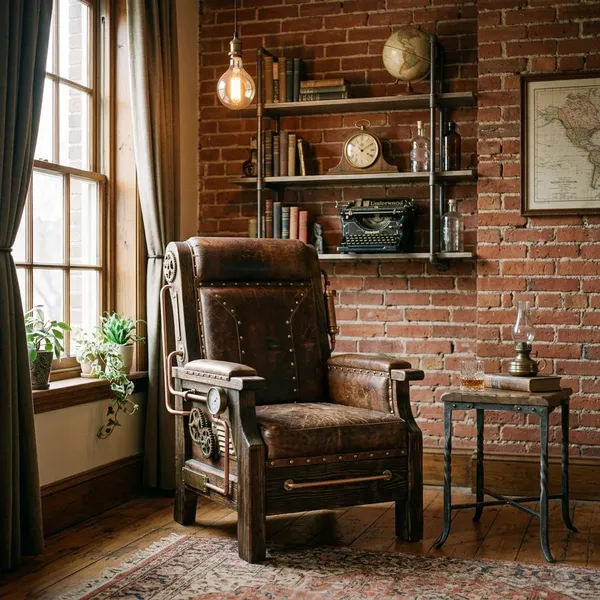
Ways to get a steampunk chair
You can buy one finished, commission a custom piece, upcycle a vintage chair, or build from scratch. The right route depends on how much control you want and how much work you are willing to take on.
Buy a ready-made chair
Ready-made is the fastest option and the safest choice if you want clear dimensions, normal delivery, and a return policy. It works well for renters, finished rooms, or anyone who wants the look without a project.
The weak point is sameness. Some mass-market chairs rely on printed distressing, thin faux leather, or decorative metal that does not hold up well. Zoom in on product photos, look for customer images, and avoid listings that show style words but vague construction details.
Order a custom design
Custom design makes sense when size or function is hard to find off the shelf. You might need a compact desk chair, a matching dining set, or a bar stool at a specific height. Ask for drawings, exact dimensions, material samples, and a clear timeline before paying a deposit.
Upcycle a vintage chair
Upcycling is often the most satisfying middle path. You start with a chair that already has age, shape, or better construction, then add the leather, dark finish, metal trim, or rivets that push it toward steampunk style.
This route suits someone who wants a unique result without paying for a full custom commission. It is less suitable if the chair needs major structural repairs or if you want a perfectly matched set with no variation.
Build one from scratch
Building from scratch gives the most freedom, but it is also the least forgiving option. A chair has to support weight safely, sit level, and stay comfortable after more than a few minutes. If you are not confident with joinery, metalwork, or structural design, start with upcycling instead.
How to upcycle a chair with steampunk style
A good upcycle does not mean covering a chair with random cogs. The strongest results usually come from a sturdy base, careful repair, dark upholstery, controlled metal accents, and an aged finish that still looks clean enough for everyday use.
- Start with structure: only use a chair that feels stable.
- Clean and repair first: do not hide wobble, rust, or loose joints under decoration.
- Choose a tight palette: dark wood, brown or black leather, and one metal tone usually look better than many finishes.
- Keep comfort visible: padding and usable seat depth matter as much as the theme.
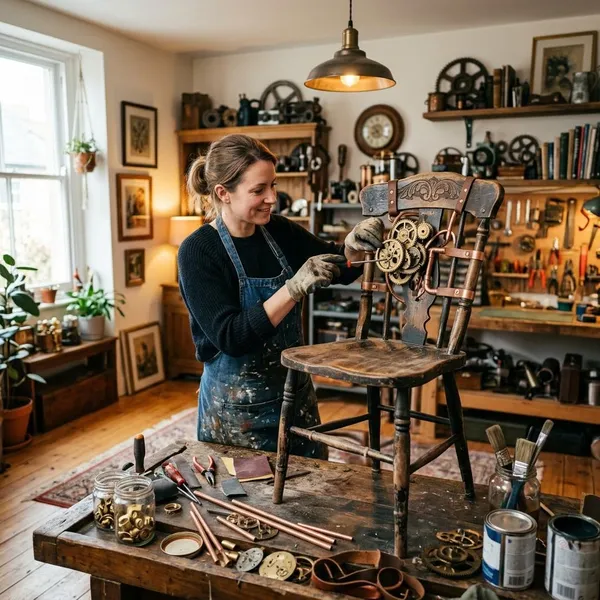
Choose a sturdy base chair
Pick a chair with good bones: solid wood, heavy vintage construction, or a strong metal frame. Wiggle the legs, press on the back, and check whether the seat can be removed or reupholstered. Surface scratches are fine; a failing frame is not.
Old dining chairs, office chairs, and armchairs can all work. A chair with curved arms, turned legs, panel details, or a slightly formal silhouette already gives you a better starting point than a flimsy modern chair with no character.
Repair and prepare the frame
Tighten joints, replace missing screws, sand rough areas, and remove active rust before adding style details. Weathered should look deliberate, not dirty or unsafe. Paint, stain, and protective finishes also last better when the surface is properly prepared.
Add leather or dark fabric
Brown, chestnut, oxblood, black, and deep charcoal fabrics all work well. Real leather gives the richest effect, but durable faux leather or heavy woven fabric can be a better choice for a low-budget project or a chair used by children or pets.
Do not choose upholstery by color alone. Check how it handles friction, cleaning, and stretching around corners. If the seat foam is flat or crumbling, replacing it will improve the finished chair more than adding extra trim.
Fit metal and rivet details
Use metal where it looks believable: along upholstery edges, on corners, around arms, or near frame joints. Brass, aged bronze, blackened steel, and iron-style finishes are easier to blend than bright chrome.
- Avoid sharp edges where hands, legs, or clothing may catch.
- Repeat one finish so the chair feels designed rather than decorated in pieces.
- Use restraint with gears; a few details usually look stronger than a crowded surface.
Finish with an aged effect
Use stain, glaze, wax, matte paint, or a patina-style finish to bring the parts together. The goal is depth, not damage. A slightly worn edge or softened metal tone can look convincing, while heavy distressing can make the chair seem neglected.
Conclusion
Choose the chair that fits your real use first, then let the style follow. A bold design is worth it when the proportions, frame, and comfort are right; if those basics are weak, even beautiful leather and metalwork will not make the chair enjoyable to live with.
FAQ
How is a steampunk chair different from an industrial chair?
Steampunk is usually more decorative and warmer, with Victorian influence, leather, brass tones, rivets, and a sense of invented machinery. Industrial style is often simpler, cleaner, and more warehouse-like.
Can a steampunk chair work in a modern room?
Yes, especially as one strong focal piece. Keep the rest of the room calmer, repeat one material such as leather or dark metal elsewhere, and avoid making every accessory match the theme.
Which materials last longest on a steampunk chair?
Strong hardwood, steel or iron frames, quality leather, and tightly fixed hardware usually age best. Construction still matters most; premium materials will not help much if the joints are weak.
How is a steampunk chair different from an industrial chair?
Steampunk is usually more decorative and warmer, with Victorian influence, leather, brass tones, rivets, and a sense of invented machinery. Industrial style is often simpler, cleaner, and more warehouse-like.
Can a steampunk chair work in a modern room?
Yes, especially as one strong focal piece. Keep the rest of the room calmer, repeat one material such as leather or dark metal elsewhere, and avoid making every accessory match the theme.
Which materials last longest on a steampunk chair?
Strong hardwood, steel or iron frames, quality leather, and tightly fixed hardware usually age best. Construction still matters most; premium materials will not help much if the joints are weak.