
Steampunk bedding works best when the bed still feels like a place you want to sleep, not a prop from a themed room. Start with comfortable base fabrics, choose one strong Victorian or industrial feature, then keep the supporting layers quieter so the look feels moody, warm, and usable every night.
What makes bedding look steampunk
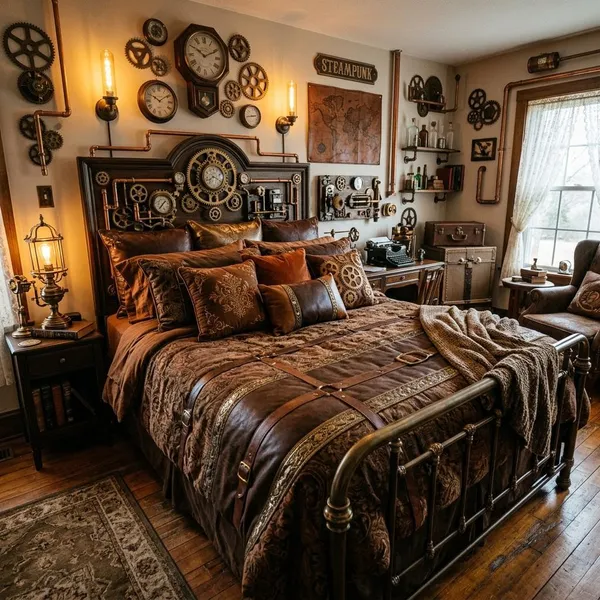
The steampunk look usually comes from a mix of antique color, Victorian pattern, mechanical details, and layered texture. The mistake is trying to use all of them at full strength. For a bedroom, one obvious style signal is usually enough, with the rest handled through color and fabric.
Dark earthy colors
Charcoal, espresso, rust, tobacco brown, burgundy, deep olive, and antique gold give steampunk bedding its grounded mood. If your room is small or low on natural light, keep the darkest color on one main layer and use taupe, warm gray, or faded cream near the pillows so the bed does not feel visually heavy.
Gears clocks and map prints
Gears, clocks, compasses, and old map prints are the clearest themed choices, so they need the most restraint. A clockwork duvet or map-print comforter can carry the whole bed; repeating the same motif on sheets, pillows, curtains, and wall art often makes the room look costume-like.
Victorian patterns and ornate details
Damask, brocade-style motifs, scrollwork, ornamental borders, tufting, piping, and covered buttons bring in the Victorian side of the style. These details are useful when you want a more grown-up look than obvious gears everywhere.
Leather-look and metallic accents
Leather-look panels, bronze buttons, copper stitching, or antique brass trims work best on small pieces such as a lumbar pillow or cushion. Avoid large leather-like sleeping surfaces unless you already know you like that feel, because they can be warm, stiff, or slippery compared with normal bedding.
Layered industrial textures
Texture is what stops a dark bed from looking flat. A simple mix might be cotton sheets, a washed duvet cover, a quilt at the foot of the bed, and one velvet or faux leather accent pillow.
- Use soft layers where you sleep: sheets, pillowcases, and duvet covers should feel breathable first.
- Save dramatic textures for accents: velvet, faux leather, heavy jacquard, or metallic trim work better in small doses.
- Check the room from the doorway: if every layer demands attention, remove one pattern before adding another detail.
Best materials for steampunk bedding
The best material depends on which layer you are buying. Sheets and pillowcases should be comfortable and washable; throws, shams, and decorative pillows can do more of the visual work. This is the easiest way to keep the style without sacrificing sleep.
Cotton for everyday comfort
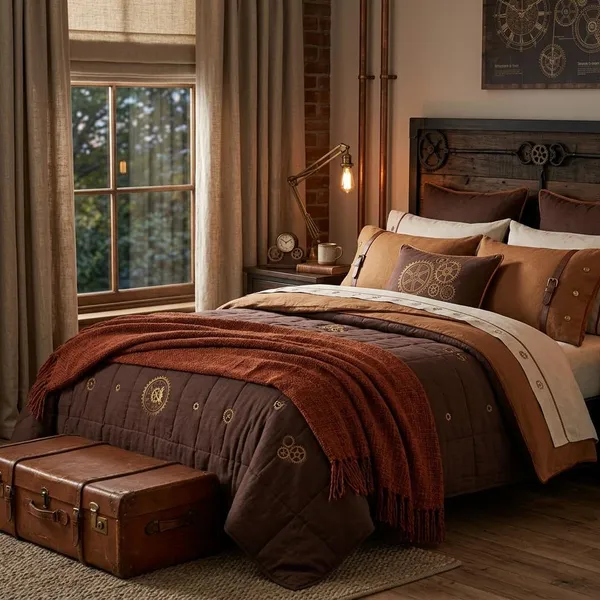
Cotton is the safest everyday choice for steampunk bedding because it is breathable, easy to wash, and available in dark solids or antique-style prints. Warm sleepers may prefer crisp percale, while sateen gives a smoother, slightly richer finish that suits the Victorian side of the look.
Linen for a textured natural look
Linen works well if you want the bed to feel relaxed rather than polished. Its rumpled texture fits old-world, travel-worn styling even when the color is plain, so a flax, tobacco, olive, or charcoal linen duvet can look steampunk without needing a bold print.
Velvet for rich decorative layers
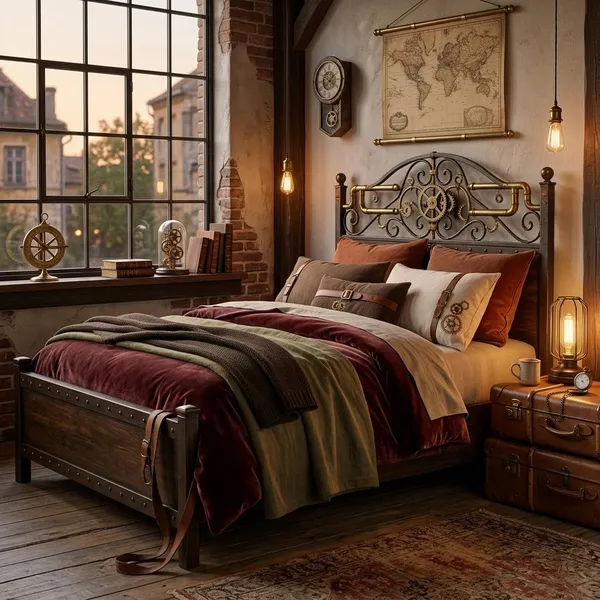
Velvet adds instant drama, but it is usually better as a throw, quilt, or cushion than as the main bedding you sleep under every night. One wine, bronze, navy, or deep green velvet piece can make a plain bed feel richer without making it harder to maintain.
Jacquard for Victorian detail
Jacquard is useful when you want pattern without a flat printed look. Because the design is woven into the fabric, damask or brocade-inspired jacquard can feel more traditional and less novelty-based.
Use it where structure helps: coverlets, shams, euro pillows, or a decorative top layer. Keep the sheets underneath simpler so the bed still feels soft against the skin.
Brushed fabrics for added warmth
Brushed cotton, flannel-like finishes, and lightly napped fabrics are good choices for cooler rooms or winter styling. They soften the heavier colors often used in steampunk bedrooms and make the bed feel cozy instead of severe.
What you need for a steampunk bed
You do not need a full matching set. A better formula is one statement layer, plain comfortable basics, and a few pieces that add texture or detail. That keeps the bed easy to make, easy to wash, and less likely to feel overdesigned.
A statement duvet or comforter
The duvet or comforter is the largest visible surface, so choose it first if you are starting from scratch. A faded map print, dark damask, clockwork design, or deep rust-brown cover can set the whole mood.
A duvet cover is often more practical than a fixed comforter for daily use because it can be washed more easily and paired with different inserts as the seasons change.
Plain sheets in grounding colors
Plain sheets keep the themed layer from becoming too busy. Charcoal, warm ivory, muted brown, taupe, black-brown, or soft gray usually work better than another printed pattern.
Textured throws and quilts
Throws and quilts are the easiest way to adjust the look by season. In summer, a lightweight linen or cotton throw at the foot of the bed may be enough. In winter, a quilted coverlet or brushed blanket can add warmth while making the layered industrial look feel intentional.
Decorative pillows with themed details
Decorative pillows are the right place for stronger details: gear embroidery, compass motifs, button tufting, faux leather panels, or brass-toned trim. For a bed you use every day, two to four decorative pillows is usually the comfortable limit; more than that becomes a nightly chore.
Optional canopies and bed skirts
Canopies and bed skirts are worth considering only if they solve a real styling problem. A tailored bed skirt can hide a modern base that clashes with the room, while a dark sheer canopy can add Victorian mood in a simple bedroom.
If the bedding already has a bold print, rich texture, and several pillows, skip the extra framing. That is usually where the look starts to feel theatrical rather than restful.
How to style steampunk bedding
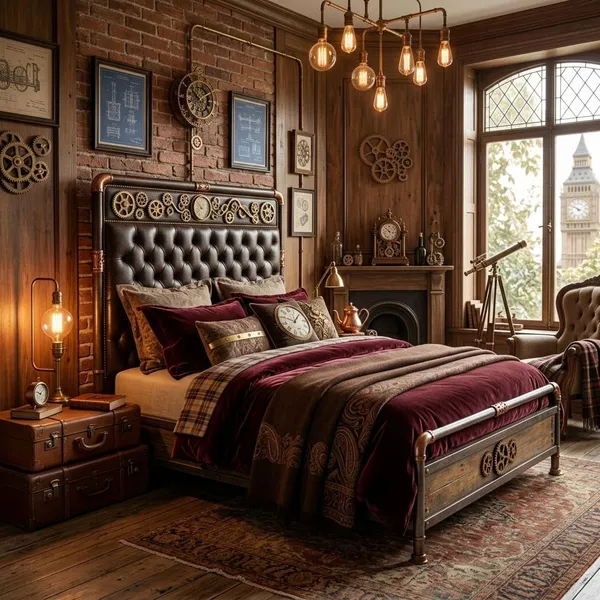
The simplest styling order is base first, pattern second, texture third, accents last. This matters because steampunk can become cluttered quickly; building the bed in layers lets you stop when the room already feels finished.
Start with a dark neutral base
Begin with a calm base color such as charcoal, espresso, faded taupe, warm gray, or black-brown. This gives the bed structure and makes later accents easier to control.
Add one main steampunk pattern
Choose one main pattern and let it lead. That could be a vintage map duvet, ornate jacquard quilt, clockwork comforter, or a border print with Victorian detail.
- If the pattern is bold: keep sheets and throws solid.
- If the pattern is subtle: add interest through texture rather than another print.
- If you are unsure: repeat two colors from the statement piece in the rest of the bedding.
Layer soft contrasting textures
A good steampunk bed should look dramatic from a distance and feel comfortable up close. Pair smooth cotton with washed linen, a quilted throw, or one velvet accent so the bed has depth without becoming rough or heavy.
Use metallic details in small amounts
Metallic details should act like punctuation. Aged brass, copper, pewter, or bronze can appear in a pillow trim, lamp base, mirror frame, or drawer hardware, but shiny metal on every surface can make the room feel cold.
Matte or weathered finishes usually blend better with dark textiles and wood furniture than bright chrome or mirror-like gold.
Match the bedding with warm lighting
Warm lighting makes the whole setup easier on the eyes. Deep browns, burgundy, olive, charcoal, velvet, and jacquard all look richer under amber bedside lamps than under cool white bulbs.
Conclusion
Steampunk bedding looks best when the practical layers stay soft and the themed details are edited. Choose the fabric you want to sleep in first, add one strong visual feature, then use texture, warm light, and small aged-metal accents to finish the mood without turning the bedroom into a stage set.
FAQ
Can steampunk bedding fit a modern bedroom?
Yes, and it often looks better in a modern room when the furniture is simple. Keep the bedding to one main steampunk feature, then echo it with one lamp, frame, or small decor piece.
Which fabric is best for everyday use?
Cotton is the easiest everyday option for most people because it is breathable and washable. Linen is a strong alternative if you prefer a more relaxed, textured bed.
How do you avoid making the room look costume-like?
Stop after one obvious theme element. If you already have a gear-print duvet, choose plain sheets, quiet pillows, and aged finishes instead of adding more clocks, maps, and machinery motifs.
Can steampunk bedding fit a modern bedroom?
Yes, and it often looks better in a modern room when the furniture is simple. Keep the bedding to one main steampunk feature, then echo it with one lamp, frame, or small decor piece.
Which fabric is best for everyday use?
Cotton is the easiest everyday option for most people because it is breathable and washable. Linen is a strong alternative if you prefer a more relaxed, textured bed.
How do you avoid making the room look costume-like?
Stop after one obvious theme element. If you already have a gear-print duvet, choose plain sheets, quiet pillows, and aged finishes instead of adding more clocks, maps, and machinery motifs.