
The League of Extraordinary Gentlemen is steampunk in more than a visual sense. Its Victorian setting, impossible machines, literary science-fiction cast, and alternate-history politics all shape the story, so it feels built from steampunk ideas rather than dressed in steampunk decoration.
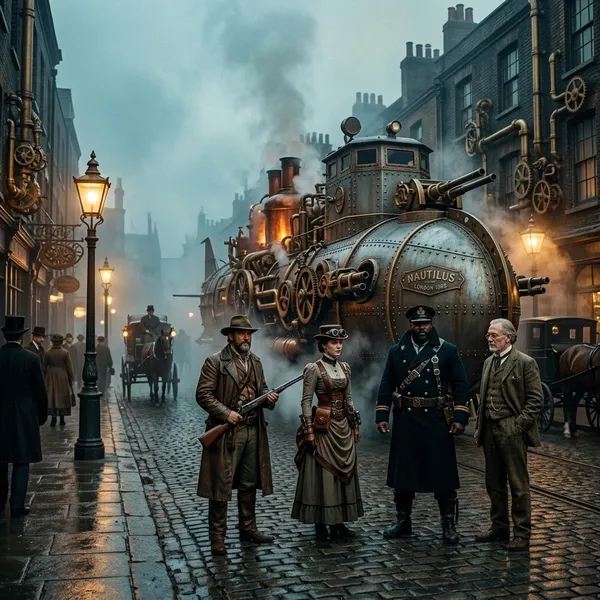
Is The League of Extraordinary Gentlemen steampunk?
Yes, The League of Extraordinary Gentlemen is widely treated as a steampunk comic. The clearest test is simple: remove the Victorian world, the speculative inventions, and the 19th-century literary sources, and the story stops working. That is a stronger steampunk signal than brass details or period costumes alone.
Victorian setting
The Victorian setting is not just scenery. London's streets, government offices, docks, clubs, and hidden criminal networks all carry the pressure of a society that believes in progress while living with poverty, repression, and imperial violence. That tension is one of the main reasons the comic reads as steampunk rather than ordinary historical fantasy.
Retro-futuristic technology
Captain Nemo's Nautilus is the most obvious example: it feels advanced, but advanced in a way a 19th-century imagination could believe in. The same mood runs through the comic's weapons, flight ideas, strange materials, and scientific schemes. The machines have weight, danger, and political value, which matters more than whether every device has a gear on it.
Classic sci-fi characters
The cast gives the comic a deep steampunk backbone. Mina Murray, Captain Nemo, Dr. Jekyll and Mr. Hyde, and Hawley Griffin all bring Victorian fears with them: invasion, transformation, invisibility, hidden violence, scientific arrogance, and social collapse. Allan Quatermain adds the adventure-and-empire side of the period, but the comic treats that legacy with a more critical eye.
Alternate-history world
The series imagines a world where fictional discoveries and characters all exist together, and that changes history from the inside. Governments need new spies, criminals chase impossible science, and inventions become strategic weapons. That alternate-history logic is a major part of its steampunk identity.
What is The League of Extraordinary Gentlemen about?
The League of Extraordinary Gentlemen follows a group of famous literary figures recruited to deal with threats ordinary Victorian institutions cannot handle. The first volume is built around assembling the team and stopping dangerous scientific power from falling into the wrong hands.
The practical way to read the premise is not "Victorian Avengers." The team is too damaged, suspicious, and morally uneven for that. The story works because these characters are useful together, not because they naturally trust each other.
Mina builds the League
Mina Murray is the person who gives the team shape. Working with British intelligence, she finds the recruits, keeps the mission moving, and often shows better judgment than the more physically dramatic members of the group. For new readers, she is also the steadiest way into a dense world of references and old literary baggage.
Literary heroes join forces
The "heroes" label needs a warning. Allan Quatermain is worn down, Nemo is brilliant but severe, Hyde is terrifying, and Griffin is not someone you should trust. The appeal is watching these figures clash, not watching a clean team of noble champions save the day.
Victorian London faces new threats
London works almost like a pressure chamber. Public order, empire, surveillance, crime, and experimental science all overlap, so the city feels powerful and rotten at the same time. That makes the threats feel rooted in the society around them, not dropped into the plot for spectacle.
Science drives the conflict
The central danger is not just a villain with a machine. Scientific knowledge becomes something governments and criminals want to control because it can change transport, warfare, spying, and imperial reach. That is where the comic becomes especially steampunk: invention is exciting, but it is never innocent.
Main League of Extraordinary Gentlemen characters
The main cast matters because each member brings a different corner of Victorian or near-Victorian fiction into the same world. If you only recognize one or two names, the story still works, but knowing the sources makes the character choices sharper.
Mina Murray
Mina Murray, from Dracula, becomes the League's practical center. She is controlled, observant, and far more capable than anyone who expects her to be a passive gothic survivor. Her role is especially important because the team would probably collapse into ego, violence, or betrayal without someone forcing it to function.
Allan Quatermain
Allan Quatermain is not presented as a clean adventure hero. He is older, damaged, and tied to the fading myths of imperial exploration. That makes him useful in dangerous places, but it also lets the comic question the kind of heroic image older adventure fiction often celebrated.
Captain Nemo
Captain Nemo may be the most obviously steampunk figure in the group. He brings the Nautilus, technological brilliance, anti-imperial anger, and a sense that invention can be both beautiful and threatening. He also expands the story beyond London, making the world feel connected to oceans, empires, and global conflict.
Dr. Jekyll and Mr. Hyde
Dr. Jekyll and Mr. Hyde bring body horror into the League. Hyde gives the group brute force, but he also makes every scene feel less safe. Their presence turns Victorian science into something physical and frightening: progress can split a person open rather than improve them.
Hawley Griffin
Hawley Griffin, the Invisible Man, is a sharp warning about power without accountability. Invisibility makes him perfect for spying, but the comic does not treat that as charming. He is intelligent, useful, and deeply dangerous, which helps keep the League from feeling like a heroic fantasy team.
What makes the comic stand out?
The comic stands out because it commits to the consequences of its own premise. It does not simply place famous characters in the same room for recognition value. It builds a shared literary world where science, empire, horror, adventure, and politics all affect one another.
Literary mashups
The mashup works because the references usually have a job. They add history, tension, satire, or atmosphere instead of acting only as name-drops. A reader can miss plenty of allusions and still follow the plot, but catching them makes the world feel much larger.
Dark storytelling
The tone is often violent, cynical, and uncomfortable. That is not a side detail; it is part of the comic's argument about Victorian respectability and the uglier forces underneath it. If you prefer upbeat adventure, this is the section of the warning label to take seriously.
Victorian sci-fi
The science-fiction elements feel as if they grew out of Victorian anxieties: exploration, transformation, hidden forces, new weapons, and the fear that knowledge might outrun morality. That gives the comic more weight than a story that simply pastes futuristic gadgets into old London.
Hidden references
Hidden references are part of the fun, but they should not be treated like homework. Names, background details, and small visual jokes often point to other books or fictional traditions. On a first read, it is better to follow the mood and plot than pause constantly to identify every clue.
For rereaders or classic-literature fans, those details become a second layer. The world feels packed because it suggests dozens of other stories happening just outside the frame.
Detailed worldbuilding
The worldbuilding is strong because the comic thinks through consequences. If Nemo exists, naval power changes. If Griffin exists, spying changes. If dangerous science is real, governments and criminals both want it. That cause-and-effect design is what keeps the setting from feeling like a random pile of references.
Who will enjoy this steampunk comic?
The best fit is a reader who likes Victorian sci-fi, literary crossovers, dark comics, and worlds that reward attention. It is not the best first choice for someone who wants a fast, cheerful team adventure or a simple introduction to steampunk aesthetics.
| Reader type | Likely reaction |
|---|---|
| New to steampunk | Good if you want a darker, literary example; less ideal if you want something gentle. |
| Classic literature fan | Rewarding, as long as you are open to bold reinterpretations. |
| Movie-only viewer | Expect a much denser and harsher comic. |
| Casual superhero reader | Possible, but the tone and references may feel less straightforward. |

Conclusion
The League of Extraordinary Gentlemen earns its steampunk label because the genre is built into its setting, technology, characters, and alternate history. It is best approached as a dark Victorian sci-fi comic with literary teeth, not as a simple adventure with retro gadgets. If that sounds appealing, start with the first volume and give yourself permission to miss a few references the first time through.
FAQ
Is the comic darker than the movie?
Yes. The comic is harsher, more violent, and more cynical than the film, with less emphasis on clean blockbuster heroics.
Where should new readers start?
Start with The League of Extraordinary Gentlemen, Volume I. It introduces the team and the 1890s setting before the series becomes broader and more reference-heavy.
Is the whole series steampunk?
The early material is the clearest steampunk portion. Later parts widen the timeline and genre mix, but the Victorian steampunk foundation remains the reason many readers first connect the series with the genre.