
A steampunk time machine is usually bought or built for atmosphere, not science: it should look like a Victorian inventor could have made it from brass, wood, gears, gauges, and impossible ideas. The best choice depends first on use—desk decor, room centerpiece, cosplay prop, event installation, or collector display—because size, weight, detail, and durability matter more than simply adding more gears.
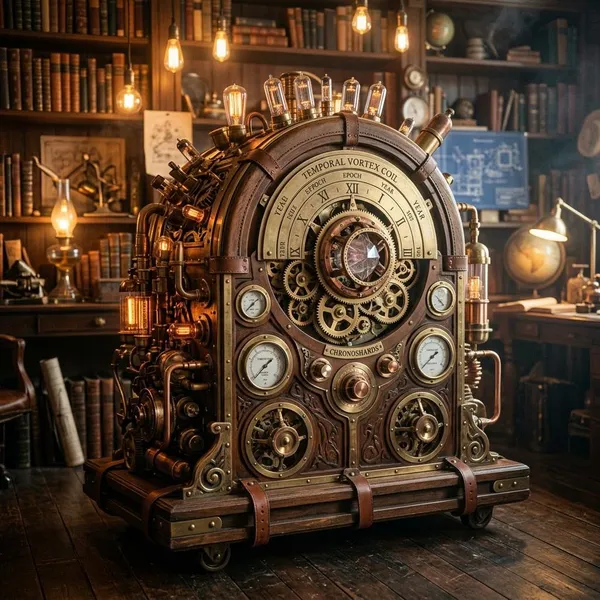
What is a steampunk time machine
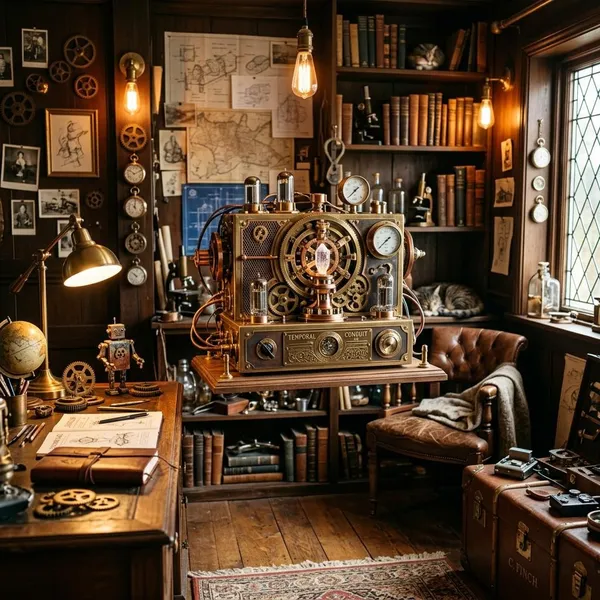
A steampunk time machine is a fictional time-travel device designed as if advanced technology developed through Victorian-era materials and mechanical thinking. It may be a small sculpture, a room prop, a cosplay accessory, or a detailed handmade replica, but the appeal is the same: it makes imaginary time travel feel tactile and story-rich.
A fictional time machine with steampunk styling
It is not meant to be a real scientific machine. Its job is to suggest time travel through visual clues: a lever for "calibration," a gauge that seems to track pressure, a glowing tube that implies energy, or a rotating wheel that looks like it controls time.
Victorian-inspired design with imagined technology
Victorian influence usually shows up through dark wood, brass trim, rivets, engraved plates, leather-like straps, antique-style instruments, and warm lighting. Imagined technology pushes it beyond normal vintage decor with coils, tubes, switches, pressure gauges, and strange control panels.
A library shelf piece might look refined and scholarly, while an escape-room prop may look rougher, louder, and more theatrical. Both can be steampunk if the old-world materials and impossible machinery feel like they belong together.
Visible mechanics as part of the story
Visible mechanics are what make the object feel active. Gears, rods, flywheels, wires, and pipes suggest that something is being powered, adjusted, or transferred, even if the machine is completely static.
- Good detail feels connected: pipes lead somewhere, gauges face the operator, and gears sit near timing controls.
- Weak detail feels pasted on: random gears scattered across flat panels rarely create a believable machine.
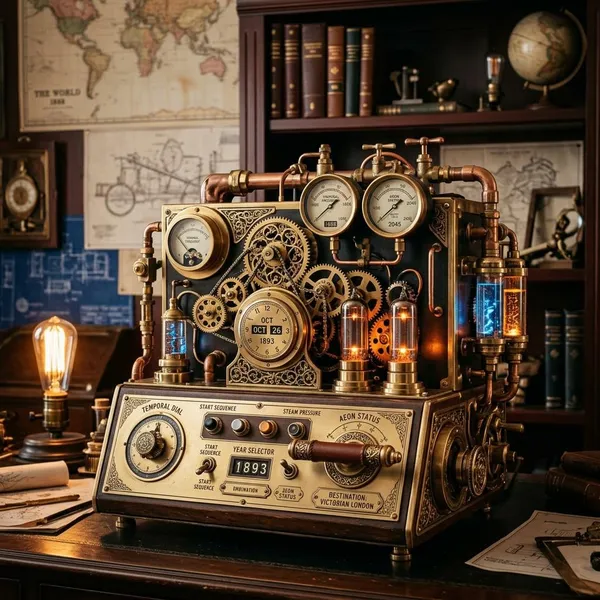
What makes a time machine look steampunk
The steampunk look comes from a controlled mix of aged materials, exposed systems, and a clear sense of purpose. A convincing piece does not need every possible detail; it needs a few strong features that look as if they are part of one working invention.
Brass and aged metal
Brass is one of the quickest ways to signal steampunk because it recalls antique instruments, telescopes, clocks, and scientific equipment. It works especially well on control plates, bezels, rivets, levers, hinges, and trim.
Aged copper, darkened steel, and rubbed metallic finishes add depth, but the aging should look intentional. A little patina around edges and high-touch areas often looks better than heavy distressing across every surface.
Gears and exposed mechanisms
Gears work best when they seem to control timing, movement, or power transfer. A gear cluster beside a dial or wheel feels much more believable than gears placed evenly across a panel just to fill space.
Gauges, dials, and switches
Controls make the machine readable. A strong control area might include one main dial, a few smaller gauges, toggle switches, and a lever that clearly feels like the operator's main action point.
For small desk models, this is often where the design succeeds or fails. There may not be room for big side mechanisms, so the panel needs to carry the story at close range.
Pipes, wires, and valves
Pipes and wires connect separate parts into one imagined system. A copper tube from a chamber to a gauge, or a wire bundle from a coil to a switch panel, gives the viewer a path to follow.
- Use pipes for flow: pressure, steam, energy, or cooling.
- Use wires for control: switches, lights, coils, or signals.
- Use valves sparingly: they should look adjustable, not randomly decorative.
Wood and worn finishes
Wood gives the machine warmth and structure. A stained base, cabinet body, or frame can make even a fantasy device feel like a serious instrument rather than a toy.
Worn finishes should match imagined use. Handles, corners, panel edges, and control areas can show wear; untouched deep corners should usually remain darker and cleaner. That small difference makes aging feel more natural.
How to design a steampunk time machine
Start by deciding what the machine has to do in real life. A display piece can be heavier and more delicate; a cosplay prop needs to be light, smooth-edged, and comfortable to carry; an event prop should survive repeated handling and be easy for guests to understand.
Choose the machine shape
The silhouette sets expectations before anyone notices the small details. A chair or sled shape hints at classic time-travel fiction, a cabinet or console feels like laboratory equipment, and a backpack or handheld form works better for cosplay.
For home decor, medium size is often the easiest to live with: large enough for convincing detail, but not so large that it becomes hard to place, clean, or store.
Build the main control panel
The control panel should tell the viewer how the machine is operated. Give it hierarchy instead of clutter: one dominant control, two or three supporting gauges or switches, and labels only where they add character.
- Main action: lever, wheel, large dial, or key switch.
- Status details: gauge, small light, numbered scale, or indicator needle.
- Story label: short wording such as "chronometer," "pressure," or "temporal range."
Add visible mechanical parts
Mechanical parts look stronger when grouped into zones. One area can suggest power, another timing, and another stabilization. This keeps the design readable and avoids the common DIY mistake of decorating every surface equally.
If budget or time is limited, choose a few hero features: one rotating wheel, one coil assembly, one lit chamber, or one strong gear train. A clear focal point usually beats a crowded surface.
Layer materials and textures
Use contrast, but keep the palette disciplined. A reliable combination is one main body material, one dominant metal tone, and one or two supporting textures such as leather-like straps, matte black panels, glassy tubes, or aged labels.
Not every part has to be real brass or hardwood. Painted foam, plastic tubing, and lightweight craft materials can look convincing if the finish is consistent and the edges are clean.
Finish with lights and movement
Lights and motion should feel like the final layer, not a way to hide weak design. Warm amber, soft red, or off-white lighting usually suits the style better than bright modern blue unless the whole design is more cinematic.
For long-term display, keep effects simple and easy to access. One glowing chamber with a reachable battery compartment is more useful than five fragile effects that stop working after a few uses.
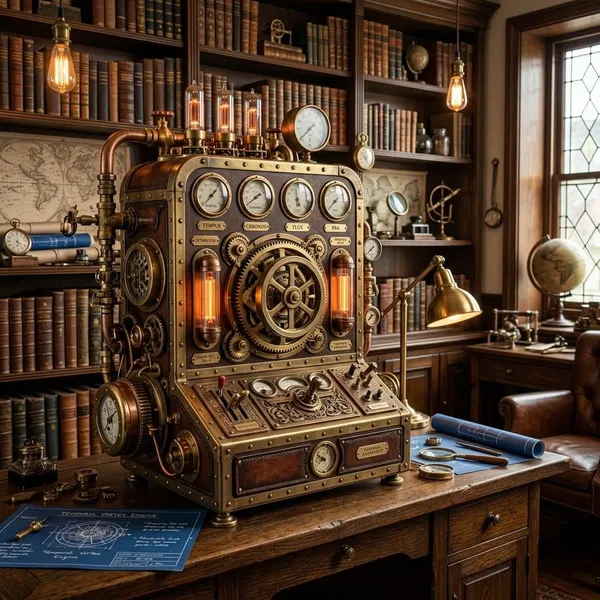
How to choose a steampunk time machine
When choosing a steampunk time machine, check purpose first, then size, finish, mechanical logic, and interaction. A piece that looks impressive in photos may still be the wrong choice if it is too large for the shelf, too fragile for events, or too plain up close for a collector display.
| Use case | Prioritize first | Be careful with |
|---|---|---|
| Desk or shelf decor | Close-up finish and compact detail | Oversized parts that crowd the space |
| Themed room | Strong silhouette and visual presence | Pieces that only look good from one angle |
| Cosplay | Weight, comfort, and smooth edges | Heavy metal parts and fragile protrusions |
| Events | Durability and simple interaction | Complicated effects that are hard to reset |
Match the size to your space
Measure the actual spot before buying, including depth and clearance for pipes, handles, wheels, or side assemblies. Product photos often make props look easier to place than they are.
A compact model suits a desk, shelf, or reading corner when the best details face forward. A larger statement piece makes more sense in a themed room, studio, shop display, or event space where people can step back and see the full shape.
Check the materials and finish
Good finish work matters more than material names. Real wood and metal are appealing, but painted resin, foam, or plastic can still look strong if the color, aging, and texture are handled well.
- Look for clean edges: rough seams can make a piece feel cheap.
- Check the metallic finish: it should have depth, not flat gold paint.
- Compare close-up photos: hardware should look integrated, not simply glued on.
Look for convincing mechanical detail
The details should appear to belong to one system. Gears near timing controls, pipes leading into gauges, and wires connected to lights or coils all help the object feel designed rather than decorated.
For collectors, this is where handmade or higher-end pieces often stand out. Small choices such as layered plates, readable labels, balanced spacing, and controlled weathering can make the difference between a novelty item and a display-worthy object.
Decide between display and interaction
A display-only model is usually easier to own: fewer batteries, fewer moving parts, less maintenance. It is a good choice for bookshelves, offices, and long-term decor where finish quality matters most.
An interactive version is better for events, parties, escape rooms, or game rooms, where a lever, light, sound, or moving gear gives people something to respond to. If it will be handled often, choose simple interactions over fragile complexity.
Choose a style that fits its purpose
A refined Victorian laboratory style fits libraries, studies, and classic interiors. A rougher industrial style suits workshops, game rooms, themed bars, and escape rooms. A bold cinematic style with glow effects and oversized coils works best when the goal is drama rather than subtle decor.
Match the machine to nearby furniture and lighting. A distressed build can look perfect beside dark shelves and leather chairs, but out of place in a clean modern room unless the finish is more polished.
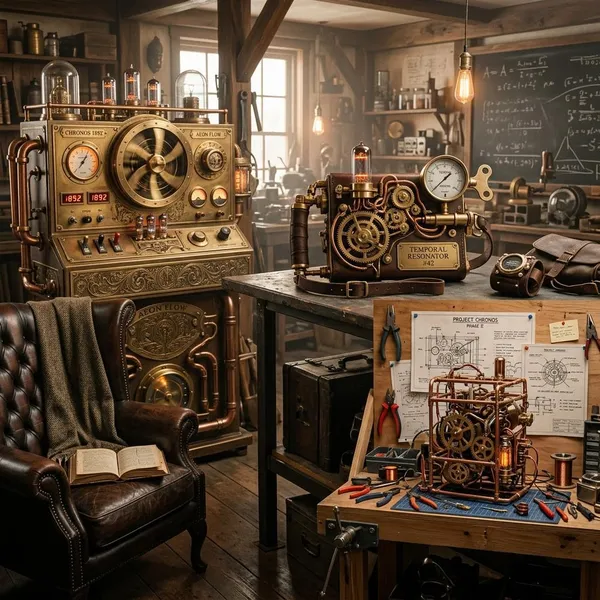
Steampunk time machine ideas by use
The same design language can serve very different needs. A small desk model should reward close viewing, while a cosplay prop has to survive movement, photos, crowds, and hours of carrying. Choosing by use keeps the design practical instead of just decorative.
Small models for desk decor
Small models are best for offices, bookshelves, reading corners, and hobby rooms. Because they are viewed up close, prioritize finish quality, readable controls, miniature gauges, neat wiring, and a strong base.
For a gift or casual decor piece, small is often safer than large. It is easier to place and less likely to feel like a themed-room commitment.
Statement pieces for themed rooms
A statement piece should have a strong outline, visible side details, and enough scale to anchor the room. It works best when the surrounding space already supports the mood with dark wood, maps, leather, industrial shelving, old books, or scientific curiosities.
Check viewing angles before committing to a large build. If it will sit in a corner, the front and one side matter most; if it stands in the middle of a room, the back cannot look unfinished.
Detailed replicas for collectors
Collectors usually care about craftsmanship, references, finish, and coherence. A replica or handmade build should hold up under close inspection, with labels, materials, controls, and mechanical parts that feel deliberately placed.
Higher cost is often tied to labor rather than size. Careful weathering, custom parts, and a believable invented system can be more valuable than a bigger object with generic decorations.
Lightweight builds for cosplay
For cosplay, lighter materials are usually smarter than "real" materials. EVA foam, thin plywood, plastic tubing, hollow shells, painted details, and battery LEDs can create the look without making the prop exhausting to carry.
- Keep edges smooth: crowded conventions are not kind to sharp protrusions.
- Balance the weight: backpack and handheld builds should not pull awkwardly.
- Make one feature bold: a glowing dial or large lever reads better in photos than dozens of tiny details.
Interactive props for events
Interactive props need to be obvious, durable, and easy to reset. A guest should know what to touch, see a clear response, and not need instructions from a staff member every time.
Conclusion
A strong steampunk time machine is not the one with the most gears; it is the one that looks like it has a purpose. Decide where it will live, how often it will be handled, and how close people will view it, then choose the size, finish, detail, and effects around that use. When the materials, controls, and visible mechanics all support the same story, the piece feels imaginative without looking like a pile of decorative parts.
FAQ
Is H. G. Wells' The Time Machine steampunk?
It is not steampunk in the modern label sense, but it is a major influence. The Victorian setting and mechanical time-travel idea fit naturally with the style later associated with steampunk.
Can a steampunk time machine actually work?
No. It can have working lights, clocks, motors, sounds, or switches, but those features create an illusion rather than real time travel.
What materials work best for a steampunk time machine?
Wood, brass accents, copper tubing, aged metal finishes, glass-like tubes, and sturdy hardware work well for display pieces. For wearable or portable props, lightweight foam, plastic tubing, and painted surfaces are often more practical.
What is the difference between steampunk and retro-futuristic design?
Steampunk is a narrower style built around Victorian and industrial-era ideas of technology. Retro-futuristic design is broader and can also include mid-century space-age, dieselpunk, atomic-age, and other past visions of the future.