
The right steampunk wall sconce should look like it belongs in the room even when it is switched off, but it also needs to give comfortable light where you actually use it. Start with three checks: the metal finish, the bulb glare, and whether the fixture can be mounted safely in that spot. If those work, the decorative details are much easier to judge.
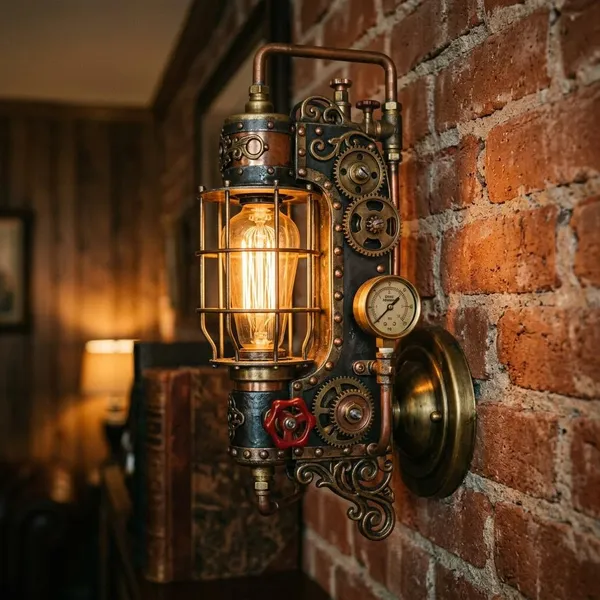
What makes a wall sconce steampunk?
Steampunk lighting usually sits between Victorian decoration and old workshop hardware. A good sconce has a sense of machinery, age, and craft without looking like random pipes screwed to a wall.
Exposed bulbs and pipework
Exposed bulbs and pipe-style arms are the fastest way to create that workshop feel. They work best when the bulb is part of the design, not just a visible technical part.
- For a bold room: choose visible elbows, flanges, and dark metal pipes.
- For a smaller room: one exposed bulb on a simple arm is usually enough.
- For a bedroom: check glare before choosing a bare bulb near eye level.
Brass, copper, and black iron
Brass and copper make the fixture feel warmer and more Victorian, especially near wood furniture, leather, or dark paint. Black iron feels heavier and more factory-like, so it suits hallways, desks, bars, and rooms where you want stronger contrast.
Mixed finishes can look especially convincing. A black frame with brass screws or a copper accent often feels more collected and less like a single flat showroom piece.
Valves, cages, and mechanical details
Valves, cages, gauges, and gear-like shapes add the mechanical character, but restraint matters. One good cage or valve detail usually looks better than a fixture covered in decorative parts.
Aged Victorian-industrial finishes
Aged brass, weathered copper, oil-rubbed bronze, and distressed black finishes usually feel more natural than shiny new metal. They soften reflections, hide fingerprints better, and pair well with reclaimed wood, brick, leather, and deep wall colors.
If the room is modern and clean, an aged finish also helps the sconce look like a deliberate accent rather than a novelty item.
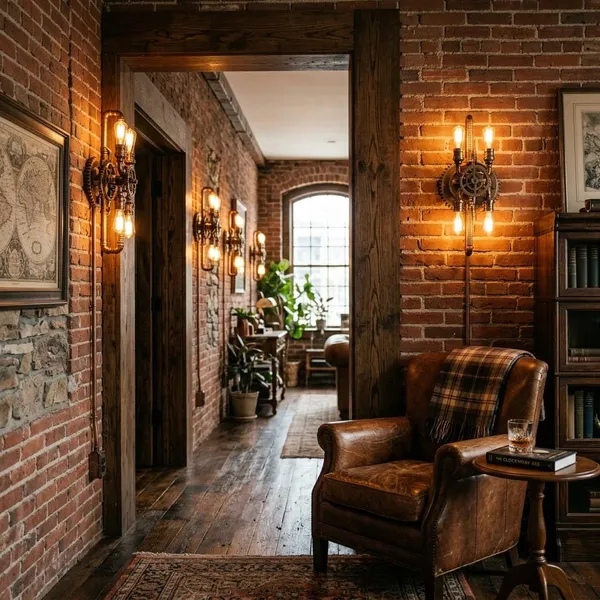
Best places for steampunk wall sconces
These sconces work best where the fixture can be seen and the warm light adds atmosphere. They are not ideal for every wall: a narrow walkway, a very low ceiling, or a spot where the bulb shines straight into your eyes can make even a good design annoying.
Use the room's purpose to decide how decorative the sconce should be. A bar area can handle drama. A reading corner needs comfort first. A hallway needs a low-profile fixture that will not catch shoulders or bags.
Beside the bed
A bedside sconce is useful when you want to clear the nightstand and make the bed wall feel more finished. Plug-in models can work well for renters, while hardwired pairs look cleaner for a long-term bedroom setup.
The mistake to avoid is choosing a bare, bright bulb at sitting eye level. If you read in bed, look for a slightly adjustable arm, a warm dimmable LED, or a bulb that is shielded by a cage or tinted glass.
Along a hallway
Hallways suit steampunk sconces because the fixtures add character without using floor space. Keep the projection shallow in tight corridors, and repeat the same fixture at even intervals if you are installing more than one.
Above a reading chair
A reading chair needs the light to land on the book or side table, not in your face. A downward-facing or angled sconce is usually more comfortable than a straight bare bulb.
- Occasional reading: a warm accent bulb may be enough.
- Daily reading: choose better control, such as an adjustable arm or dimmer.
- Small corner: avoid oversized cages that make the wall feel crowded.
Beside a mirror
Beside a mirror, the sconce becomes both lighting and framing. A pair can look strong in an entryway, dressing area, or powder room, as long as the fixtures are not too large for the mirror.
If the mirror is used for grooming, do not rely on a very dim amber bulb alone. It may look moody but still leave shadows where you need clear visibility.
Behind a bar or desk
Behind a bar, a steampunk sconce can be more theatrical: cages, valves, and darker finishes often suit bottles, shelves, and wood counters. Behind a desk, be more careful. The fixture should add mood without creating glare on a screen or throwing shadows across your work area.
How to position a wall sconce
Positioning decides whether the sconce feels custom or awkward. Before drilling, check the height, the line of sight to the bulb, the relation to nearby furniture, and the direction of the light.
Set a comfortable mounting height
Many wall sconces are mounted around eye level or a little above, but the best height depends on the room. In a hallway, slightly higher often feels balanced. Beside a bed or chair, the fixture may need to sit lower so the light reaches the useful area.
Leave enough space between fixtures
When using multiple sconces, spacing should feel calm rather than crowded. Large cages, long pipe arms, and bright exposed bulbs need more breathing room than slim shaded fixtures.
- Mark all positions first before installing the first fixture.
- Stand back from the whole wall to check the rhythm.
- Keep pairs symmetrical around beds, mirrors, or desks unless the room is intentionally asymmetrical.
Keep glare out of eye level
Glare is the main comfort issue with exposed bulbs. If the sconce sits where people look directly at it, choose a lower-output bulb, amber glass, a dimmer, or a fixture that angles the bulb away from the eyes.
Align it with nearby furniture
A sconce usually looks better when it relates to something nearby: the center of a nightstand, the edge of a mirror, the height of a headboard, or the line of a shelf. Steampunk fixtures have strong shapes, so poor alignment is easy to notice.
Test the light direction first
Some sconces throw light up, some down, and some straight out from the wall. Test the direction before final mounting, especially if the bulb is clear glass or the fixture has a cage that casts shadows.
For a desk, check the work surface. For a chair, check the page or lap area. For a hallway, walk past from both directions and make sure the bulb does not hit your eyes directly.
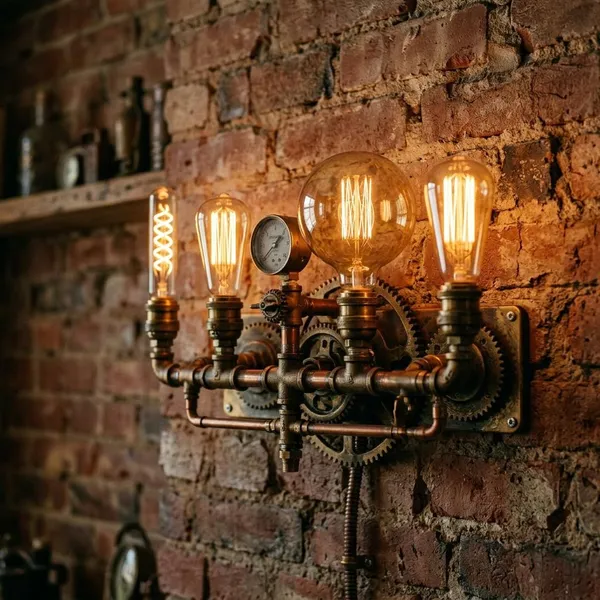
Bulbs for steampunk wall sconces
The bulb is not a minor detail in this style. In many steampunk sconces, it is fully visible, so it affects the look, the mood, and the comfort of the room.
Edison-style LED bulbs
Edison-style LED bulbs are usually the easiest match because they give the visible filament look without the heat and short life of old incandescent bulbs. Check the socket type, bulb size, and maximum rating for the fixture before buying.
Shape changes the mood too: tube bulbs look more technical, globe bulbs feel softer, and classic pear shapes are the safest all-round choice.
Warm white bulbs
Warm white light usually flatters brass, copper, black iron, wood, and leather. Cooler light can make the same sconce feel sharper and less vintage, which may be fine for a work area but less comfortable in a bedroom or lounge.
Dimmable bulbs
Dimmable bulbs are worth considering when one fixture has to do more than one job. A bedside sconce may need enough light for reading and a much softer level later at night.
Check that the bulb, dimmer, and fixture are compatible. If they are not, flickering or poor dimming can become more irritating than the original brightness problem.
Clear or amber glass bulbs
Clear glass shows the filament more sharply and gives a crisper industrial look. Amber glass softens the glow and often feels better in bedrooms, lounges, and bars.
- Choose clear glass when the fixture is higher or mainly decorative.
- Choose amber glass when the bulb sits closer to eye level.
- Avoid very dim bulbs where you need task light, such as a mirror or reading chair.
Low-glare bulbs for exposed fixtures
Low-glare bulbs help keep the exposed-bulb look comfortable. If the sconce feels harsh, try reducing brightness before replacing the whole fixture.
Frosted bulbs can reduce glare, but they may soften the vintage look more than you want. Lower-lumen vintage LEDs or amber-tinted bulbs are often a better compromise for steampunk designs.
How to install a steampunk wall sconce
Installation depends on whether the fixture is plug-in or hardwired. Plug-in sconces are easier to place and remove, which is useful for renters or temporary layouts. Hardwired sconces look cleaner and are better for permanent rooms, but they require more care.
The first priority is safety, then placement, then appearance. Steampunk fixtures can be heavier than they look because of metal pipes, cages, and decorative hardware, so wall support matters just as much as the wiring.
Mark the mounting position
Mark the position with pencil and painter's tape before making holes. If you are installing a pair, measure from the same reference points on both sides, such as the floor, bed frame, mirror edge, or desktop.
Check the wall support
Do not assume a basic drywall anchor is enough. Check the fixture weight, the wall type, and whether you can mount into a stud, a proper electrical box, or hardware rated for the load.
Be more cautious with long-arm sconces because the weight pulls outward from the wall. A fixture that feels secure on day one can loosen after cleaning, vibration, or bulb changes if the support is weak.
Secure a plug-in fixture
A plug-in sconce still needs a solid wall mount. Plan the cord route before attaching the fixture so the finished setup looks intentional rather than temporary.
- Use cord clips or a cover if the cord runs down a visible wall.
- Keep cords away from walkways to avoid snags and tripping.
- Choose plug-in for flexibility if you may move furniture later.
Prepare hardwired connections
For a hardwired fixture, turn off power at the breaker and confirm it is off with a suitable tester before touching wires. Follow the manufacturer's instructions and make sure the electrical box is suitable for the fixture.
Call an electrician when needed
Call an electrician if you are adding a new fixture location, replacing old wiring, installing several sconces, or unsure about local electrical requirements. It is also the better choice when a heavy decorative fixture needs both secure mounting and reliable wiring.
Professional help may cost more upfront, but it prevents the two problems that are hardest to fix later: unsafe wiring and a sconce mounted in the wrong way.
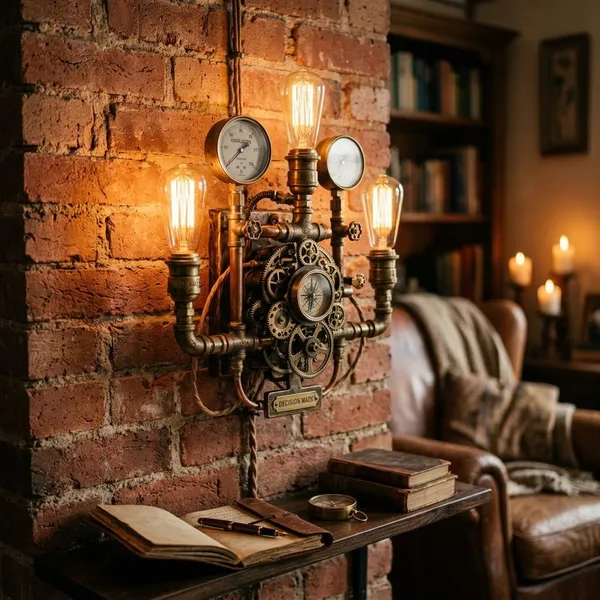
Conclusion
A steampunk wall sconce is a good choice when the finish, bulb, and placement all support the way you use the room. Pick the style after you know where it will go, not before: bedside lights need softness, hallway lights need clearance, and bar or desk areas need the right balance of mood and function. If the fixture looks authentic but creates glare or feels poorly mounted, keep looking.
FAQ
Can you use a steampunk sconce in a bathroom?
Only use one that is rated for the bathroom zone where it will be installed. Near moisture, sinks, tubs, or showers, safe placement and local electrical rules matter more than the style.
Do steampunk sconces suit modern rooms?
Yes, especially if you choose a simple black iron, brass, or aged-metal design. In a modern room, one or two strong fixtures usually look better than turning every detail into a theme.
Are exposed bulbs too bright for bedrooms?
They can be if the bulb is clear, high-output, or mounted in your line of sight. Warm dimmable LEDs, amber glass, or a slightly shielded design are safer choices for bedside comfort.
Can you use a steampunk sconce in a bathroom?
Only use one that is rated for the bathroom zone where it will be installed. Near moisture, sinks, tubs, or showers, safe placement and local electrical rules matter more than the style.
Do steampunk sconces suit modern rooms?
Yes, especially if you choose a simple black iron, brass, or aged-metal design. In a modern room, one or two strong fixtures usually look better than turning every detail into a theme.
Are exposed bulbs too bright for bedrooms?
They can be if the bulb is clear, high-output, or mounted in your line of sight. Warm dimmable LEDs, amber glass, or a slightly shielded design are safer choices for bedside comfort.