
If you are choosing steampunk candle holders, start with three checks: the candle must sit securely, the flame area must stay clear, and the piece should match the scale of the surface where it will live. The best designs look aged and mechanical without turning into a cluttered pile of gears. For DIY projects, build around a heat-safe candle cup first, then add the steampunk details around it.
What makes a candle holder steampunk
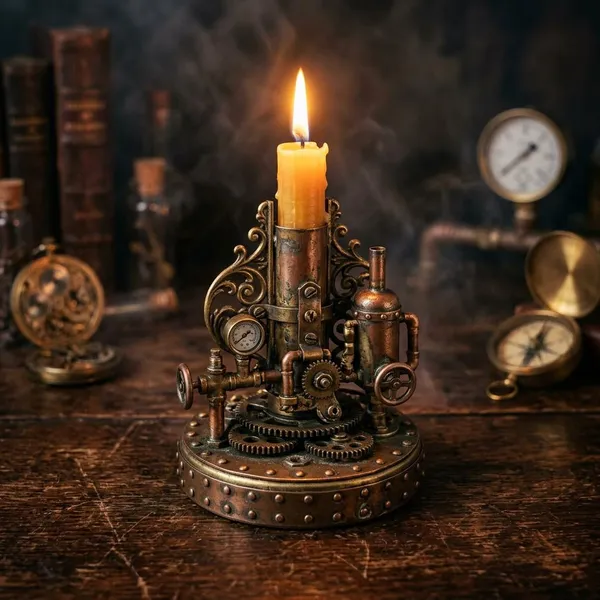
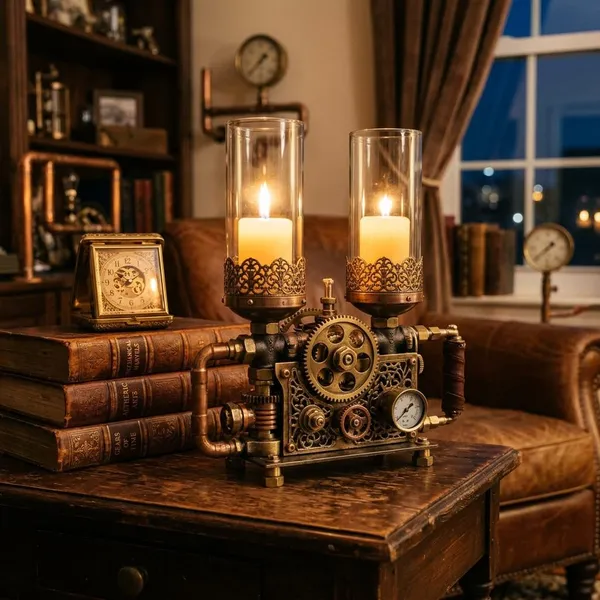
A steampunk candle holder usually blends old-world decoration with industrial hardware. Think Victorian curves, dark metal, brass or copper accents, visible bolts, gears, pipe shapes, and finishes that look aged rather than factory-new.
Victorian shapes and ornament
Victorian influence gives the holder its elegant side: pedestal bases, curved stems, scrollwork, arched arms, and ornate silhouettes. These shapes keep steampunk decor from feeling like plain workshop hardware.
Gears, pipes, and rivets
Gears, pipes, rivets, bolts, valves, and watch-like parts create the mechanical character. A pipe stem or a few gears near the base can be enough; covering every surface often makes the candle harder to see and the holder harder to clean.
- For buying: check that decorative pieces are firmly attached.
- For DIY: keep embellishments outside the flame path.
- For display only: use LED candles if the design is crowded.
Brass, copper, and dark metal
Brass, copper, bronze, blackened steel, and dark iron tones suit the steampunk look because they suggest old machinery and antique instruments. Mixed finishes usually look more convincing than one bright metallic color.
Distressed industrial finishes
A distressed finish makes a candle holder feel worn-in rather than shiny and new. Rubbed edges, dark wax, aged brass paint, faux patina, or matte black details can pull mismatched materials together.
Popular steampunk candle holder styles
Different steampunk candle holder styles solve different decorating problems. A tea light holder adds a small accent, a taper holder gives height, a candelabra becomes the focus, and a lantern is easier to place near books, shelves, or mixed decor.
Before choosing a style, picture where it will sit when it is not lit. A dramatic piece can look great in a product photo but feel oversized on a narrow shelf or awkward in the middle of a busy dining table.
Industrial pipe holders
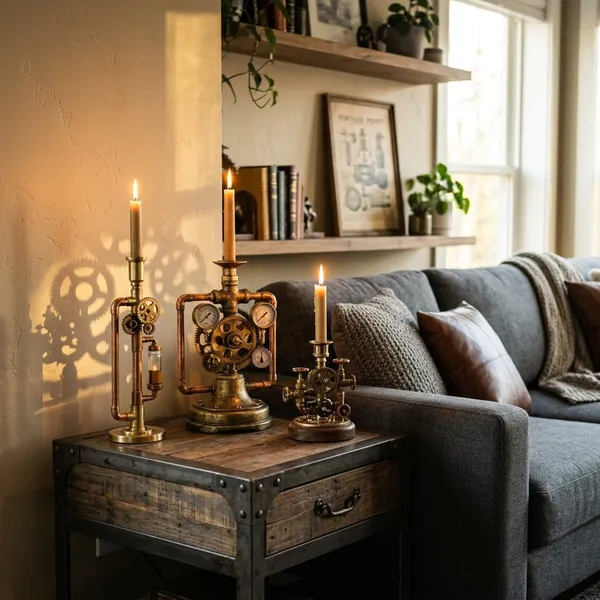
Industrial pipe holders use plumbing-style fittings, elbows, couplings, and short pipe sections as the main structure. They work well in rooms with metal shelving, leather, dark wood, or other industrial accents.
Check the base before the finish. If the pipe holder rocks slightly, has a narrow footprint, or holds the candle off-center, it is not a good choice for real flames on a table that people use.
Gear and glass tea light holders
Gear and glass tea light holders are a good entry point if you want steampunk detail without a large object. The glass keeps the candle visually contained, while gears or washers around the outside create the mechanical look.
They are especially useful for small apartments, bedside trays, bathroom counters, or seasonal displays where you want atmosphere but still need to move things around easily.
Sculptural candelabras
Sculptural candelabras are for statement decor. They suit wide mantels, entry consoles, large dining tables, themed events, or rooms where one object can carry the mood.
- Best fit: open surfaces with room around the arms.
- Watch out for: blocked sightlines across a dining table.
- Safer choice: flameless tapers if the candelabra is tall or heavily detailed.
Lantern-style holders
Lantern-style holders combine metal frames, glass panels, handles, cages, and aged finishes. They are easier to style than many open holders because the candle area is visually contained.
A lantern is a smart choice for shelves and mantels where loose decorative objects sit nearby. It still needs supervision with a real candle, but the frame makes the display feel neater and less exposed.
Mixed-media centerpieces
Mixed-media centerpieces combine materials such as wood, glass, metal, resin, gears, and reclaimed hardware. They can lean rustic, gothic, antique, or industrial depending on the balance of materials.
For a dining table, keep the design low enough that people can see over it. For a console or sideboard, you can go heavier and more sculptural because it will not interrupt conversation or table use.
Which steampunk candle holder fits your space
The right holder depends less on the label and more on how the space is used. A busy hallway console, a quiet reading corner, and a formal dining table need different levels of stability, height, and visual weight.
Tea light holders for small displays
Tea light holders fit narrow shelves, trays, windowsills, and small side tables. They are easy to group, easy to move, and less visually demanding than tall holders.
If you only want a hint of steampunk, choose one or two glass-centered tea light holders with dark metal accents. If you want a stronger display, group three small holders on a tray instead of buying one bulky piece.
Taper holders for dining tables
Taper holders are usually the best choice for dining tables because they add height without taking much surface space. A pair works for everyday dinners; several matching or related holders can make a holiday table feel more dramatic.
Candelabras for statement decor
Choose a candelabra when the holder is meant to be the main feature, not a small accent. It works best on a wide mantel, large table, entry cabinet, or event display where the arms and candles have space around them.
Lanterns for shelves and mantels
Lanterns are practical for shelves, mantels, and console tables because they have a defined frame. They sit comfortably beside books, clocks, framed art, or modern furniture without making the whole room feel themed.
- Use real candles when the lantern is heat-safe and has enough clearance.
- Use LED candles near dried flowers, paper, fabric, or crowded shelves.
- Choose glass panels if you want a cleaner, softer glow.
Flameless designs for delicate settings
Flameless designs are the better choice near fabric runners, dried botanicals, paper decorations, low shelves, children, pets, or high-traffic areas. They also make sense if you want the holder lit for hours while people are moving around the room.
For a low-risk dinner table with adults present, real tapers may be fine. For a year-round mantel display surrounded by books and seasonal decor, a warm LED candle is usually the more practical option.
How to use steampunk candle holders safely
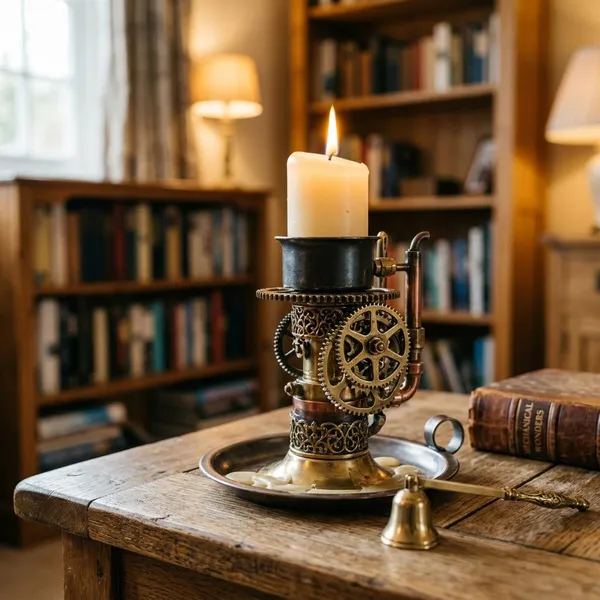
Steampunk designs need a little more attention than plain holders because they often include layered metal, decorative parts, reclaimed pieces, or painted finishes. Treat the holder as functional decor: it should look good, but it also has to manage heat, wax, and movement.
Keep flames away from decorations
Keep gears, wires, ribbons, faux botanicals, paper tags, painted parts, and loose hardware away from the flame. Decorative items should not lean over the wick or sit where heat can build up.
With tea lights, a useful check is to keep decorations lower than the rim of the inner candle cup when possible. That gives the flame a clearer path and reduces the chance of scorching nearby details.
Use the correct candle size
A candle should sit straight, snug, and fully supported. Do not use a taper that wobbles, a tea light that rises above its cup, or a pillar that overhangs the base.
Choose a heat-resistant surface
Place the holder on stone, ceramic, tile, metal, or a sturdy heat-safe tray when possible. Metal and glass can transfer heat downward during a longer burn, even if the holder feels fine at first.
- Wood mantel: add a tray or ceramic plate underneath.
- Dining table: protect the surface from heat and wax drips.
- Painted furniture: avoid direct contact during long burns.
Keep the holder away from drafts
Drafts from vents, fans, doors, or open windows can push the flame sideways. That can cause uneven burning, soot, or heat exposure to decorations that would otherwise be far enough away.
If the flame keeps leaning or flickering hard, move the holder. Lanterns and glass-centered holders handle mild air movement better than open tapers, but they still should not sit directly in strong airflow.
Never leave a burning candle unattended
Never leave a real candle burning when you leave the room or stop paying attention. Steampunk holders can hide small problems because there are more parts, shadows, and surfaces around the flame.
Before lighting, do a quick one-minute check: the base is level, the candle fits, decorations are clear of the wick, and nothing hangs above the flame. If you want a long evening glow after dinner or while watching a film, switch to LED candles once active supervision is no longer realistic.
How to make a steampunk candle holder
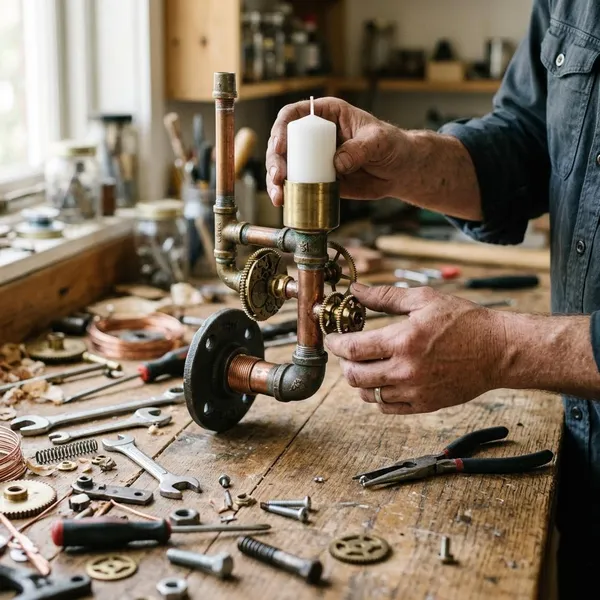
The safest DIY approach is to start with a real candle holder or heat-safe insert, then decorate around it. That keeps the flame area functional instead of trying to turn random parts into a candle holder from scratch.
A tea light or votive project is the easiest starting point. It gives you a small flame, a clear inner cup, and enough outer space for gears, washers, pipe fittings, glass pieces, or aged paint effects.
Start with a heat-safe base
Use glass, ceramic, metal, stone, or an existing candle cup as the base. Avoid lightweight pieces that tip easily, unknown plastics, thin painted containers, or anything that smells when warmed.
For a beginner-friendly design, place a tea light cup inside a larger heat-safe glass or metal vessel. The inner cup holds the flame; the outer area becomes the decorative zone.
Plan the design around the flame
Decide where the candle sits before adding any decorative parts. Check the flame height, the open space above it, and the path heat will take as the candle burns.
This is where many DIY pieces go wrong: they look great before lighting but put gears, labels, or trim too close to the wick. If a detail would sit above or beside the flame, move it lower or use an LED candle instead.
Add gears, pipes, and metal details
Add gears, washers, bolts, rivets, small pipe fittings, or watch-style parts after the flame zone is clear. A few well-placed details usually look better than covering the whole holder.
- Cluster heavier parts near the base so the holder feels grounded.
- Mix sizes to avoid a flat, repetitive pattern.
- Test loose layouts first before gluing anything permanently.
Apply paint and an aged finish
Paint helps mismatched materials feel intentional. Matte black, antique bronze, aged brass, copper, and gunmetal shades all work well for a steampunk look.
Use dry brushing, dark wax, or light edge highlights to create age without making the piece look dirty. Let paint, sealant, and adhesive cure fully before using a real candle; if the smell remains strong, keep it decorative or use a flameless candle.
Test the holder before use
Test the finished holder before treating it as regular decor. Place it on a heat-resistant surface, light the candle in a draft-free spot, and watch for leaning flames, smoke, shifting parts, hot areas, or soot marks.
- Burn it briefly while staying nearby.
- Touch only the surrounding surface after the flame is out and the holder has cooled.
- Remove or lower any detail that gets too warm or sits in the flame path.
A DIY holder is only successful if it stays stable and calm during actual use, not just if it looks good in a photo.
Conclusion
A good steampunk candle holder should feel distinctive without making candle use harder or riskier. Choose small tea light designs for flexible accents, tapers for dining, lanterns for shelves, and candelabras only where there is enough room for them to stand out safely. If you are making one yourself, the heat-safe candle area comes first; the gears and aged finish are there to support the design, not fight the flame.
FAQ
Can you use real candles in steampunk candle holders?
Yes, if the holder is stable, heat-safe, and leaves clear space around the flame. If the design includes delicate trim, unknown materials, or crowded decorations, use a flameless candle instead.
Are industrial pipe candle holders safe?
They can be safe when the base is level and the candle cup fits properly. Because metal may warm during use, place the holder on a heat-resistant surface and do not leave it burning unattended.
Can you make a holder from recycled materials?
Yes, recycled gears, washers, fittings, and glass pieces can work well as decoration. Keep the actual candle in a heat-safe insert and avoid plastics, coated scraps, or anything that may release odor when warmed.
Do steampunk candle holders suit modern decor?
Yes, especially if the design is restrained. Dark metal, glass, simple pipe shapes, and subtle brass details can add texture to a modern room without making it feel like a themed set.
Can you use real candles in steampunk candle holders?
Yes, if the holder is stable, heat-safe, and leaves clear space around the flame. If the design includes delicate trim, unknown materials, or crowded decorations, use a flameless candle instead.
Are industrial pipe candle holders safe?
They can be safe when the base is level and the candle cup fits properly. Because metal may warm during use, place the holder on a heat-resistant surface and do not leave it burning unattended.
Can you make a holder from recycled materials?
Yes, recycled gears, washers, fittings, and glass pieces can work well as decoration. Keep the actual candle in a heat-safe insert and avoid plastics, coated scraps, or anything that may release odor when warmed.
Do steampunk candle holders suit modern decor?
Yes, especially if the design is restrained. Dark metal, glass, simple pipe shapes, and subtle brass details can add texture to a modern room without making it feel like a themed set.