
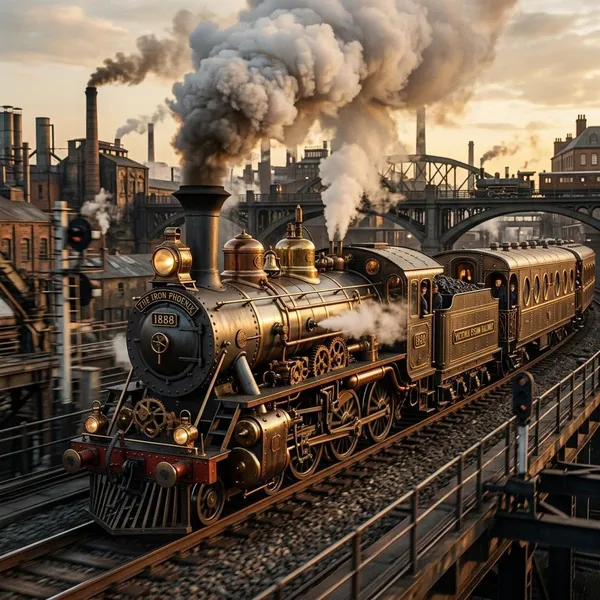
A steampunk train works when it feels like a real steam locomotive that wandered into an alternate mechanical world. The quickest way to judge one is to look for three things: a believable steam-era base, visible handmade machinery, and a clear story behind why the train exists. If it is only an old train with a few gears glued on, it usually reads more like decoration than steampunk.
What makes a train steampunk
The style starts with 19th-century railway design, but it should not stop there. A convincing steampunk train looks as if someone built it for a world of inventors, secret expeditions, dangerous routes, or impossible power systems. The historic shape keeps it grounded; the speculative details make it feel alive.
Victorian steam locomotive styling
Long boilers, large driving wheels, tall smokestacks, iron frames, and classic carriages give the train its historical backbone. These shapes matter because they stop the design from drifting into generic fantasy. For a model or illustration, start with a recognizable steam locomotive silhouette before adding anything strange.
Brass pipes gears and rivets
Brass, copper tones, rivets, pipe runs, gauges, and gear shapes create the handmade industrial feel people expect from steampunk. The useful check is balance: the details should look like they belong to the machine, not like random ornaments pasted onto every flat surface.
- Use pipes to suggest pressure, steam, or fuel flow.
- Use rivets to make panels feel heavy and built by hand.
- Use gears where they imply motion, timing, or clockwork control.
Exposed engines and moving parts
Visible rods, pistons, wheels, and linkages make the train feel mechanical instead of merely decorative. This is especially important for display models: even if the model does not run, the viewer should be able to imagine how power travels through it.
For a hands-on builder, exposed movement is worth prioritizing over extra trim. A smaller model with a working gear train often feels more steampunk than a larger static model covered in repeated gear shapes.
Imagined clockwork technology
Clockwork parts push the train beyond real railway history. Giant springs, winding keys, pressure chambers, unusual boilers, and fictional power cores can all work, as long as they still feel mechanical rather than magical for no reason.
A strong story-driven design
The strongest steampunk trains suggest a role. A polished passenger train might belong to aristocrats, inventors, or spies. A battered cargo train might be crossing a frozen frontier with fuel tanks and repair tools strapped to the cars. An armored engine should look as if it has survived attacks, not as if it is wearing smooth decorative plates.
Main types of steampunk trains
Most steampunk trains fall into a few recognizable types. Choosing the type first makes the rest easier, because the shape, colors, accessories, and level of fantasy should all support the same idea.
Luxury passenger trains
Luxury passenger trains lean into polished wood, brass lamps, velvet-looking interiors, etched windows, observation cars, and elegant compartment details. They are a good fit if you like the romantic side of steampunk: mystery, travel, invention, and old-world comfort.
Armored war trains
Armored war trains are built around force. Look for heavy plating, reinforced windows, dark metal tones, weapon mounts, shielded boilers, and rough repair details. The design should feel dangerous, but not overloaded.
Clockwork locomotives
Clockwork locomotives focus on invention. Oversized gears, winding mechanisms, layered housings, exposed drive systems, and experimental shapes make them feel like prototypes from an eccentric workshop.
They are especially satisfying as mechanical kits. A model such as the Ugears V-Express Steam Train is appealing because its visible movement supports the theme instead of only imitating it. If you want something to demonstrate to guests, clockwork is often more interesting than a purely static display.
Explorer and cargo trains
Explorer and cargo trains suit stories about long routes, remote outposts, mining towns, hidden ruins, or dangerous frontiers. Crates, tools, fuel tanks, cranes, maps, lanterns, and weathered cars help sell the purpose.
This type is a strong choice for custom builders because small accessories change the whole mood. The same locomotive can become an archaeological expedition, a smuggler convoy, or a supply train for a mountain settlement just by changing the cargo and surface wear.
Flying and interdimensional trains
Flying and interdimensional trains are the most fantasy-heavy option. They may run on suspended rails, pass through portals, float on impossible boilers, or travel between worlds. To keep them steampunk, keep the old materials and visible machinery: riveted cabins, pressure dials, pistons, brass frames, and smoke systems still need to be part of the design.
Where to find steampunk trains
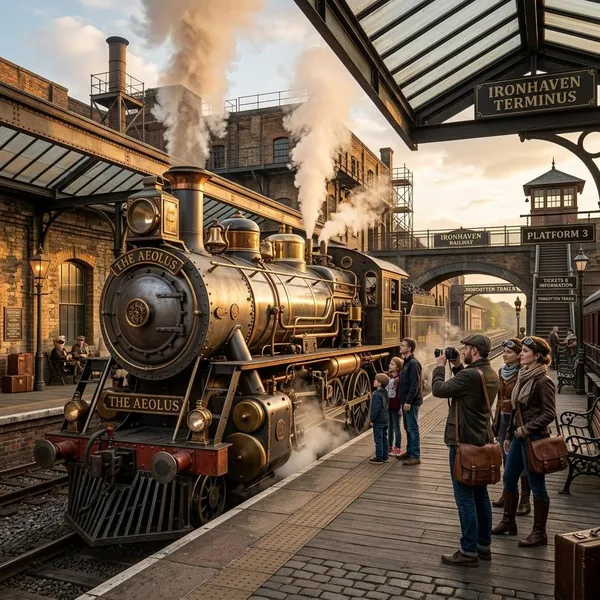
You can find steampunk trains in fiction, games, kits, brick sets, custom builds, and themed attractions. The best place to start depends on what you want from the idea: inspiration, a build project, a moving model, or a one-time immersive experience.
Fantasy books and comics
Books and comics are useful when you want visual direction before spending money on a model. Trains in these worlds can become royal transports, moving cities, military convoys, secret laboratories, or heist locations.
Pay attention to the mood rather than copying every detail. If you keep saving images of refined interiors and brass lamps, a luxury passenger train may suit you. If you prefer soot, armor, and patched metal, an explorer or war-train style will probably feel more satisfying.
Games and animated worlds
Games and animation add sound, smoke, movement, lighting, and scale, which makes steampunk trains feel more convincing. They are also good references for color choices and motion details: glowing windows, pulsing engines, turning wheels, and shifting machinery often translate well into models.
Wooden model kits
Wooden model kits are a practical entry point if you want a calm building project and a warm, handcrafted finish. Laser-cut wooden parts often suit the steampunk look naturally, especially when the design includes layered panels, gears, and lighting.
Brick-built train sets
Brick-built trains are better when you want size, rebuilding options, and easier repair. A set such as the Mould King 12046 Steampunk Steam Train appeals to builders who like larger displays, remote-control functions, and the freedom to modify sections later.
- Choose bricks for layout building, customization, and repeat handling.
- Choose wood for a more finished decorative look and quieter assembly.
- Choose mechanical kits when visible motion matters more than scale.
Escape rooms and themed attractions
Escape rooms and themed attractions are the most immersive option because they turn the train into a setting rather than an object. A steampunk railway escape room, for instance, may use props, puzzles, sound effects, timed missions, and story pressure to make the machinery feel part of an adventure.
How to choose a steampunk train model
Choose the model by use first, not by the most dramatic product photo. A display-only train, a weekend build, a working mechanical kit, and a motorized set are very different purchases. The most important checks are space, handling, movement, build time, and whether you want to customize it later.
| Best fit | Choose this if | Be careful if |
|---|---|---|
| Wooden puzzle | You want a focused build and a warm display piece | You need something sturdy for frequent handling |
| Brick set | You want size, rebuilding, and layout options | You dislike long builds or visible brick texture |
| Mechanical kit | You want gears, motion, and demonstration value | You prefer simple assembly with fewer adjustments |
| Motorized set | You want movement, play, or remote control | You have limited track space or want zero maintenance |
| Custom model | You want a unique collector piece | You do not want planning, painting, or trial and error |
Conclusion
The best steampunk train is the one whose design and use match the way you want to enjoy it. If you want atmosphere, look for strong story cues; if you want a hobby project, choose the build style you will actually finish; if you want repeat interaction, prioritize motion and durability over extra ornament. A believable steam-era base, purposeful mechanical detail, and a clear role will matter more than the number of gears on the surface.
FAQ
Are steam trains automatically steampunk?
No. A steam train becomes steampunk only when historic railway styling is combined with speculative mechanical design, exaggerated invention, or story-driven fantasy details.
How is a steampunk train different from a vintage train?
A vintage train tries to preserve or represent railway history. A steampunk train uses that history as a base, then adds imagined technology, theatrical machinery, and a stronger fictional purpose.
Can steampunk train models move?
Yes, some can. Look for wording such as self-propelled, spring-driven, motorized, remote-controlled, or compatible with track systems if movement is important to you.
What materials suit a steampunk train model?
Wood works well for warmth and display, bricks for rebuilding and durability, and metal or metallic finishes for brass-and-rivet detail. The best choice depends on whether you care most about looks, handling, or movement.
Are steam trains automatically steampunk?
No. A steam train becomes steampunk only when historic railway styling is combined with speculative mechanical design, exaggerated invention, or story-driven fantasy details.
How is a steampunk train different from a vintage train?
A vintage train tries to preserve or represent railway history. A steampunk train uses that history as a base, then adds imagined technology, theatrical machinery, and a stronger fictional purpose.
Can steampunk train models move?
Yes, some can. Look for wording such as self-propelled, spring-driven, motorized, remote-controlled, or compatible with track systems if movement is important to you.
What materials suit a steampunk train model?
Wood works well for warmth and display, bricks for rebuilding and durability, and metal or metallic finishes for brass-and-rivet detail. The best choice depends on whether you care most about looks, handling, or movement.