
If you want a quick way into steampunk, short fiction is usually the best place to start: one strong machine, one altered piece of history, and one clear conflict can do more in 20 pages than a bloated novel does in 400. Start with free online stories if you are still testing your taste, then move to anthologies when you know whether you prefer clockwork mystery, weird invention, western action, or fantasy-leaning atmosphere.
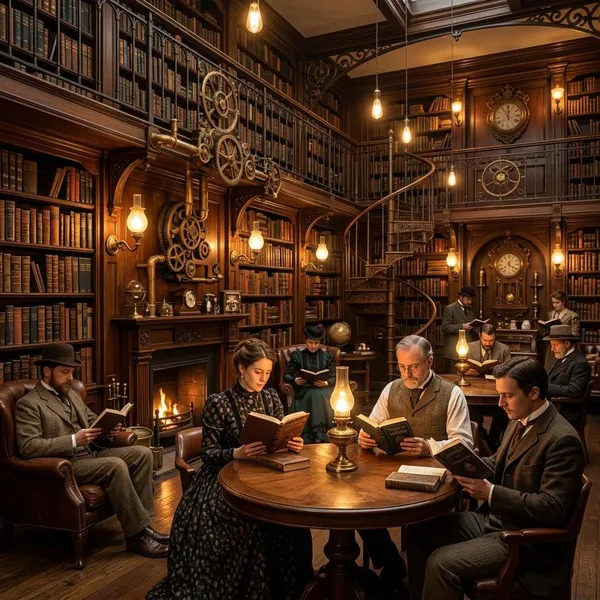
Best steampunk short stories to read online
Online steampunk short stories are useful because you can sample the genre without buying a collection first. The fastest approach is not to read randomly, but to choose by the kind of hook you actually enjoy: a strange machine, a changed past, a salvage job, a moral problem, or a darker character piece.
Terrain
Terrain is the sort of title to pick when you want atmosphere and setting to matter. It suits readers who like a world that feels physically changed by industry: routes, borders, damaged landscapes, or places where machinery has altered how people live.
The Punctuality Machine
The Punctuality Machine is a good pick if you like one clever device at the center of the plot. A timekeeping machine can be funny, sinister, or political depending on how it is used: to organize life, punish lateness, control workers, or expose obsession.
- Best for: readers who like a clean speculative premise.
- Check for: whether the machine creates consequences, not just charm.
- Skip for now if: you want broad worldbuilding more than a tight idea.
A Different Engine
A Different Engine points toward alternate history, which is one of steampunk's strongest short-story modes. The appeal is not just "old world plus gears"; it is seeing how one changed invention might reshape transport, class, trade, or war.
Salvage
Salvage works well for readers who prefer worn metal over polished brass. Salvage stories often feel more practical and dangerous because the machines are broken, reused, stolen, or too valuable to abandon.
The Guilt Child
The Guilt Child suggests a darker, more psychological side of steampunk. This is the one to choose if you want the machinery to carry emotional weight rather than simply power an adventure.
It may not be the easiest first read for someone expecting airships and jokes, but it can be more memorable if you like stories about blame, exploitation, innocence, or systems that turn people into tools.
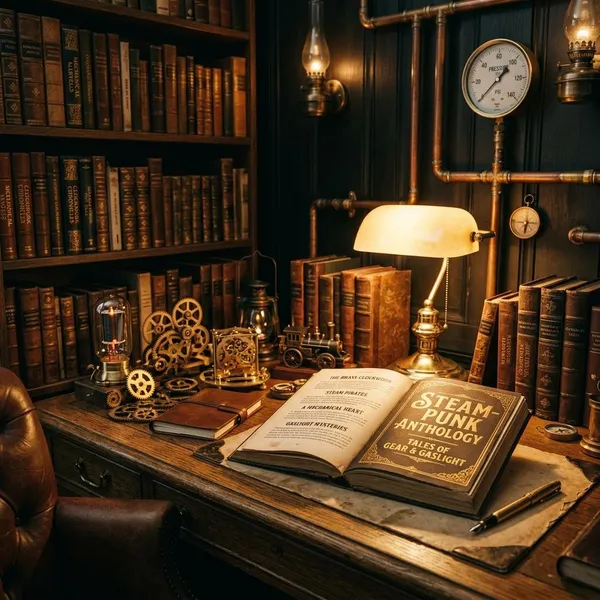
Steampunk anthology stories worth reading
Anthologies are better once you know what you want more of. A broad collection lets you compare westerns, automata stories, literary retellings, spy plots, and fantasy-infused pieces without committing to one author's version of steampunk.
For a new reader, the sensible order is simple: try a few free stories first, buy a general anthology next, then look for narrower collections if you discover a favorite lane. For a longtime steampunk reader, anthologies are more useful for finding unusual voices and stranger combinations than for getting the most familiar brass-and-airship version of the genre.
The Last Ride of the Glory Girls
The Last Ride of the Glory Girls is the anthology pick to reach for if you want steampunk with western momentum. "Last ride" already gives the story pressure: one final job, escape, confrontation, or reckoning.
Clockwork Fagin
Clockwork Fagin is worth reading if you like literary remix with a sharper social edge. A familiar Dickensian type filtered through clockwork technology can quickly bring in poverty, child labor, theft, discipline, and survival without pages of setup.
Oracle Engine
Oracle Engine combines two ideas that naturally create tension: prediction and machinery. Is the device truly prophetic, merely statistical, or being used by powerful people to make their decisions look inevitable?
This is a strong choice for readers who like philosophical science fiction. It can offer mystery without needing a full detective plot.
Steam Girl
Steam Girl sounds character-first, which can be a relief in a genre that sometimes overdecorates its machinery. Look for how the title character's agency is shaped by the technology around her: who gets to build, travel, speak, work, or be believed?
If you are choosing for a younger reader or someone new to speculative fiction, a character-centered steampunk story is often easier to enter than a dense alternate-history puzzle.
Hand in Glove
Hand in Glove is a good match for readers who enjoy secrecy, disguise, careful objects, and social performance. In steampunk, a glove might be fashion, weapon, prosthetic, code tool, or evidence.
That makes it a natural fit for mystery or espionage. A small object can carry the plot without forcing the story to explain an entire empire.
Some Fortunate Future Day
Some Fortunate Future Day is the quieter anthology choice: reflective, possibly hopeful, and more interested in what progress costs or promises than in spectacle. It is worth choosing when you want steampunk with emotional aftertaste.
Not every good steampunk story needs a chase. Sometimes one changed future, one act of repair, or one fragile hope is enough.
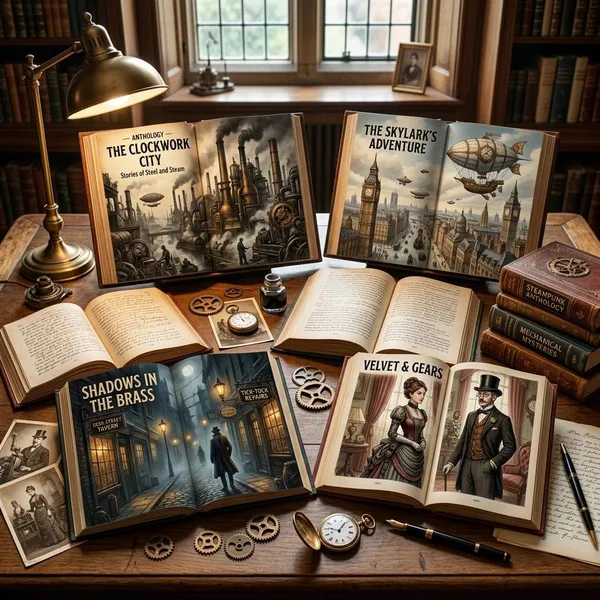
Steampunk short stories by style
If you are unsure where to begin, choose by reading mood rather than by title. Someone who wants a puzzle will probably enjoy a different steampunk story than someone who wants wonder, frontier danger, or a moral question about artificial life.
| Style | Choose it when you want | Good first test |
|---|---|---|
| Clockwork and automata | Identity, labor, artificial life | Does the machine feel almost human? |
| Alternate history | A changed past with visible consequences | Can you see how society shifted? |
| Steampunk western | Motion, danger, frontier pressure | Does the tech matter outside a city? |
| Mystery and espionage | Secrets, clues, hidden devices | Does one object change what people know? |
| Fantasy-infused steampunk | Magic mixed with machinery | Do engines and enchantment both matter? |
Clockwork and automata stories
Clockwork and automata stories are often the easiest entry point because the central question appears quickly: is this machine only a tool, or does it deserve fear, sympathy, rights, or grief?
These stories are best when the automaton affects more than the scenery. A mechanical servant can expose class tension; a clockwork child can make the reader question care and ownership; a soldier-machine can turn invention into moral injury.
Alternate-history adventures
Alternate-history steampunk is for readers who enjoy cause and effect. One changed engine, computation system, weapon, or transport network should make the past feel recognizably historical but no longer stable.
Steampunk westerns
Steampunk westerns work because both genres care about unstable borders. Law is thin, machinery arrives before responsibility, and people improvise with whatever tools they can repair or steal.
Pick this style for a fast, low-friction read: train lines, desert engines, mining towns, outlaw crews, and experimental weapons all create conflict quickly. If you dislike western tropes, though, this may not be the best first branch of steampunk for you.
Mystery and espionage stories
Mystery and espionage steampunk uses devices as clues, locks, disguises, surveillance tools, or weapons. This style is especially good in short fiction because the plot has a built-in question from the start.
- Good sign: the invention reveals information at the right moment.
- Weak sign: the mystery would work the same in any historical setting.
- Best reader fit: anyone who likes compact plotting over big lore.
Fantasy-infused steampunk
Fantasy-infused steampunk sits near gaslamp fantasy, but the balance matters. If magic does everything important and the machines are only decoration, it no longer feels strongly steampunk.
This style is ideal when you want atmosphere without strict technical logic: enchanted engines, spirit-driven mechanisms, prophetic machines, or airships guided by impossible forces. For readers who find hard machinery cold, it can be the most welcoming doorway into the genre.
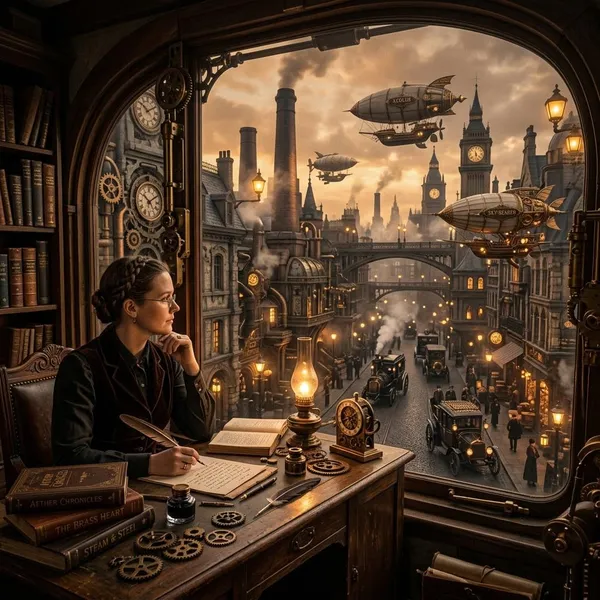
What makes steampunk short fiction work
The best steampunk short fiction does not try to build a whole encyclopedia of an alternate world. It chooses one strong idea, places pressure on a character, and lets the invention change what can happen.
Worldbuilding starts quickly
Short steampunk needs fast worldbuilding. A single precise detail can do more than a long explanation: an automaton selling tickets, a ban on private engines, soot on expensive gloves, or a factory whistle that controls the whole neighborhood.
If the first few pages are only background, the story may feel like a novel fragment. Good short fiction makes the world visible while something is already happening.
Inventions shape the conflict
The invention should be removable only if the story collapses with it. A prosthetic might change status and ability; a message engine might expose a spy; a salvage machine might force someone to choose between profit and safety.
That is the quickest quality check: ask what would happen if the machine disappeared. If the answer is "almost nothing," the steampunk is probably surface-level.
Historical settings feel reimagined
A reimagined historical setting should show altered habits, not just altered props. Different transport changes distance. Different manufacturing changes work. Different communication changes secrecy and control.
The story does not need to explain all of that, but it should imply enough for the world to feel changed. One sharp social detail can be more convincing than a page of invented history.
Technology carries thematic weight
Steampunk technology often works best when it means more than progress. It can stand for exploitation, repair, surveillance, ambition, grief, rebellion, or the hope that broken systems can be rebuilt.
This is why a small machine can carry a large story. The object moves the plot, but it also tells you what the story is really worried about.
One strong idea drives the story
A memorable steampunk short story is usually easy to summarize in one sentence: a machine predicts futures, a crew salvages the wrong engine, a clockwork child unsettles a household, or a railway changes who owns the frontier.
That clarity is not a weakness. In short fiction, one focused idea gives the ending more force than a huge world that never has room to matter.
Conclusion
The best way to choose steampunk short stories is to match the story's central machine to the reading experience you want: mystery, altered history, frontier action, moral unease, or strange wonder. If the invention changes the characters' choices instead of merely decorating the setting, you are much more likely to find a story that stays with you after the brass and smoke clear.
FAQ
Where can you read steampunk short stories online for free?
Try searchable archives from speculative fiction magazines, author websites, and publisher sample pages. Use terms such as "steampunk," "clockwork," "automata," and "alternate history," then check whether the story is legally hosted before reading.
What are the best steampunk short story anthologies?
The best choice depends on taste: start with a broad steampunk anthology if you are new, or choose a themed one if you already know you want westerns, romance, darker stories, or literary retellings. A good anthology should feel varied without turning into random Victorian-flavored fantasy.
How is steampunk different from gaslamp fantasy?
Steampunk usually makes machinery, invention, and industrial technology central to the plot. Gaslamp fantasy may share the historical mood, but magic, spirits, curses, or folklore usually drive the world more than engines do.
What themes are common in steampunk short fiction?
Common themes include progress and harm, class, labor, empire, surveillance, identity, repair, and who gets access to powerful technology. In short fiction, those themes usually work best when they are carried by one machine or one urgent conflict.