
If you want a steampunk robot to look convincing, decide first what it is meant to be: a shelf sculpture, a cosplay prop, a character design, or a large display piece. The style comes from Victorian industrial shapes, believable mechanical details, aged metal colors, and a few signs of use rather than from covering every surface with gears.
What makes a robot look steampunk
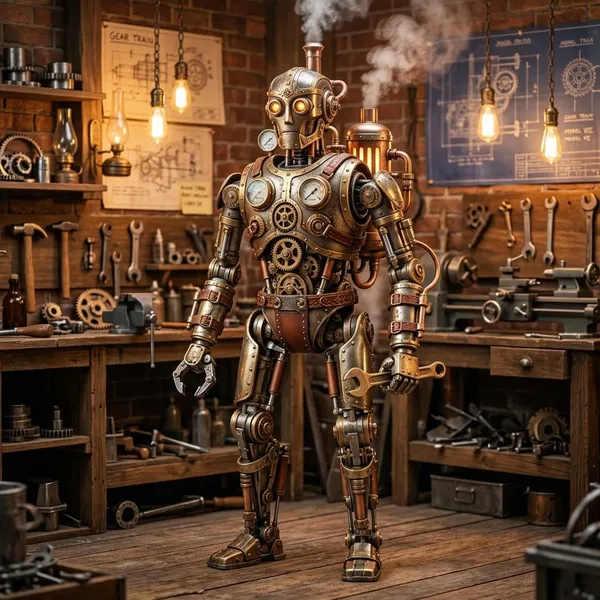
A robot starts to feel steampunk when it looks built by an old workshop inventor instead of produced by a modern factory. Prioritize silhouette, material contrast, and believable parts before adding small decoration.
Victorian industrial styling
Think of the robot as a machine from an alternate late-1800s workshop. Domed heads, boiler-like torsos, riveted plates, heavy joints, vents, and instrument panels all help create that Victorian industrial mood.
Brass copper and dark metal
A convincing palette usually starts with brass, copper, bronze, gunmetal, blackened iron, and dark brown. Brass gives the design a crafted look, copper adds warmth, and darker metals keep the robot from looking too shiny or toy-like.
- Use dark tones first: a black or brown base coat makes metallic paint look deeper.
- Add warm metal accents: brass and copper work well on faceplates, pipes, trim, and gauges.
- Avoid flat bright silver: it often reads as modern unless it is heavily aged.
Exposed gears pipes and gauges
Gears, pipes, and gauges should look as if they have a job. A gauge on the chest can suggest pressure control, pipes from the back to the shoulders can imply steam transfer, and gears near a joint can hint at movement.
Rivets leather and worn surfaces
Rivets are useful because they make flat panels feel like bolted metal plates. Leather straps can add a workshop, travel, or repair feel, especially around tanks, arms, or tool sections.
Weathering should appear where wear would naturally happen: corners, knees, elbows, handles, feet, and raised edges. A little dark wash around rivets or vents is usually more believable than covering the entire robot in the same dirty finish.
Handmade mechanical details
One memorable detail can give the robot more personality than dozens of small decorations. A winding key, telescope eye, tiny boiler tank, tool arm, chest hatch, or monocle lens gives the build a clear identity.
Small imperfections can help if they look intentional. Mixed screws, uneven plates, and reused parts can make the robot feel like a real invention, while perfect symmetry may make it look too manufactured.
Popular steampunk robot styles
The best style depends on how the robot will be used. A small desk piece can focus on charm and detail, while a cosplay prop needs to be light, durable, and readable from a few steps away.
Humanoid mechanical servants
Humanoid servants are easy to recognize because they use a familiar body plan: head, torso, arms, and legs. That makes them a good choice if you want the robot to feel like a butler, porter, mechanic, lab assistant, or workshop helper.
Use accessories to clarify the role. A tray suggests a servant, a lantern suggests an explorer's assistant, and a tool arm suggests a repair machine. The accessory should support the character rather than distract from the main shape.
Cute clockwork robots
For a first build or a handmade gift, cute clockwork robots are often the easiest route. Rounded bodies, big eyes, short limbs, and simple gears can create charm without needing complex construction.
- Best for: shelf decor, gifts, beginner crafts, small recycled builds.
- Use: tins, bottle caps, springs, buttons, washers, and cardboard tubes.
- Keep in mind: playful proportions matter more than realistic engineering.
Animal-inspired machines
Animal shapes give you a strong silhouette before you add any detail. A mechanical owl can use layered metal feathers, a dog can have piston legs, and a beetle can carry segmented armor and tiny clockwork parts.
Victorian explorers and astronauts
Explorer and astronaut versions add a story before anyone reads a description. Goggles, helmets, pressure tanks, maps, compasses, satchels, and heavy boots suggest travel, discovery, and dangerous machines from another age.
This is a strong choice for a display piece if you want more drama than a simple standing robot. A copper tank backpack or a cracked glass eye can instantly suggest a machine that has been through expeditions.
Large display sculptures
At a large scale, tiny details matter less than strong shapes. Big shoulder joints, oversized rivets, broad chest plates, glowing eyes, and bold metal contrast are easier to read across a room.
Plan the practical side early. A large sculpture needs a stable base, manageable weight, durable surfaces, and parts that will not break during transport. For event or shop displays, safety and repairability matter as much as style.
Best materials for a steampunk robot
Start with the material that solves the biggest problem first. For a desk sculpture, that may be stability and detail; for cosplay, it is usually weight; for a large display, it is structure and durability.
Recycled metal parts
Real scrap metal brings texture that paint alone cannot fully imitate. Springs, washers, nuts, bolts, plumbing fittings, watch parts, broken tools, and old handles can all become believable mechanical details.
Use heavier pieces with care. Clean sharp edges, avoid loose rust, and do not place heavy metal high on a small robot unless the base can support it. If the piece will be handled often, glue alone may not be enough.
Wood cardboard and foam
Use wood, cardboard, or foam for the main body when you need shape without too much weight. Cardboard is good for testing proportions, foam works well for large lightweight forms, and wood gives small sculptures a solid handmade feel.
Gears screws and hardware
Hardware is where the robot starts to look engineered. Large bolts suit shoulders, hips, knees, and feet, while smaller screws, washers, and gears work better around the head, chest, and control panels.
- Place big parts on structural areas: joints, feet, shoulders, and the torso.
- Use small parts for detail: eyes, buttons, panels, and instrument sections.
- Keep a reason for each piece: decorative parts look better when they suggest a function.
Wires tubes and leather
Wires and tubes help connect one part of the robot to another. Run them between the torso and arms, from a backpack tank to the shoulders, or around a control panel so they look like power, steam, or pressure lines.
Leather works best as a contrast material. A strap around a tank, wrist, or tool section can make the robot feel repaired, portable, or expedition-ready without adding more metal.
Metallic paint and patina
Paint is what makes mixed materials feel like one machine. A cardboard tube, plastic cap, and metal washer can belong together once they share a dark base coat, metallic highlights, and aged edges.
Work in layers rather than one heavy coat. Start dark, dry brush brass or copper over raised areas, then use a thin black or brown wash in corners and around rivets. For copper details, a small amount of green-blue patina can suggest age, but too much can make the robot look painted rather than worn.
Where steampunk robots are used
Use case should guide the build more than the fantasy idea alone. A robot that only sits on a shelf can be heavier and more delicate, while one used at a convention or event needs to survive movement, handling, and setup.
Home and office decor
For a desk, shelf, or studio corner, a smaller robot is usually the most practical choice. It is easier to clean, easier to place, and less likely to dominate the room.
Focus on a stable base, balanced proportions, and one strong focal detail such as expressive eyes, a chest gauge, or a winding key. Moving gears are not necessary for everyday decor; a well-aged finish usually does more for the look.
Collectible sculptures
A collectible robot should feel specific. Buyers and makers often respond more to character and craftsmanship than to perfect symmetry, so found parts, careful weathering, and a clear role can make the piece more appealing.
Cosplay props
Cosplay changes the priorities. Weight, comfort, and secure attachment matter more than using real metal, especially if the prop will be worn for hours or carried through a busy venue.
Foam, sealed cardboard, plastic tubing, and lightweight craft pieces can still look metallic after painting. Avoid sharp edges, loose wires, and heavy parts near the face, shoulders, or hands unless they are safely secured.
Themed event displays
Event displays need to read quickly. Large gauges, bright eye lights, bold silhouettes, and oversized rivets create atmosphere faster than tiny watch gears that guests may never notice.
If the robot will be moved between venues, design it in sections or choose materials that can handle storage. A dramatic sculpture is less useful if it is too fragile to transport or too heavy to set up safely.
Games stories and concept art
In games, stories, and concept art, the robot's design should explain its role at a glance. A polished brass machine may suggest wealth and service, while a battered iron robot suggests factory labor, war, or constant repair.
Give the machine one clear function before adding decoration. Is it a messenger, guard, miner, explorer, pet, or servant? That decision will guide the body shape, materials, posture, and details more effectively than simply adding more gears.
Conclusion
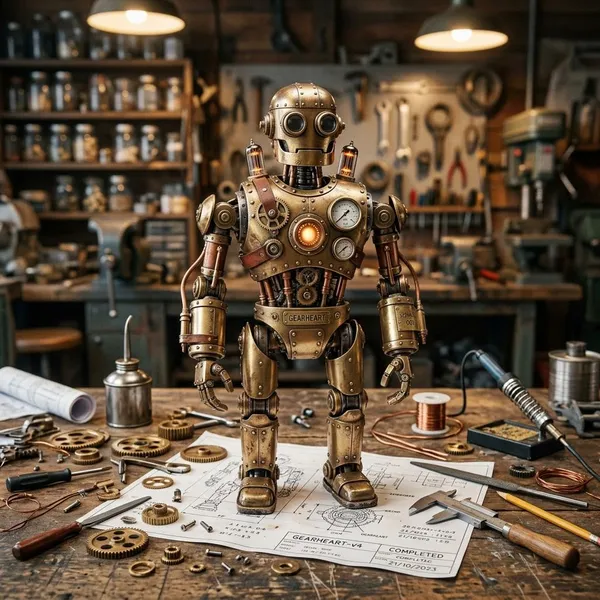
A strong steampunk robot starts with purpose, not decoration: choose where it will live, give it a clear role, then build the silhouette and mechanical details around that idea. Brass, copper, rivets, leather, gears, and patina can all help, but the design feels best when every part looks like it belongs to the same strange old machine.
FAQ
What is a steampunk robot called?
It is often called a steampunk robot, clockwork robot, or automaton. "Automaton" fits especially well when the design is meant to feel antique or self-operating.
Do steampunk robots need moving gears?
No. Static gears are enough for decor or artwork if they are placed where movement would make sense, such as near joints, panels, or a visible drive section.
Can you make one from recycled materials?
Yes. Recycled tins, screws, springs, wires, bottle caps, and old hardware often make the design look more authentic than brand-new craft parts.
What colors suit a steampunk robot?
Brass, copper, bronze, gunmetal, black, dark brown, and aged silver usually work best. Small amber, red, or green patina accents can add character without making the palette feel too modern.
What is a steampunk robot called?
It is often called a steampunk robot, clockwork robot, or automaton. "Automaton" fits especially well when the design is meant to feel antique or self-operating.
Do steampunk robots need moving gears?
No. Static gears are enough for decor or artwork if they are placed where movement would make sense, such as near joints, panels, or a visible drive section.
Can you make one from recycled materials?
Yes. Recycled tins, screws, springs, wires, bottle caps, and old hardware often make the design look more authentic than brand-new craft parts.
What colors suit a steampunk robot?
Brass, copper, bronze, gunmetal, black, dark brown, and aged silver usually work best. Small amber, red, or green patina accents can add character without making the palette feel too modern.