
A good steampunk doll should look like a character first and a pile of gears second. If you are buying one, start with how it will be used: display, photography, gentle handling, or a craft project. If you are making one, choose a clear role and build the clothing, colors, and accessories around that idea.
What makes a doll steampunk?
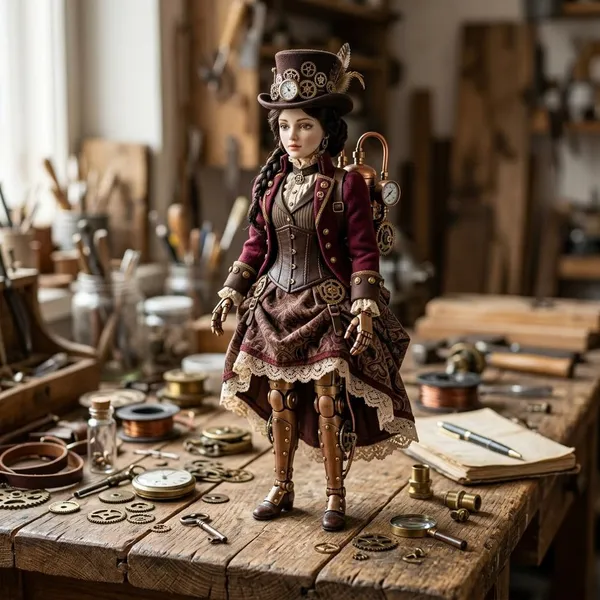
Steampunk style mixes old-fashioned elegance with imagined machinery. The most convincing dolls usually have a Victorian or Edwardian base, warm metal accents, and a little weathering so the character feels as if they belong in a world of airships, workshops, maps, and strange inventions.
Victorian-inspired clothing
Clothing sets the era before the accessories do any work. Corsets, waistcoats, fitted jackets, lace collars, bustle skirts, bloomers, gloves, boots, and high necklines all help the doll feel rooted in a Victorian-inspired world.
Clockwork accessories
Goggles, gears, tiny keys, chains, pocket-watch charms, buckles, and miniature tools are the fastest visual clues. The mistake is using all of them at once. Pick one focal point first, such as goggles on a hat or a watch chain at the waist, then add only what supports the same character.
- Display doll: delicate metal charms and tiny chains can work well.
- Handled doll: lighter resin, plastic, felt, or stitched details are usually safer.
- Small-scale doll: one bold accessory often reads better than five tiny ones.
Brass and copper tones
Warm metals give steampunk its workshop feel. Antique brass, copper, bronze, dark silver, and aged gold usually look more natural than bright chrome or shiny modern gold.
Use these tones as accents rather than coating the whole doll in metallic color. Buttons, buckles, painted trim, jewelry, boot details, or a small gear brooch can be enough, especially when paired with brown, cream, black, burgundy, olive, dusty rose, or deep teal.
Aged and weathered details
A little age makes the design feel lived-in. Tea-stained lace, darker edges on a belt, rubbed bronze paint, or lightly distressed fabric can suggest travel and use without making the doll look dirty or damaged.
Industrial fantasy styling
This is where the doll becomes more than a historical costume. Industrial fantasy styling gives the character a purpose: mechanic, explorer, scientist, librarian-inventor, time traveler, pilot, or collector of impossible machines.
Popular types of steampunk dolls
The best type depends on whether you want a finished collectible, a poseable display piece, a beginner customization project, or a soft handmade doll. Price and durability vary a lot, so it helps to choose the format before falling in love with the styling.
OOAK art dolls
OOAK means one of a kind. These dolls are handmade or heavily customized, so the face, clothing, accessories, and character concept are usually unique.
Fashion dolls
Fashion dolls are the easiest starting point for many buyers and makers. They are affordable, widely available, and usually simple to dress or restyle.
Ball-jointed dolls
Ball-jointed dolls, or BJDs, suit collectors who care about posing, photography, and a premium display presence. Their articulation makes them excellent for scenes with books, props, trunks, tools, or miniature workshop setups.
The trade-off is cost and care. Resin, custom face-ups, wigs, eyes, and detailed outfits may need more careful handling than a simple vinyl doll. A BJD is a good choice when you want a long-term display character, not a quick casual craft.
Custom repainted dolls
A custom repainted doll starts as a standard factory doll and becomes more individual through face painting, shading, lashes, hair changes, or a new expression. For steampunk, a repaint can shift the mood from cheerful toy to serious inventor, moody traveler, or elegant adventurer.
This option sits nicely between budget customizing and high-end art collecting. You still get an original look, but you do not have to sculpt the doll from scratch.
Crochet and textile dolls
Crochet and textile dolls have a softer, more handmade feel. Yarn, felt, cotton, embroidery, and stitched accessories can make the steampunk theme warmer and less severe.
They are especially practical for gifts or decorative shelf dolls when the small parts are sewn on securely. For a child's room or a cozy handmade display, fabric goggles and stitched buttons may be a better choice than sharp metal findings.
How to choose a steampunk doll
Start with use, then check construction. A beautiful doll can still be the wrong choice if the accessories are fragile, the clothing stains the body, or the scale does not fit your display space.
Decide how you will use it
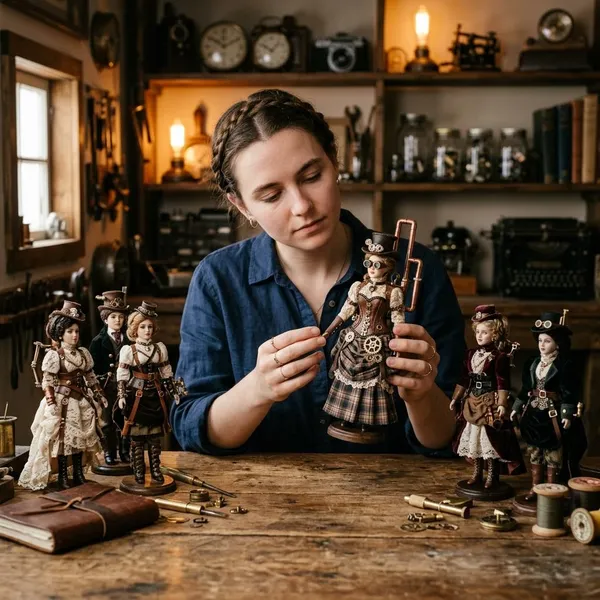
This decision should come before style details. A cabinet display doll can have fine chains, delicate lace, and fragile props. A doll for gentle handling, gifting, or a busy household needs sturdier clothing and fewer loose parts.
| Use case | What to prioritize | What to avoid |
|---|---|---|
| Display or collecting | Originality, face detail, layered costume, visual impact | Paying for durability you do not need |
| Photography | Poseability, stable shoes, accessories that read well on camera | Bulky items that block movement |
| Gift or gentle handling | Secure stitching, soft edges, simple trims | Tiny detachable metal pieces |
| Customization practice | Affordable base, removable clothes, easy repaint surface | Rare collector dolls as a first experiment |
Choose the right doll type
Match the format to the job. A fashion doll is good for experiments, an OOAK art doll is best as a finished collectible, a BJD works well for dramatic posing, and a textile doll suits handmade charm.
Check the materials and finish
Look closely at the body, face, seams, paint, and clothing edges. Resin can feel premium, vinyl is practical, and fabric or yarn gives a softer handmade result, but neat finishing matters more than the material name alone.
- Face paint: should look intentional, not rushed or uneven.
- Fabric edges: should be hemmed, sealed, or cleanly finished.
- Metallic details: should look aged or muted, not randomly shiny.
- Scale: buttons, gears, hats, and buckles should not overpower the doll.
Inspect clothing and small parts
Small details deserve a real check, especially when buying online. Zoom in on hats, chains, goggles, belts, keys, trims, and shoes. If everything is glued on with visible blobs or looks oversized, the doll may be less satisfying in person.
Match quality to your budget
A low price is not automatically a bargain, and a high price is not automatically good craftsmanship. Compare what you are actually paying for: a stronger base, original repaint, better tailoring, secure accessories, or the artist's one-of-a-kind work.
How to make a steampunk doll
Making one is easier when you plan the character before choosing decorations. A simple inventor, traveler, aviator, or mechanic concept will guide the colors, outfit, hairstyle, and accessories so the finished doll feels intentional rather than cluttered.
Choose the base doll
Pick a base that fits your skill level and the final use. A fashion doll is easiest for clothing changes and beginner customization. A crochet or textile base is better if you want a soft handmade piece. A BJD or resin base makes sense only if you are ready for more careful handling and higher costs.
Plan the colors and outfit
Limit the palette early. Two main colors plus one metal tone is often enough: for example, brown and cream with brass, or black and burgundy with copper.
Then decide the outfit pieces by role. An inventor may need a vest, rolled sleeves, goggles, and a tool pouch. A formal display doll might look better in a fitted jacket, lace collar, and long skirt. This keeps the design from becoming a random mix of every steampunk idea at once.
Make the clothing
Start with fit, not decoration. A clean bodice, skirt, coat, waistcoat, or pair of trousers gives the doll structure; lace, buckles, straps, and buttons should come after the garment sits properly.
- Use fine trims: narrow ribbon and small lace usually look better at doll scale.
- Test movement: make sure sleeves, skirts, and belts do not block posing.
- Repurpose scraps: old ribbon, faux leather, and fabric offcuts are often enough.
- Keep one focal area: hat, bodice, waist, or boots, not all four at once.
Add gears and accessories
Accessories should support the character's job. Place the main piece first, then decide whether the doll really needs more. A gear brooch, a tiny book, a map roll, or a key chain can say plenty without covering the whole outfit.
- Hold pieces in place before attaching. View the doll from the front and side.
- Check balance. Heavy items can make a doll lean or pull clothing down.
- Use the right attachment. Stitch fabric dolls; glue only where it will stay hidden and secure.
- Leave space around the face. Crowded goggles, hats, and hair pieces can hide the expression.
Finish the face and hair
The face decides the mood. A focused gaze suits an engineer or pilot; softer brows and muted lips can suit a traveler, librarian, or aristocratic inventor. Even small changes in blush, lip color, or eyebrow shape can make the doll feel less factory-made.
Hair should work with the outfit instead of fighting it. Braids, buns, pinned curls, loose waves, or a short practical style can all fit steampunk. If the hat or goggles are already dramatic, keep the hairstyle simpler.
Secure the small details
Do a final stress check before calling the doll finished. Tug gently on chains, buttons, hats, goggles, belts, and charms. If something shifts easily, reinforce it with a hidden stitch, a second glue point, or a lighter replacement.
Conclusion
The strongest choice is the one that matches the doll's purpose: delicate and detailed for display, sturdy and simple for handling, affordable for learning, and more refined when you want a finished collectible. Whether you buy or make it, keep the character idea clear and let every gear, fabric, color, and accessory earn its place.
FAQ
Can beginners customize a steampunk doll?
Yes. Start with a low-cost fashion doll, limit the palette, and make one or two changes first, such as clothing and goggles, before trying a full repaint or complex accessories.
Can real clock parts be used on a doll?
Yes, but they are best for display dolls. Real clock parts can be sharp, heavy, or difficult to attach, so lightweight craft gears are usually better for dolls that will be handled.
Are steampunk dolls made for play or display?
Some are made for display and some can handle gentle play. The deciding factors are secure parts, soft or rounded materials, and whether any small accessories could loosen during use.
Can beginners customize a steampunk doll?
Yes. Start with a low-cost fashion doll, limit the palette, and make one or two changes first, such as clothing and goggles, before trying a full repaint or complex accessories.
Can real clock parts be used on a doll?
Yes, but they are best for display dolls. Real clock parts can be sharp, heavy, or difficult to attach, so lightweight craft gears are usually better for dolls that will be handled.
Are steampunk dolls made for play or display?
Some are made for display and some can handle gentle play. The deciding factors are secure parts, soft or rounded materials, and whether any small accessories could loosen during use.