
Steampunk stickers work best when the design, material, and surface all match: paper for journals and collage, vinyl for handled items, and printable sheets when you need custom sizes or a matching theme. Start by deciding where the sticker will go, then choose the style and finish that suits that use instead of buying only by artwork.
What makes a sticker steampunk
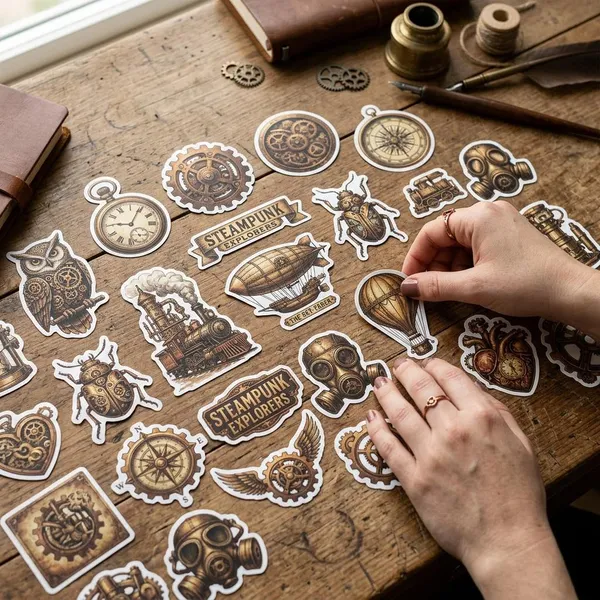
A sticker feels steampunk when it mixes antique elegance with imagined machinery. The style is not just "old brown graphics" or random gears; the strongest designs usually combine a Victorian mood, mechanical details, aged metal colors, and a sense of invention.
Victorian-inspired details
Victorian-style elements give steampunk its refined side: pocket watches, cameo frames, corsets, keys, lace borders, gloves, formal hats, florals, and ornate labels. These details are useful when you want the design to look vintage rather than purely industrial.
They are especially good for paper crafts, handmade cards, gift tags, and planners because the shapes feel decorative without dominating the page. If your project already uses soft colors or antique paper, Victorian designs usually blend more naturally than heavy gear artwork.
Gears, clocks, and airships
Gears, cogs, gauges, clock faces, pipes, and airships create the mechanical side of the look. These motifs are easy to recognize from a distance, which makes them better for visible surfaces such as laptops, notebooks, storage boxes, or water bottles.
- Use gears when you want a workshop or invention feel.
- Use clocks for a timeworn, antique mood.
- Use airships when the project needs adventure or storytelling.
Brass, copper, and dark tones
Steampunk colors usually sit in a warm, aged palette: brass, copper, bronze, deep brown, charcoal, burgundy, muted gold, and blackened metal. These tones help the artwork feel like leather, machinery, old paper, or a workshop drawer.
Matte finishes often suit these colors because they reduce glare and make the design feel more antique. Glossy finishes can still look good on bold mechanical designs, but they may make subtle vintage details feel newer and less weathered.
Industrial and fantasy themes
Industrial details bring in rivets, pipes, engines, panels, bolts, and workshop textures. Fantasy details add impossible machines, mechanical animals, flying inventions, maps, and alternate-history characters.
Popular steampunk sticker styles
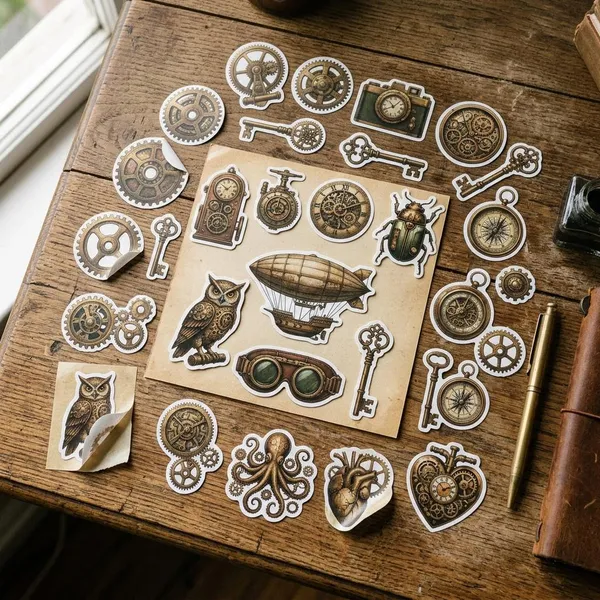
Steampunk stickers can look romantic, mechanical, gothic, adventurous, or collage-like. Style matters because two stickers made from the same material can feel completely different once they are placed on a page, bottle, gift box, or device.
Elegant Victorian designs
Elegant Victorian designs focus on filigree, cameo portraits, lace, antique keys, florals, framed labels, and formal clothing details. They are the safest choice when you want a softer vintage look.
Use them for journals, envelopes, tags, memory books, and handmade gifts. They also work well when the sticker needs to support the design rather than become the main visual focus.
Mechanical and clockwork designs
Mechanical and clockwork designs are the classic choice for a stronger steampunk effect. They use cogs, exposed machinery, watches, gauges, engine parts, and metal textures.
This style is better for hard surfaces or bold layouts because the shapes stay readable. A large clockwork sticker on a laptop, for example, usually looks cleaner than a very detailed collage sticker that gets visually lost from a distance.
Gothic steampunk designs
Gothic steampunk leans darker, with ravens, skulls, black lace, lanterns, distressed portraits, deep reds, and shadowy metalwork. It works well for Halloween crafts, alternative planners, cosplay packaging, themed events, or décor that needs more drama.
Adventure and airship designs
Adventure designs use airships, maps, compasses, goggles, trunks, wings, and travel instruments. They feel more story-driven than decorative, which makes them a good match for travel journals, book-club favors, classroom themes, and fantasy-inspired gifts.
Vintage collage designs
Vintage collage stickers mix tickets, stamps, handwritten notes, watch faces, faded portraits, diagrams, labels, and torn-paper textures. They are practical for crafters because they give you both focal pieces and small fillers in one pack.
Choose collage sets when you want fast layering. A scrapbook page, planner spread, or handmade card can look finished more quickly when the stickers already include varied sizes and textures.
Types of steampunk stickers
The most important choice is material, not artwork. A beautiful paper sticker may fail on a water bottle, while a durable vinyl sticker may feel too slick in a vintage journal. Match the sticker type to the amount of handling, moisture, and texture involved.
| Sticker type | Best use | Be careful with |
|---|---|---|
| Vinyl | Laptops, bottles, phone cases, storage boxes | Curves, cheap adhesive, unclear waterproof claims |
| Paper | Journals, planners, scrapbooks, cards | Water, friction, outdoor use |
| Die-cut | Single statement designs | Very thin outlines that may lift |
| Sticker sheets | Layered crafts and mixed layouts | Tiny pieces that are hard to peel |
| Printable | Custom labels, party sets, DIY themes | Ink smudging and weak home materials |
Vinyl stickers for durable surfaces
Vinyl is usually the best option for items that get touched often. Choose it for laptops, phone cases, water bottles, smooth storage bins, coated notebooks, and metal containers.
Do not assume every vinyl sticker is fully waterproof. If the sticker will go on a bottle that may get wet, look for clear wording such as water-resistant, waterproof, laminated, or suitable for outdoor use. If the listing is vague, treat it as decorative rather than heavy-duty.
Paper stickers for journals and crafts
Paper stickers are better for indoor creative projects. They sit naturally on journal pages, planners, scrapbooks, envelopes, gift tags, and handmade cards, especially when the finish is matte or slightly textured.
For a daily planner, paper is often the nicer choice because it is lightweight and easy to layer. For a child's lunch bottle or a toolbox, it is the wrong material because moisture and rubbing will damage it quickly.
Die-cut stickers for single designs
Die-cut stickers are trimmed around the artwork, so they look more finished than square or rectangular cuts. A die-cut airship, pocket watch, ornate key, or mechanical bird works well when you want one clear focal point instead of many small accents.
Sticker sheets for mixed collections
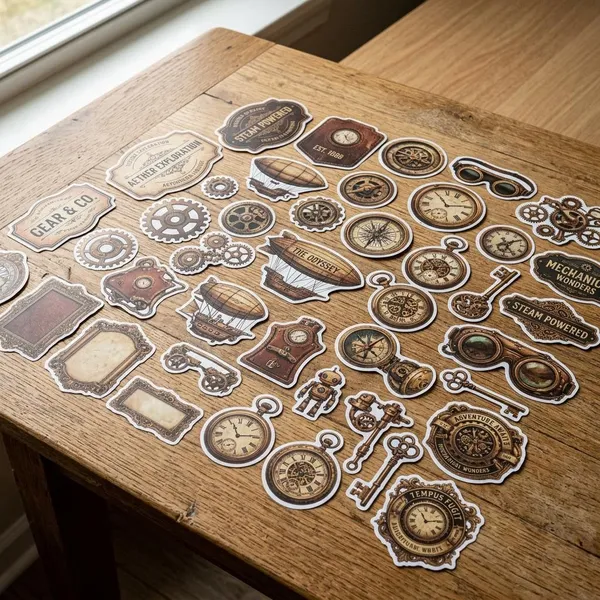
Sticker sheets are useful when a project needs variety: small gears, labels, borders, clocks, corners, and larger focal images. They are especially handy for planners and scrapbook pages because you can repeat a theme without using the exact same sticker every time.
- Choose sheets for layering and variety.
- Choose single die-cuts for one bold surface.
- Choose both if you are decorating a full themed box or gift set.
Printable stickers for DIY projects
Printable stickers are best when size, color, or wording needs to match a specific project. They are useful for party favors, custom storage labels, planner sets, themed envelopes, or test designs before ordering a professional batch.
Home-printed stickers depend heavily on paper, ink, printer settings, and sealing. For indoor labels or journals, standard sticker paper may be enough. For smoother handled items, printable vinyl plus a laminate sheet is usually more sensible, though still not always as tough as professionally made vinyl.
Where to use steampunk stickers
Steampunk stickers work on both practical objects and decorative projects, but the surface decides how long they will look good. Smooth, clean, non-porous surfaces are easiest. Rough fabric, unfinished wood, dusty plastic, and heavily textured paper can cause lifting or weak adhesion.
Laptops and phone cases
Laptops are one of the easiest places to use steampunk stickers because the surface is usually flat and visible. Vinyl die-cuts or larger mechanical designs tend to look best here, especially if you want a strong personal style without covering the whole device.
Phone cases need a little more caution. Curved edges and constant handling can lift sticker corners, so smaller vinyl designs are safer than one large detailed sticker. If you change cases often, removable vinyl is a better choice than permanent adhesive.
Journals and planners
Journals and planners are low-risk places to experiment. Paper stickers, matte finishes, ticket shapes, clock faces, and small labels can decorate a page without needing extra durability.
Scrapbooks and craft projects
Scrapbooks, cards, tags, and mixed-media projects are where steampunk stickers can do more than decorate. They can connect photos, labels, aged paper, metal charms, ribbon, and washi tape into one visual theme.
- Use large pieces as focal points.
- Use tiny gears or stamps to fill awkward gaps.
- Use labels for names, dates, quotes, or short notes.
Water bottles and storage boxes
Water bottles need the toughest choice: vinyl, preferably laminated if the bottle is used often. Apply stickers only to a clean, dry, smooth area, and avoid seams or tight curves where edges can peel.
Storage boxes are easier, but they still get handled. Steampunk label-style stickers work well for craft supplies, sewing tools, cables, stationery, or hobby storage because they make plain boxes easier to identify without looking too basic.
Gifts and party favors
For gifts and party favors, paper or printable stickers are often enough. They can seal envelopes, decorate favor bags, label treat boxes, or turn plain wrapping into something that matches a steampunk birthday, craft swap, book event, or cosplay gathering.
How to make steampunk stickers
Making your own steampunk stickers is practical if you want a specific palette, matching labels, unusual sizes, or a small themed batch. The safest approach is to test one sheet before printing everything, because dark colors, fine gears, and ornate borders can print differently than they look on screen.
Choose a clear visual theme
Pick one direction before designing: Victorian elegance, clockwork machinery, gothic drama, or airship adventure. A focused sheet looks more polished than one that tries to include every steampunk symbol at once.
A simple color limit helps too. Brass, brown, black, and one accent color are usually easier to coordinate than a crowded mix of metallics, reds, blues, maps, portraits, and gears.
Create or select the artwork
You can draw your own artwork, design digitally, or use licensed graphics that allow the kind of use you need. Avoid low-resolution images, especially for tiny clocks, thin borders, lettering, and gear teeth.
- Use large artwork for focal stickers.
- Add small icons for planners and labels.
- Leave spacing so cutting is easier.
Print on sticker paper
Choose the paper by use. Matte sticker paper suits antique designs and journals. Glossy paper gives richer contrast. Printable vinyl is better for smooth objects that may be touched more often.
Print a draft on plain paper first if the design is detailed. Check size, darkness, text readability, and margins before using sticker stock.
Cut and seal the designs
Cut with scissors, a craft knife, or a cutting machine. Simple shapes are easy by hand; detailed airships, gears, and lace borders are cleaner with a machine if you have one.
Seal only when it helps the use. Laminate sheets or spray sealants can reduce smudging and light wear, but a heavy glossy layer may change the vintage look. Test one small sticker before coating a full sheet.
Store the finished stickers flat
Keep finished stickers flat in a folder, envelope, binder sleeve, or pouch. Flat storage prevents curling, bent backing paper, and dusty adhesive edges.
If you make several sets, sort them by theme or size. It sounds small, but it saves time later when you need one label, one corner piece, or one focal design rather than digging through a mixed pile.
Conclusion
The best steampunk sticker choice is the one that fits the surface first and the style second: vinyl for handled items, paper for journals and crafts, and printable sheets for custom or temporary projects. Once the material is right, the visual choice becomes much easier—Victorian for soft vintage detail, clockwork for bold machinery, gothic for drama, and airship themes for adventure.
FAQ
Are steampunk stickers waterproof?
Some are waterproof, but many are only decorative. For bottles or damp areas, choose vinyl with clear waterproof or laminated protection rather than paper stickers.
Can steampunk stickers be removed without residue?
Sometimes, especially from smooth surfaces when the sticker uses removable adhesive. Warm the sticker gently and peel slowly; paper stickers are more likely to tear or leave backing behind.
Is matte or glossy better for steampunk designs?
Matte is usually better for an antique journal or collage look. Glossy is better when you want sharper contrast on devices, bottles, or bold mechanical artwork.
Which surfaces work best for vinyl stickers?
Smooth, clean, non-porous surfaces work best, such as laptops, phone cases, metal bottles, glass jars, coated notebooks, and plastic bins. Wipe away dust and skin oils before applying.
Are printable steampunk stickers durable?
They can be durable enough for indoor crafts, labels, and planners. For heavy handling or moisture, use printable vinyl with a protective laminate, or choose professionally made vinyl instead.
Are steampunk stickers waterproof?
Some are waterproof, but many are only decorative. For bottles or damp areas, choose vinyl with clear waterproof or laminated protection rather than paper stickers.
Can steampunk stickers be removed without residue?
Sometimes, especially from smooth surfaces when the sticker uses removable adhesive. Warm the sticker gently and peel slowly; paper stickers are more likely to tear or leave backing behind.
Is matte or glossy better for steampunk designs?
Matte is usually better for an antique journal or collage look. Glossy is better when you want sharper contrast on devices, bottles, or bold mechanical artwork.
Which surfaces work best for vinyl stickers?
Smooth, clean, non-porous surfaces work best, such as laptops, phone cases, metal bottles, glass jars, coated notebooks, and plastic bins. Wipe away dust and skin oils before applying.
Are printable steampunk stickers durable?
They can be durable enough for indoor crafts, labels, and planners. For heavy handling or moisture, use printable vinyl with a protective laminate, or choose professionally made vinyl instead.