
Choose a steampunk umbrella by use first, style second. A lace parasol may be perfect for cosplay or photos, but it can be a poor choice for rain; a printed rain umbrella is less theatrical, but much easier to live with. If you know whether you need shade, weather protection, travel convenience, or a dramatic prop, the right design becomes much easier to spot.
What makes an umbrella steampunk
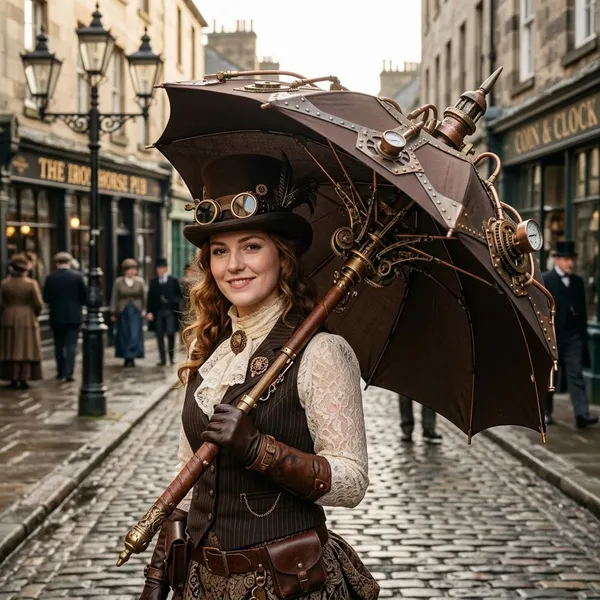
A steampunk umbrella usually mixes Victorian shape with machine-age details. The look can come from lace, a curved handle, dark metal tones, gear prints, ruffles, or an old-fashioned canopy silhouette. The strongest designs do not rely on one printed pattern alone; they look intentional from the handle to the edge trim.
Victorian lace and curved handles
Lace and curved handles bring in the Victorian side of the style. A hook handle, carved-look grip, scalloped lace edge, or slim shaft can make even a simple canopy look more period-inspired.
Use this detail deliberately. For cosplay, a curved handle looks better when carried closed and gives your hands something elegant to pose with. For daily rain use, the same handle should still feel comfortable when wet; a beautiful grip that slips in your hand is not a good trade.
Gears, clocks, and mechanical prints
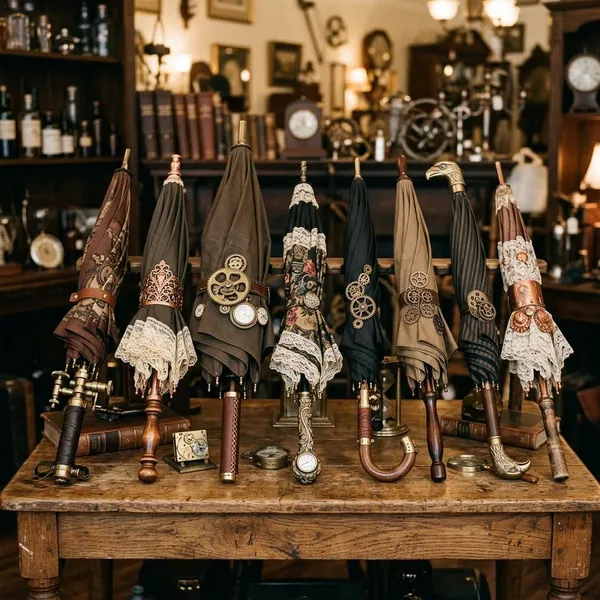
Gear, clock, compass, map, and blueprint prints are the quickest way to make a normal umbrella feel steampunk. They work especially well when you want theme without fragile decoration.
Brass, copper, and dark finishes
Brass, copper, antique gold, gunmetal, black, and deep brown give the umbrella a more mechanical, aged look. Small details matter here: a bronze-toned shaft, matte ribs, wooden handle, or dark ferrule can change the whole mood.
These finishes are also forgiving. Darker frames tend to hide small scratches better than bright chrome, which helps if the umbrella will be used at outdoor fairs, festivals, or rainy-day errands.
Ruffles, trim, and vintage details
Ruffles, bows, tassels, scalloped edges, and layered trim add drama, but they also add maintenance. They are best when the umbrella is part of a look rather than something you will open and close ten times a day.
- Good fit: portraits, gothic outfits, tea-party styling, themed weddings, and cosplay photos.
- Use caution: crowded conventions, windy streets, wet weather, and tightly packed luggage.
- Check first: stitching, loose glue, uneven trim, and edges that may snag on sleeves or bags.
Popular steampunk umbrella styles
Most options fall into a few clear types. Some are mainly decorative parasols, some are proper rain umbrellas with themed artwork, and some are custom pieces made for impact. The important part is not which one looks most impressive in a product photo, but which one suits the way you will actually carry it.
Ruffled lace parasols
A ruffled lace parasol is the classic choice for a romantic or gothic steampunk look. It adds height, texture, and softness to costumes, especially with corsets, long skirts, gloves, boots, or formal Victorian-inspired outfits.
It is usually not the right choice for bad weather. Open lace and delicate trim can let water through, sag, or stain. Treat this style as a shade and styling accessory unless the product clearly says the canopy is made for rain.
Gear-print umbrellas
Gear-print umbrellas are the easiest everyday option. They keep the standard umbrella shape but add cogs, clocks, maps, airships, or sepia mechanical artwork to the canopy.
For someone who wants a themed accessory without carrying a costume prop, this is often the safest pick. It can work with a coat and boots on a normal rainy day, then still fit a convention outfit later.
Victorian pagoda umbrellas
The pointed pagoda canopy gives a stronger silhouette than a round umbrella. It looks elegant in photos and can make a simple outfit feel much more intentional.
The trade-off is coverage. Some pagoda umbrellas are narrower at the shoulders than they appear online, and some are built more for style than weather. Before buying, look for the open diameter, not just the folded length or the staged photos.
Compact folding umbrellas
Compact folding designs make sense when the umbrella needs to disappear into a bag. They are useful for travel, city commuting, and conventions where you already have badges, props, snacks, and maybe a costume repair kit to carry.
- Choose compact if storage matters more than a dramatic silhouette.
- Avoid ultra-cheap tiny models if wind is likely; extra joints can mean extra wobble.
- Look for a secure strap, smooth folding action, and ribs that do not twist when opened.
Custom statement pieces
Custom umbrellas can include chains, faux brass gears, leather wraps, feathers, lace layers, hand-painted panels, or unusual handles. They are made to be noticed, so they suit cosplay contests, styled shoots, themed weddings, or display pieces.
Which steampunk umbrella fits your needs
Match the umbrella to the setting before you fall in love with the design. A summer convention line, a rainy outdoor market, a suitcase-friendly trip, and a controlled photoshoot all ask for different things. This is where many buyers make the wrong choice: they buy the most decorative option, then discover it is too fragile, too wide, or not waterproof.
Lace parasols for cosplay
For cosplay, a lace parasol works best when it supports the character and is light enough to hold for a long time. It should open smoothly, fit your costume colors, and not catch on wigs, sleeves, gloves, or shoulder pieces.
Full-size umbrellas for outdoor events
A full-size umbrella is the better choice for outdoor fairs, markets, festivals, and themed gatherings where the weather may change. More canopy coverage protects hats, makeup, jackets, and costume fabrics better than a small parasol.
Choose this style when function cannot be optional. A waterproof canopy, stable ribs, and a comfortable handle matter more than extra trim once you are standing outside in drizzle for an hour.
Compact designs for travel
Travel makes portability more important than drama. A folding umbrella that fits in a backpack or tote is easier to manage at airports, train stations, hotels, and crowded event halls.
Decorative pieces for photoshoots
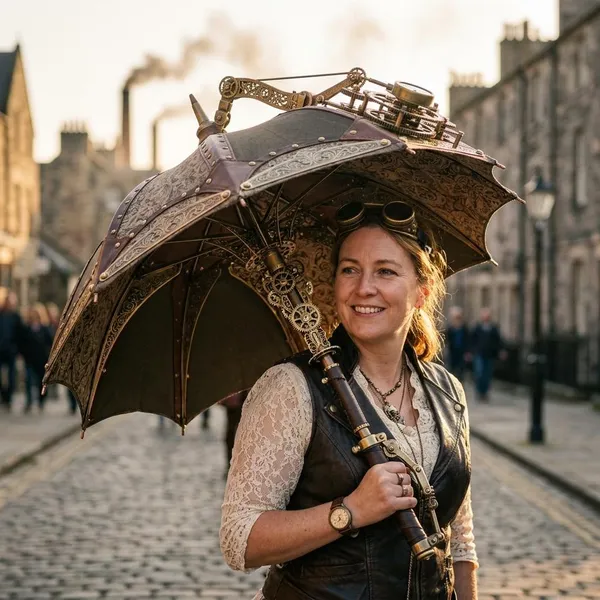
For photoshoots, the umbrella's job is to create shape, mood, and posing options. Lace, pagoda canopies, unusual handles, and custom decorations can all be useful, even if they would be inconvenient for daily use.
Check balance before the shoot if possible. A heavy decorated canopy can pull to one side, and a stiff mechanism can slow down posing. The best photo prop looks striking but can still be held at different angles without fighting the model.
Durable rain umbrellas for daily use
Daily use calls for a real rain umbrella first and steampunk styling second. Look for water-shedding fabric, ribs that feel steady, a handle that is comfortable when wet, and hardware that does not look fragile.
A good everyday compromise is a dark canopy with mechanical print or subtle antique-style details. It gives the theme without making every commute feel like you are carrying a costume piece.
How to choose a steampunk umbrella
Start with protection, then size, then build quality. Style still matters, but it should not be the first filter unless the umbrella is purely decorative. Product photos often make every piece look sturdy; the details below tell you whether it will actually suit your use.
Confirm sun or rain protection
This is the first thing to check because sellers often use "umbrella" and "parasol" loosely. A parasol may block sun and look beautiful, but that does not mean it can handle rain.
- For rain: look for wording such as waterproof or water-resistant, plus tightly woven fabric.
- For sun: look for shade coverage or UV-related claims, but do not assume protection without a clear description.
- For decoration: expect fragile trim and limited weather use unless the listing says otherwise.
- If wording is vague: read reviews for real use in drizzle, heat, wind, or events.
Check the canopy size
Canopy size decides how useful the umbrella feels in real life. A small parasol may look elegant indoors but barely shade your shoulders outside. A wide umbrella gives better coverage but can be annoying in convention aisles or crowded sidewalks.
Use the open diameter as your main check. Photos can hide scale, especially when the umbrella is held close to the camera. If you are between two sizes, choose the smaller one for indoor cosplay and the larger one for outdoor rain coverage.
Inspect the frame and fabric
The frame tells you more about durability than the print does. Look at the ribs, hinges, shaft, canopy tension, edge stitching, and the way trim is attached.
- Loose joints can wobble or twist after repeated opening.
- Sagging fabric may collect water or look messy in photos.
- Visible glue on trim can be a warning sign for travel or heat.
- Very thin fabric is usually better for styling than rough weather.
Compare weight and folded length
Weight matters more than it seems. A long parasol can be lovely for a short shoot but irritating if you carry it through a full event day. A compact umbrella is easier to pack, but very light models can feel unstable in wind.
Test the handle and opening mechanism
The handle should suit both the look and your grip. Curved handles feel more Victorian and photograph well; textured or molded grips may be safer in wet weather.
The opening action should be smooth, not stiff or jerky. For cosplay, test whether it catches on sleeves or trim. For daily use, make sure you can open and close it quickly without forcing the frame.
How to care for a steampunk umbrella
Care depends on how decorative the umbrella is. A printed rain umbrella mostly needs drying and sensible storage. A lace parasol or custom piece needs gentler handling because trim, glue, paint, and delicate edges can show damage quickly.
Let the canopy dry fully
Open the umbrella indoors after rain and let it dry before putting it away. Moisture trapped in folds can cause odor, mildew, staining, or corrosion on metal parts.
Do not rush drying with strong heat. Air drying is safer for coated fabric, glued decorations, lace, and faux-metal finishes.
Clean delicate trim by hand
Use a soft cloth, small brush, or lightly damp cloth for lace, ruffles, bows, and edging. Avoid scrubbing, soaking, or strong cleaners unless the maker specifically says the material can handle it.
Test a hidden spot first, especially with dark dyes, metallic coatings, or hand-applied decorations. Spot cleaning is usually safer than washing the whole canopy.
Protect the frame from bending
Most bent frames come from wind, forced closing, or rough packing. If fabric or trim catches, stop and free it instead of pushing the ribs closed.
Use the right umbrella for the weather. A fragile parasol should not be your backup plan for a windy, rainy walk; that is when a sturdier rain model earns its place.
Store it in a fitted sleeve
A sleeve protects the canopy from dust, scratches, and snagging. It also keeps folded umbrellas neater in a bag, though the canopy should still be dry first.
The sleeve should not be so tight that it crushes ruffles or bends decorative edges. Long parasols are best stored where the tip and canopy are not under pressure.
Check decorations before events
Before an event, open the umbrella once and check for loose trim, bent ribs, weak stitching, chipped finishes, or decorations that shifted in storage. Small fixes are much easier at home than in a hotel lobby or convention hallway.
This quick check matters most for custom pieces with chains, charms, gears, bows, or glued details. If anything feels loose, reinforce it before transport rather than hoping it survives the day.
Conclusion
The right choice is the one that fits the job you need it to do. Pick lace or a custom piece when appearance matters most, choose a full-size waterproof model for outdoor events, and go compact when travel is the real priority. Once protection, size, and frame quality are right, the gears, brass tones, ruffles, and Victorian details become the fun part rather than a compromise.
FAQ
Can a lace steampunk parasol be used in the rain?
Usually no. Most lace parasols are made for shade and styling, not rain, unless the product clearly lists waterproof fabric and weather-safe construction.
What size parasol works best for cosplay?
A medium parasol usually works best because it gives visible shape without becoming hard to carry in crowds. Go larger only if the event is photo-focused and you will not need to move through tight spaces often.
Are compact steampunk umbrellas good for travel?
Yes, if the frame is not too flimsy. A compact model is easier to pack, but it should still open smoothly, close securely, and feel stable enough for normal weather.
Is a Victorian-style sun umbrella called a parasol?
Yes, a Victorian-style sun umbrella is commonly called a parasol. The word usually points to shade rather than rain protection, so check the material before treating it like a weather umbrella.
Can a lace steampunk parasol be used in the rain?
Usually no. Most lace parasols are made for shade and styling, not rain, unless the product clearly lists waterproof fabric and weather-safe construction.
What size parasol works best for cosplay?
A medium parasol usually works best because it gives visible shape without becoming hard to carry in crowds. Go larger only if the event is photo-focused and you will not need to move through tight spaces often.
Are compact steampunk umbrellas good for travel?
Yes, if the frame is not too flimsy. A compact model is easier to pack, but it should still open smoothly, close securely, and feel stable enough for normal weather.
Is a Victorian-style sun umbrella called a parasol?
Yes, a Victorian-style sun umbrella is commonly called a parasol. The word usually points to shade rather than rain protection, so check the material before treating it like a weather umbrella.