
If you are asking is arcane steampunk, the cleanest answer is: visually, very much; as a full genre label, not quite. Arcane uses brass-toned machinery, industrial cities, class conflict, and retro-futuristic design, but Hextech is powered by magic, so science fantasy or magipunk describes the wider world more accurately.
Is Arcane steampunk
Arcane is steampunk-inspired, but it is not pure steampunk. The useful distinction is between appearance and world logic: Piltover often looks like a steampunk city, while the story's technology and conflicts depend on magic, fantasy science, and the larger League of Legends universe.
If you are deciding whether the show will satisfy a steampunk mood, the answer is probably yes. If you are trying to classify it accurately for genre, worldbuilding, or recommendations, "science fantasy with steampunk and magipunk elements" is safer.
Steampunk-inspired in its visual design
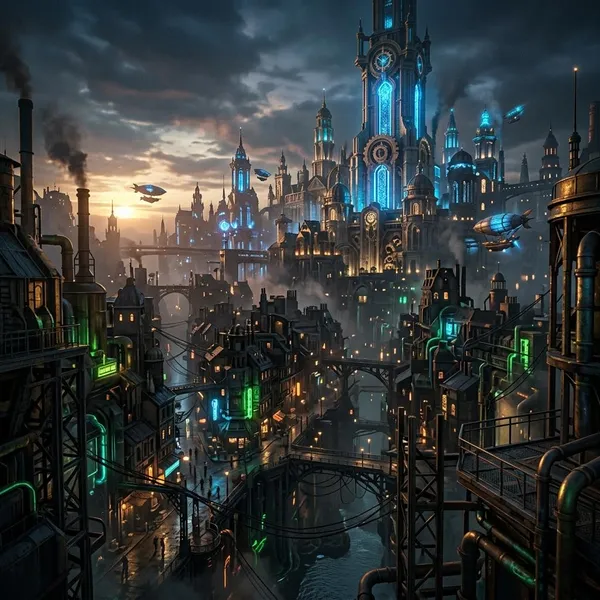
Piltover is the main reason people reach for the steampunk label. Its airships, ornate workshops, formal clothing, mechanical details, polished metal, and old-world architecture all sit close to the genre's usual visual language.
Science fantasy in its wider worldbuilding
The broader setting works better as science fantasy because invention and magic are not separate forces. Scientific ambition, political power, dangerous energy, and fantasy rules all shape the same world.
Magipunk in its use of Hextech
Hextech is the clearest magipunk element. It treats magical energy as something that can be studied, engineered, commercialized, regulated, and weaponized.
- Steampunk angle: the devices often look retro-industrial.
- Magipunk angle: the power source is magical, not steam-based.
- Story angle: Hextech changes politics, class power, travel, defense, and personal ambition.
Why Arcane is not pure steampunk
The main mistake is judging Arcane by its surface alone. Steampunk is not just "old-looking machines." It usually involves technology rooted in steam-age mechanics, Victorian or neo-Victorian influence, and an alternate-industrial logic. Arcane borrows that look, then builds its central breakthroughs around magic and fantasy science.
Hextech runs on magic rather than steam
This is the strongest reason Arcane is not pure steampunk. Traditional steampunk usually exaggerates mechanical engineering: gears, pressure, steam, brass, clockwork, engines. Hextech may share some of that visual dressing, but its real power comes from magical crystals.
If you replaced Hextech with ordinary steam engines, the story would change completely. Jayce and Viktor would no longer be dealing with the same kind of unstable, world-shifting force, and Piltover's rise would feel much closer to classic industrial fiction.
The world extends beyond Victorian influences
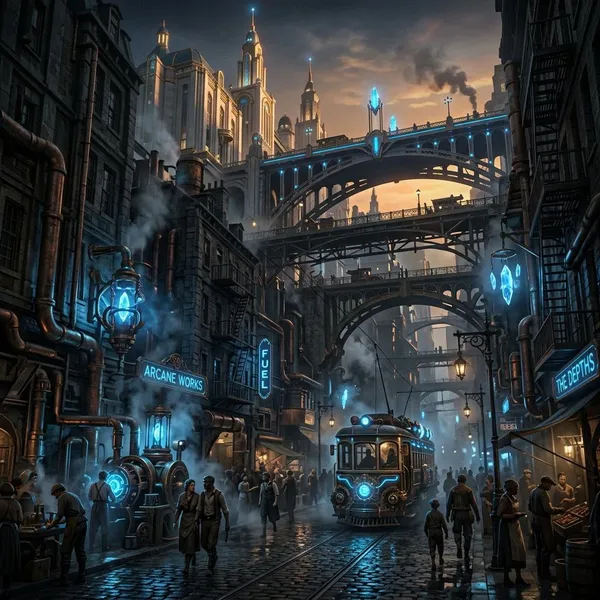
Piltover carries the clearest Victorian-inspired design, but Arcane does not stay inside that frame. Zaun brings in chemical mutation, underground survival, polluted industry, body alteration, and a harsher mood that feels less like genteel steampunk and more like industrial fantasy with darker edges.
This matters if you are recommending the show. Someone expecting a tidy airship-and-goggles adventure may be surprised by how tragic, political, and physically brutal the setting becomes.
Fantasy shapes the technology and conflict
Fantasy is not decorative in Arcane. It affects what technology can do, who controls it, and how badly it can go wrong.
The conflict is also not only about invention. It is about unequal access to power, bodies changed by dangerous substances, political fear, family trauma, and the consequences of turning unstable forces into tools. That blend pushes the show away from a narrow steampunk reading.
Several genres overlap within the setting
The most practical way to read Arcane is by layer:
- Visual layer: steampunk-inspired, especially in Piltover.
- Technology layer: magipunk because Hextech turns magic into usable infrastructure.
- World layer: science fantasy because the setting mixes invention, magic, politics, and larger fantasy lore.
- City-conflict layer: industrial fantasy, especially in the Piltover-Zaun divide.
Arcane compared with traditional steampunk
Arcane overlaps with traditional steampunk in the places most viewers notice first: machines, city design, class tension, and the romance of invention. The difference is that traditional steampunk usually asks what steam-age engineering could become, while Arcane asks what happens when a divided society starts building around magical technology.
Both use retro-futuristic machinery
Both Arcane and steampunk enjoy technology that looks advanced and old-fashioned at the same time. The machines are tactile rather than sleek: visible parts, crafted surfaces, metal frames, glass details, levers, tools, and workshops that feel lived in.
Both explore class and industrial power
The Piltover-Zaun divide is one of the strongest steampunk-adjacent parts of the show. Piltover celebrates progress, while Zaun absorbs much of its cost: pollution, neglect, danger, and social pressure.
For viewers who like steampunk because it questions who benefits from "progress," this part of Arcane will likely feel familiar. The show does not treat invention as automatically noble; it keeps asking who pays for it.
Arcane relies more heavily on magic
Magic is much more central in Arcane than it is in most traditional steampunk. Some steampunk stories include the supernatural, but the genre usually remains grounded in mechanical possibility. Hextech makes magical energy the engine of social change.
That is the point where the label shifts. A brass device powered by gears feels steampunk. A brass device powered by magical crystals and tied to world-altering consequences is better described as magipunk or science fantasy.
Arcane has a broader fantasy setting
Arcane also belongs to a wider fantasy universe, so Piltover and Zaun are not the whole genre picture. Other regions, powers, and cultures in the larger setting do not all follow steampunk logic.
That broader scope makes the show feel less like a single-genre world and more like a focused story inside a larger fantasy setting. Piltover can be steampunk-inspired without making the whole series pure steampunk.
The best genre labels for Arcane
The best label depends on what you are trying to describe. If you are talking about the look, "steampunk-inspired" works. If you are talking about Hextech, "magipunk" is sharper. If you need one umbrella term for the whole series, "science fantasy" is the most flexible.
| What you mean | Best label | Why it fits |
|---|---|---|
| The overall series | Science fantasy | Magic, invention, politics, and fantasy worldbuilding all matter. |
| Hextech devices | Magipunk | Magic is handled like technology and infrastructure. |
| Piltover's look | Steampunk-inspired | The city uses retro-futuristic industrial design. |
| Piltover and Zaun together | Industrial fantasy | The setting combines industry, inequality, atmosphere, and fantasy forces. |
Conclusion
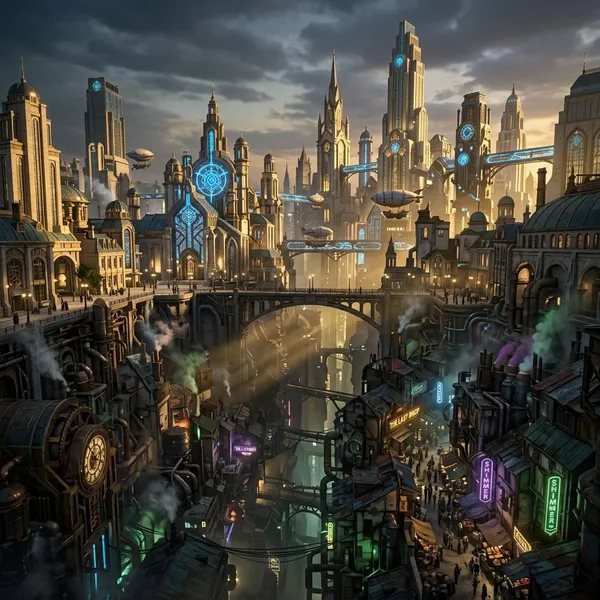
Arcane is best treated as steampunk-inspired rather than simply steampunk. If you care about the look, Piltover gives you plenty of retro-industrial beauty; if you care about how the world works, Hextech and magic push the series into magipunk and science fantasy. That hybrid identity is not a weakness—it is why the setting feels richer than a single genre label.
FAQ
Is Piltover a steampunk city?
Piltover is steampunk-inspired, especially in its architecture, inventions, airships, and polished industrial style. The caveat is that its defining breakthrough, Hextech, is magical rather than steam-powered.
Is Zaun steampunk or cyberpunk?
Zaun is closer to industrial fantasy with some cyberpunk-like mood. It has pollution, body alteration, crime, inequality, and chemical experimentation, but it is not classic cyberpunk in the high-tech digital sense.
What is the difference between steampunk and magipunk?
Steampunk usually builds from steam-age machinery and retro-industrial design. Magipunk uses magic as the power source for tools, systems, and institutions.
Does Hextech count as steampunk technology?
Not exactly. Hextech can look steampunk, but because it runs on magical energy, magipunk is the more precise label.
Is Piltover a steampunk city?
Piltover is steampunk-inspired, especially in its architecture, inventions, airships, and polished industrial style. The caveat is that its defining breakthrough, Hextech, is magical rather than steam-powered.
Is Zaun steampunk or cyberpunk?
Zaun is closer to industrial fantasy with some cyberpunk-like mood. It has pollution, body alteration, crime, inequality, and chemical experimentation, but it is not classic cyberpunk in the high-tech digital sense.
What is the difference between steampunk and magipunk?
Steampunk usually builds from steam-age machinery and retro-industrial design. Magipunk uses magic as the power source for tools, systems, and institutions.
Does Hextech count as steampunk technology?
Not exactly. Hextech can look steampunk, but because it runs on magical energy, magipunk is the more precise label.