
Victorian steampunk looks strongest when the Victorian base comes first and the mechanical fantasy supports it, not the other way around. Think fitted coats, waistcoats, long skirts, dark wood, leather, brass, and one or two believable gadgets rather than gears on every surface. If you are building an outfit or styling a room, start with the shape and materials before adding props.
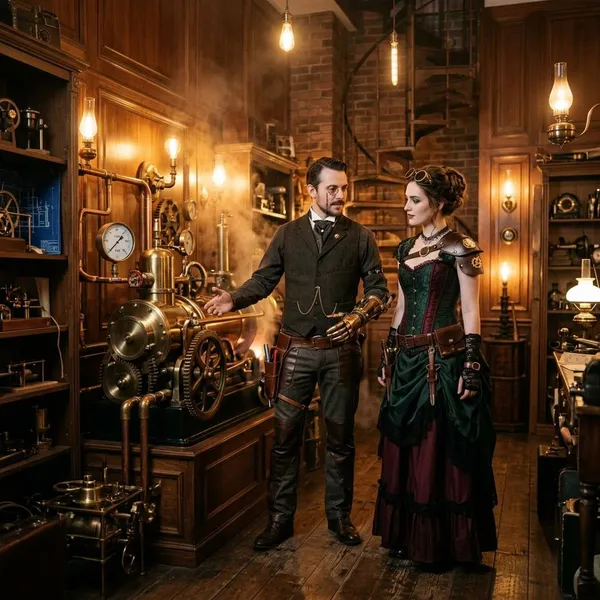
What is Victorian steampunk?
Victorian steampunk is a retro-futuristic style that imagines a nineteenth-century world where steam power, clockwork, brass machinery, and handmade invention kept evolving in dramatic ways. It borrows the mood of the Victorian era, then bends it into fantasy through airships, goggles, strange instruments, mechanical limbs, and workshop-like interiors.
What gives Victorian steampunk its look?
The look comes from four things working together: period-inspired silhouettes, imagined machinery, warm tactile materials, and details that appear useful rather than random. The common mistake is treating steampunk as a gear pattern. The better approach is to make each detail feel like it belongs to a person, room, or purpose.
Victorian tailoring and layered silhouettes
The quickest way to make the style readable is to get the silhouette right. A waistcoat, frock coat, high-neck blouse, long skirt, bustled overskirt, structured dress, or tailored jacket gives the eye a Victorian starting point before any fantasy detail appears.
- For a formal look: use a fitted coat, waistcoat, cravat, polished boots, and one metal accent.
- For an explorer look: try a long coat, practical boots, gloves, satchel, and weathered fabrics.
- For a softer look: build around lace, a full skirt, velvet, brocade, or a shaped bodice.
Imagined steam-powered machines
A steampunk machine should look as if someone could operate, repair, or carry it. It does not need to be technically realistic, but it should suggest a job: measuring pressure, navigating, lighting a room, powering a tool, or helping with travel.
Airships, brass goggles, analytical engines, gauge-covered panels, mechanical arms, and altered lamps all work because they show their parts. Valves, tubes, dials, levers, and rivets make technology feel visible and handmade instead of sealed away like modern electronics.
Brass, leather, wood, and rich fabrics
Materials do a lot of the storytelling. Brass adds warmth, leather suggests use, wood gives weight, and fabrics such as wool, velvet, lace, cotton, and brocade keep the style tied to Victorian taste. A small amount of wear can help; a scuffed satchel or aged desk often looks more convincing than something shiny and brand new.
Use color to keep the look controlled. Brown, black, cream, burgundy, oxblood, deep green, navy, and antique gold tones are easy to combine. If every metal finish is different, the result can feel accidental, so repeat one main finish such as brass or aged bronze where you can.
Clockwork details and handmade gadgets
Small gadgets are most effective when they hint at a role. A pocket watch suits a traveler or scholar, goggles suit a pilot or mechanic, a compass suits an explorer, and a modified cane can feel elegant without becoming loud.
Where does Victorian steampunk come from?
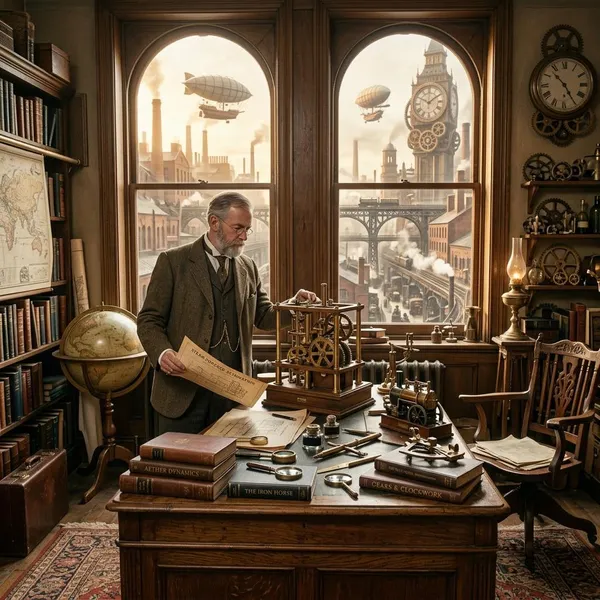
Victorian steampunk comes from a blend of real nineteenth-century industry, early speculative fiction, and modern creative reinterpretation. That is why it can feel historical, adventurous, and slightly theatrical at the same time.
Victorian industry and invention
Real nineteenth-century industry supplies the visual backbone: railways, steam engines, telegraphs, iron bridges, factories, workshops, scientific instruments, and public engineering projects. These things still look physically understandable because their parts are visible and heavy.
Early science fiction and adventure stories
Adventure fiction added the sense of travel, danger, and invention. Writers such as Jules Verne and H. G. Wells helped make submarines, time machines, strange vehicles, laboratories, and impossible journeys feel natural beside nineteenth-century clothing and manners.
Modern reimaginings of the nineteenth century
Today's version is shaped by books, films, games, conventions, cosplay, DIY craft, and interior design. Some people aim for a historically careful look, while others prefer a looser fantasy version. Both can work if the choices feel intentional.
- For everyday style: use one or two hints, such as boots, a waistcoat, a watch chain, or a leather bag.
- For cosplay or events: push the silhouette and props further, but keep a clear character idea.
- For home decor: choose useful pieces first, then add mechanical display objects sparingly.
How to create a Victorian steampunk outfit
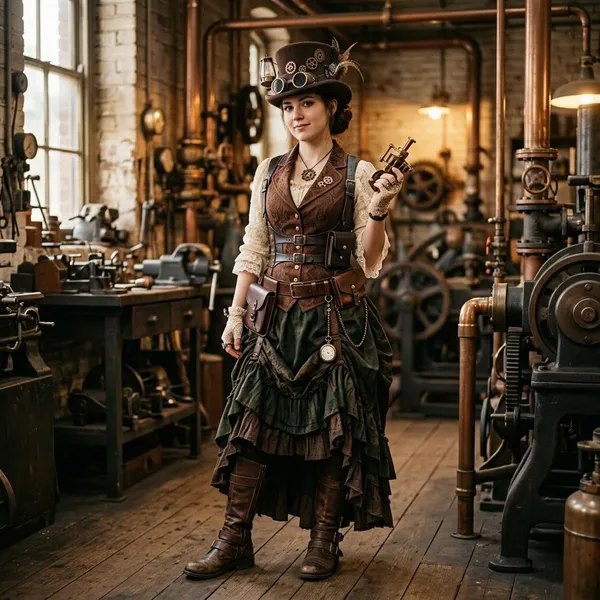
Build the outfit in order: anchor garment, silhouette, accessory, color control, then comfort check. That order matters because it prevents the look from becoming a pile of themed items. A good outfit should still make sense if you remove the goggles.
Start with a waistcoat, coat, dress, or skirt
Pick the garment that does the most work. A waistcoat can make a shirt and trousers feel period-inspired. A long coat adds drama. A structured dress, full skirt, or high-neck blouse gives a strong Victorian line without needing many extras.
Build layers around a clear silhouette
Once the anchor piece is chosen, layer around it without hiding the shape. Belts, gloves, scarves, cravats, overskirts, aprons, and jackets should support the same outline, not fight it.
- Check the waistline: belts and vests should define it, not chop the outfit awkwardly.
- Check the length: coats, skirts, and aprons should not all end at the same visual point.
- Check the full view: take a mirror photo; clutter shows up faster from a distance.
Add a mechanical prop or accessory
One mechanical accessory is usually enough for a wearable look. Good choices include a pocket watch, goggles, compass, cane, satchel, notebook, tool pouch, brooch, or small handmade gadget.
Match the accessory to the imagined role. A navigator needs lenses or maps. A machinist needs gloves or tools. A scholar may only need a watch chain, notebook, and worn leather bag. This keeps the outfit from looking like random steampunk symbols were added at the end.
Repeat colors and metal finishes
A controlled palette makes a layered outfit look deliberate. Two main colors, one accent color, and one metal finish are enough for most people. For example, black and cream with burgundy accents and antique brass will usually look cleaner than mixing silver buckles, bright gold chains, bronze goggles, and matte black clips.
Leave room to move comfortably
Comfort is not a small detail if you plan to wear the outfit for more than a photo. Before an event, check whether you can sit, walk, climb stairs, carry a bag, raise your arms, and stay cool enough. Heavy props, stiff corsetry, tight boots, or dragging hems can turn a clever look into a problem after an hour.
For a short photoshoot, dramatic pieces may be worth the inconvenience. For a convention, party, or full day out, choose lighter layers, secure accessories, and shoes you can actually walk in. A comfortable outfit usually looks more confident because you stop adjusting it.
How to bring Victorian steampunk into a room
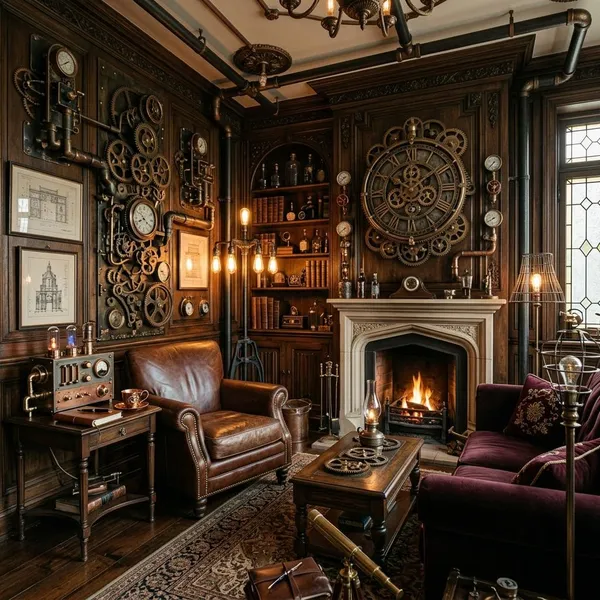
A room needs the same balance as an outfit: a Victorian base, industrial touches, warm materials, and a few objects that look collected rather than scattered. Start with furniture and lighting before buying decorative gears or pipes.
Start with Victorian-inspired furniture
Look for furniture with carved wood, turned legs, tufted upholstery, writing surfaces, cabinets, shelves, or trunk-like storage. It does not have to be antique. A modern desk with classic lines or a secondhand leather chair can still set the right mood.
Mix wood, leather, and metal
The material mix should feel warm before it feels mechanical. Dark wood, leather seating, brass handles, iron shelving, glass shades, and stitched accessories create depth without turning the room into a stage set.
If the space is already dark, add cream textiles, warm lamps, or patterned cushions so it does not become heavy. If the room is modern and pale, start with one strong wooden piece and one metal lamp rather than trying to cover every surface.
Add industrial lighting
Lighting changes the mood faster than almost any accessory. Warm bulbs, brass desk lamps, adjustable sconces, lantern-style pendants, and shaded reading lamps suit the style better than bright white overhead light.
- For renters: use plug-in lamps and warm bulbs instead of replacing fixtures.
- For a desk: choose a task lamp with brass, bronze, black metal, or visible joints.
- For atmosphere: add one smaller accent light near books, instruments, or a display shelf.
Display mechanical objects with purpose
Mechanical objects should look chosen, not dumped into the room. Clocks, compasses, typewriters, drafting tools, binoculars, maps, old cameras, globes, scientific instruments, and boxed tools can work well when grouped by use.
Conclusion
The strongest Victorian steampunk choices look edited, useful, and grounded in a clear Victorian shape. Start with tailoring or furniture, repeat warm materials, add one purposeful mechanical detail, and stop before the theme starts shouting. That restraint is what makes the style feel imaginative instead of cluttered.
FAQ
Is steampunk always Victorian rather than Edwardian?
No. Victorian influence is the most common, but many looks borrow from Edwardian fashion or blend late nineteenth- and early twentieth-century details. The more important feature is the retro-futuristic machinery, not an exact date range.
How is Victorian steampunk different from Victorian gothic?
Victorian gothic leans toward darkness, romance, mourning, mystery, and sometimes the supernatural. Victorian steampunk leans toward invention, travel, tools, brass, leather, and visible machinery. They can overlap, but the mood is different.
Do steampunk outfits need goggles, corsets, or gears?
No. Those items are common, not required. A clear silhouette, consistent materials, and one thoughtful accessory can look more convincing than an outfit covered in expected symbols.