
You can make a convincing diy steampunk costume without buying a full cosplay outfit: choose a character first, build the shape from clothes you already own, then add one or two handmade accessories that look useful. The biggest mistake is starting with random gears and goggles before the outfit has a clear role, color palette, and comfortable base.
Choose a steampunk character
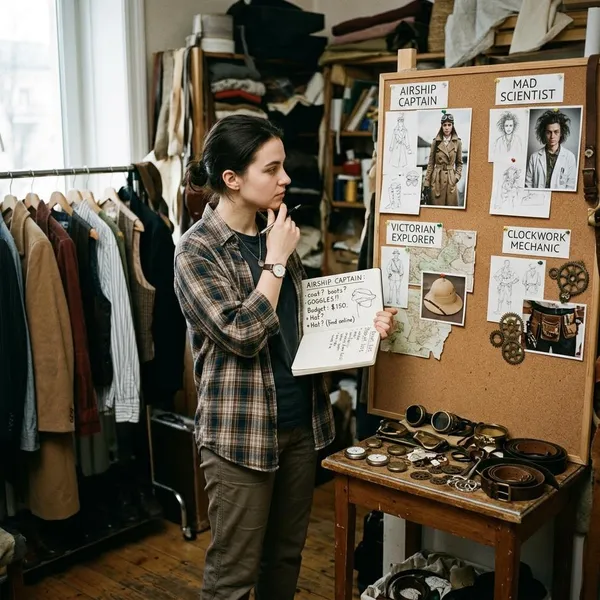
A character gives the costume direction before you spend money. If you are dressing for one Halloween party, you can keep the idea simple and rely on a strong accessory. If you will be walking around a convention all day, choose a role that lets you move, sit, and carry essentials without fighting the outfit.
Airship captain
An airship captain works best when the outfit looks structured and slightly commanding. Try a fitted jacket, vest, dark trousers or a long skirt, boots, and a belt. Brass-toned goggles, gloves, a scarf, or a watch chain can suggest authority without making the costume heavy.
Choose this route if you already have a blazer, long coat, or neat boots. Keep the lines tidy so the outfit reads like a uniform rather than a pile of vintage-looking pieces.
Inventor or mechanic
This is the most forgiving choice for a fast, low-cost costume. A button-up shirt with rolled sleeves, a vest, sturdy pants, boots, and a pouch can look right immediately.
- Best for comfort: fewer formal layers and easier movement.
- Best accessory: goggles, a small tool pouch, or a cardboard gadget.
- Avoid: so many fake tools that sitting or walking becomes awkward.
Explorer
An explorer should look ready to travel, not ready for a ballroom. Use breathable layers, comfortable boots, a satchel, a scarf, or a map-style prop. Olive, tan, cream, brown, and muted brass tones work especially well.
Victorian aristocrat
A Victorian aristocrat costume depends more on shape and texture than on historical accuracy. Long skirts, waistcoats, lace blouses, gloves, brooches, fitted jackets, and decorative hats can all work if the outfit feels polished.
If you want drama without buying much, focus on one rich-looking layer and one refined prop, such as a fan, cane, ornate chain, or decorated handbag.
Build your costume from everyday clothes
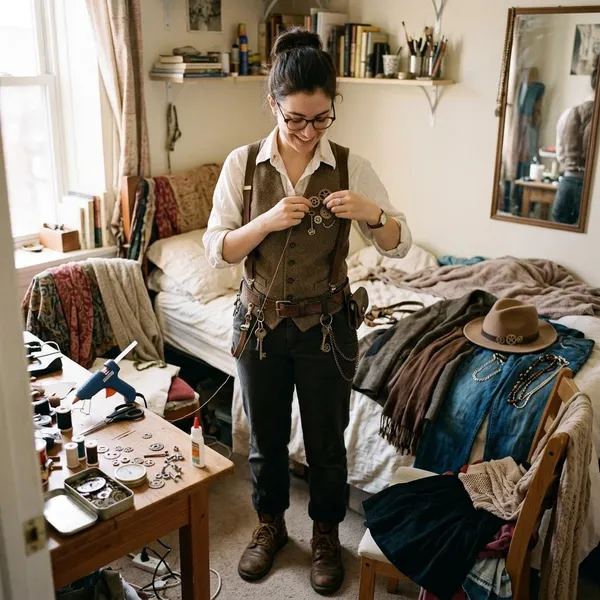
Start with the base outfit before making accessories. The first things to check are silhouette, comfort, and color: does the outfit have a clear shape, can you move in it, and do the main pieces look like they belong together?
- Pick one role before choosing clothes.
- Choose two clothing colors and one metal finish.
- Build the main layers before adding props.
- Test movement early so you do not decorate pieces you will not wear.
Start with a shirt or blouse
A plain button-up shirt in white, cream, tan, gray, or black is enough for most costumes. Lace, pintucks, puffed sleeves, or a high collar add a stronger Victorian mood, but they are not required.
Change the styling to match the character: rolled sleeves suit a mechanic or explorer, while a tucked shirt with a scarf, brooch, or tie feels more captain or aristocrat.
Add trousers or a long skirt
Choose trousers or a skirt that supports the role and lets you move. Straight-leg trousers and dark pants are easy for beginners because they pair well with boots. A long skirt adds drama, but it should not catch under your shoes or restrict your stride.
Layer a vest, jacket, or fitted bodice
This is usually the layer that makes the outfit feel intentional. A vest adds shape without much heat, a jacket gives authority, and a fitted bodice or waistcoat can make simple clothes look more styled.
- For a quick party costume: use a thrifted vest over a basic shirt.
- For a full-day event: choose a layer that does not pinch under the arms.
- For a dressier look: look for texture, buttons, seams, or a slightly old-fashioned cut.
Finish with boots and a belt
Boots make the outfit look less modern, and a belt gives the costume a practical center. Lace-up boots, ankle boots, work boots, or riding-style boots all work better than sneakers. A belt can hold a pouch, chain, keys, or a lightweight prop, which makes the costume feel useful instead of decorative only.
Make simple steampunk accessories
Accessories should support the character, not bury the outfit. Start with items you already have: old sunglasses, broken jewelry, small bags, cardboard packaging, ribbon, buttons, craft paint, or spare hardware.
Decorate costume goggles with faux metal trim
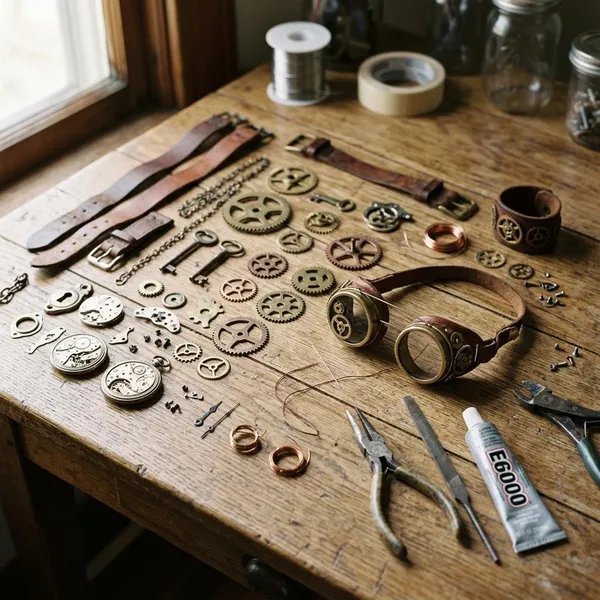
Goggles instantly suggest steampunk, but they should still be light enough to wear around your neck, on a hat, or on your forehead. Start with costume goggles, safety glasses, or old sunglasses, then paint the frames brass, bronze, copper, or gunmetal.
Add small foam, cardboard, or plastic trim for a faux metal effect. Use a few rivet-like dots or gear shapes rather than covering every surface; overdecorated goggles can look bulky fast.
Turn a small pouch into a belt bag
A pouch is one of the most practical accessories because it can carry your phone, keys, cash, or makeup. Use a coin purse, small thrifted bag, or neutral pouch, then attach it to a belt with loops, clips, or ribbon.
Make a watch chain from spare jewelry
A broken necklace, charm bracelet, or craft chain can become a watch chain with almost no cost. Attach it to a vest pocket, belt loop, waistband, or bag strap. If you do not have a pocket watch, use a key, small charm, or old pendant to suggest one.
Build a lightweight gadget from cardboard
Cardboard is ideal for a homemade steampunk gadget because it is cheap, light, and easy to paint. Layer pieces to make panels, dials, tubes, handles, or gauges, then use metallic paint with a little darker shading to make it look aged.
Give the gadget a job before you finish it. A mechanic might carry a pressure reader, an explorer could have a map scanner, and an airship captain might hold a navigation device. That small purpose makes the prop easier to understand at a glance.
Bring the steampunk look together
The final step is editing. Put the full outfit on, stand back, and check whether the character is obvious before you add anything else. From a distance, people notice shape, color, boots, and one standout accessory before they notice tiny details.
If the costume feels busy, remove the weakest item first. If it feels plain, add one detail that repeats an existing color or metal finish rather than introducing something new.
Repeat a few colors and metal finishes
Two clothing colors and one metal finish are usually enough. Brown with brass, black with gunmetal, cream with bronze, or burgundy with antique gold can make thrifted pieces look coordinated.
Repeat the same finish in small places: goggles, chain, belt buckle, pouch hardware, or prop trim. This matters more than buying expensive pieces.
Choose one statement accessory
Pick one item to lead the outfit: goggles, a hat, a cane, a belt setup, or a handmade gadget. A clear focal point makes the costume easier to read in photos and less likely to look crowded.
Give props a purpose in your character's story
A prop looks stronger when it seems useful. Instead of carrying a random decorated object, decide what it does: measures pressure, reads weather, stores maps, opens engine panels, or signals an airship crew.
Test the fit while sitting and walking
Wear the full costume for a short test before the event. Sit down, walk across the room, bend, reach forward, and carry any prop you plan to bring.
- If straps slip: shorten, pin, or remove the item.
- If chains snag: move them higher or use fewer links.
- If layers feel hot: remove the heaviest piece and keep the strongest accessory.
- If shoes rub: change them now; uncomfortable boots can ruin the outfit faster than a missing prop.
Conclusion
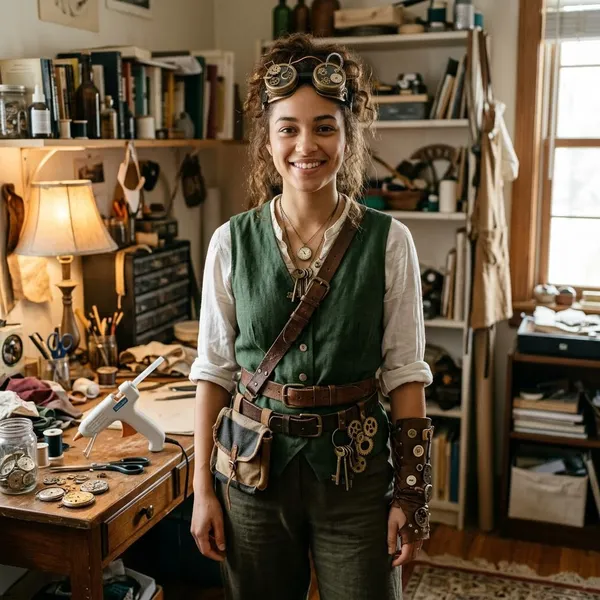
A good steampunk costume is less about owning special pieces and more about making clear choices. Start with the role, build a comfortable base, repeat a small color palette, and let one accessory do the storytelling. If you can sit, walk, and explain what your character carries, the outfit will feel finished even when most of it came from your closet or a thrift store.
FAQ
Do I need a corset for a steampunk costume?
No. A corset is optional. A vest, fitted jacket, waistcoat, belt, or structured blouse can create shape with more comfort and easier movement.
Can a steampunk costume be all black?
Yes. Use different textures so it does not look flat: cotton, lace, faux leather, velvet, denim, or brocade-style fabric. One metal finish, such as gunmetal or brass, adds contrast.
How can I make a steampunk costume for hot weather?
Use one light base layer, a thin vest or belt instead of a heavy jacket, and small accessories rather than bulky props. Wear goggles on a hat or belt if they feel too warm on your face.