
A steampunk wedding suit works best when it looks like wedding tailoring first and themed styling second. Start with the coat, fit, fabric, and shoes, then add only a few Victorian or mechanical details so the outfit feels intentional rather than costume-like.
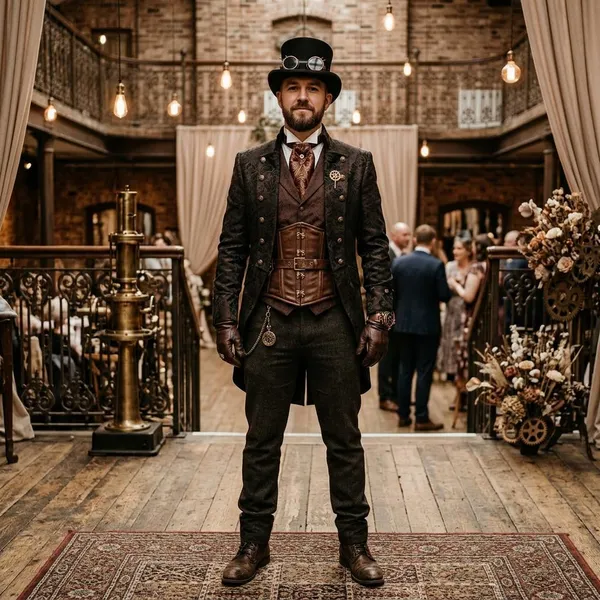
What should a steampunk groom wear?
The safest formula is simple: a strong tailored base, one textured layer, polished footwear, and a small number of accessories. If the outfit would still look sharp without the goggles, chains, or props, you are usually on the right track.
A tailored coat or suit jacket
The coat is the piece guests notice first, so treat it as the anchor. A frock coat, morning coat, evening tailcoat, longline coat, or sharp suit jacket can all work, but the shoulders, waist, and sleeve length matter more than decorative trim. A slightly dramatic coat with clean tailoring will look more expensive than a heavily detailed coat that fits poorly.
A fitted waistcoat and trousers
A waistcoat gives the outfit the layered Victorian feel that makes steampunk styling work. It can be plain wool for a restrained groom, tweed for a warmer vintage look, or brocade if the coat is simple enough to handle more texture.
Trousers should stay clean and formal. Avoid anything too skinny, too loose, or too casual; the line from waist to shoe needs to look deliberate in ceremony photos.
A crisp shirt with simple neckwear
A white or ivory shirt is usually the easiest choice because it keeps the look wedding-ready and balances darker coats. For neckwear, a cravat, ascot, bow tie, or standard tie can work. If the coat and waistcoat are already detailed, keep the neckwear quiet; if the suit is subtle, a richer cravat can carry more of the theme.
Polished leather shoes or boots
Choose formal footwear before themed footwear. Oxfords, balmoral boots, lace-up dress boots, and polished leather shoes in black, dark brown, chestnut, or oxblood all fit the mood. Costume boots with shiny synthetic leather or exaggerated buckles can weaken an otherwise strong outfit.
One or two steampunk accessories
Accessories should finish the outfit, not become the outfit. A pocket watch, antique-style cuff links, a collar pin, a tie bar, or a subtle lapel detail is usually enough.
- Good choice: brass watch chain with a textured waistcoat.
- Risky choice: goggles, oversized chains, gear-covered pins, and heavy boots all at once.
Best coat styles for a steampunk wedding suit
The coat decides whether the outfit feels subtle, vintage, formal, or theatrical. A daytime garden wedding usually needs a lighter hand, while an evening ceremony in a historic venue can carry a stronger silhouette. If you are unsure, choose the coat style that matches the venue first and the theme second.
Frock coat for Victorian style
A frock coat is the clearest Victorian choice. Its longer body and shaped waist create instant period influence, especially in charcoal, black, brown, dark green, or burgundy. Because the coat already has presence, pair it with a cleaner waistcoat, tailored trousers, and restrained accessories.
This is a strong option for manor houses, historic hotels, candlelit rooms, or weddings where the theme is visible throughout the decor. It may feel heavy for a casual summer ceremony unless the fabric and styling are kept lighter.
Morning coat for a daytime wedding
A morning coat suits formal daytime weddings because it feels traditional without becoming too theatrical. The cutaway front keeps the look elegant in natural light, and it pairs well with a waistcoat, striped or plain formal trousers, and a cravat or tie.
Evening tailcoat for formal drama
An evening tailcoat is best saved for a wedding that can match its drama. It works in dark interiors, black-tie-inspired settings, candlelit venues, or winter evening ceremonies. Keep the color deep and the details controlled: black, midnight navy, or dark burgundy with one rich waistcoat or refined metallic accent is usually enough.
If the wedding is relaxed, outdoors, or held in bright afternoon light, a tailcoat can feel overdressed rather than stylish. In that case, a frock coat or longline coat may be easier to wear.
Longline coat for a modern look
A longline coat is a useful middle ground for grooms who like steampunk style but do not want strict period dress. It gives a longer, more dramatic shape than a standard jacket while still feeling modern enough for loft venues, industrial spaces, or contemporary weddings.
Standard suit for subtle steampunk styling
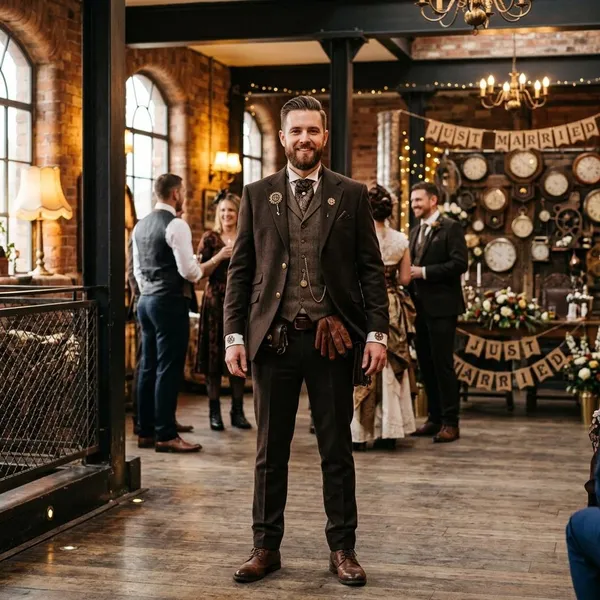
A regular two-piece or three-piece suit can still look convincingly steampunk if the styling is thoughtful. Choose a textured fabric, add a waistcoat, use brass or bronze details, and finish with polished leather shoes or boots.
Best colors and fabrics for the suit
Steampunk colors usually work best when they feel aged, rich, or textured rather than shiny and novelty-like. Think wool, tweed, velvet, herringbone, jacquard, and sturdy suiting cloth, with brass, bronze, or copper used as accents. The base color should do most of the visual work; metallic details should be the punctuation.
Charcoal wool with brass details
Charcoal wool is one of the easiest foundations because it is formal, flattering, and less severe than solid black. Brass buttons, cuff links, a watch chain, or a tie pin add the steampunk note without making the groom look overstyled.
Use this combination when you want the outfit to feel elegant first and themed second. It works especially well for city venues, evening receptions, and weddings where the bride or wedding party is dressed in classic formal colors.
Brown tweed with copper accents
Brown tweed gives a warmer, more rustic version of steampunk. Copper details sit naturally with brown fabric, so a watch chain, tie pin, or boot hardware can look integrated rather than added at the last minute.
This combination is especially good for woodland, barn, autumn, or garden weddings. If the day is warm, look for a lighter tweed-effect fabric rather than heavy country tweed.
Burgundy velvet with black tailoring
Burgundy velvet brings romance and drama, but it needs black tailoring to keep it sharp. A burgundy velvet jacket with black trousers, or a black suit with a burgundy velvet waistcoat, can look rich without becoming loud.
Use it when the wedding has evening lighting, deep florals, candles, or a historic interior. Avoid piling on too many additional statement pieces; the color and texture already make the point.
Navy fabric with bronze accessories
Navy is a good choice if black feels too formal and brown feels too rustic. It stays polished, photographs well, and gives bronze accessories enough contrast to stand out softly.
Tan and ivory for a lighter look
Tan and ivory suit spring, summer, beach-adjacent venues, and bright daytime ceremonies. The look becomes steampunk through the cut, waistcoat, leather footwear, and antique-style details rather than through dark color.
Keep the outfit grounded with medium-brown shoes or boots and avoid too many pale pieces at once. A tan suit, ivory shirt, textured waistcoat, and one brass detail can look relaxed but still intentional.
How to match the suit to the wedding
The best groom outfit should look like it belongs in the wedding, not like it arrived from a separate photoshoot. Match the suit to three things first: weather, time of day, and venue formality. After that, adjust the accessories and color accents so the outfit connects with the wedding party.
Use lighter fabrics for warm weather
For warm weather, comfort is not a small detail. Heavy tweed, velvet, or thick wool can become distracting during a long outdoor ceremony. Lightweight wool, tropical wool, linen blends, and breathable cotton blends are more sensible choices.
You can still keep the theme visible with a waistcoat, cravat, pocket watch, or leather boots. A summer garden groom, for example, will usually look better in tan or light brown tailoring with one antique detail than in a dark layered coat that feels too heavy for the setting.
Choose richer textures for winter
Winter gives you more room for heavier texture. Wool flannel, tweed, velvet, jacquard, and brocade can look natural in colder months, especially with darker flowers, candlelight, or a formal indoor venue.
Boots also make more sense in winter, particularly if there is outdoor walking between locations. Just keep the shape formal; rugged work boots rarely suit a groom's outfit unless the whole wedding is deliberately rustic.
Keep daytime styling more restrained
Daylight makes every detail more visible, so daytime steampunk styling should usually be edited. A morning coat, waistcoat, cravat, and watch chain can be plenty. Heavy hardware, oversized goggles, and multiple gear motifs may look playful up close but distracting in ceremony photos.
Add drama for an evening ceremony
Evening ceremonies can handle darker color, richer fabric, and a stronger silhouette. A tailcoat, velvet waistcoat, satin lapel, or deep burgundy jacket can feel right in low light, especially in a historic or moody venue.
Coordinate colors with the wedding party
The groom does not need to match the wedding party exactly. A better approach is to repeat one or two tones in small places: a tie, pocket square, boutonniere ribbon, waistcoat lining, cuff links, or metal finish.
For a sage and copper palette, a brown or charcoal suit with copper accessories and a sage tie can look connected without feeling staged. For ivory and antique gold styling, an ivory shirt, warm brass buttons, or a cream waistcoat can quietly tie the groom into the wider look.
Conclusion
A strong steampunk groom look comes down to fit, restraint, and one clear style direction. Pick the coat that suits the wedding, choose fabric the season can actually support, and let a few well-chosen accessories do the themed work. If the outfit still feels formal when the props are removed, it is probably balanced enough for the day.
FAQ
Can a regular suit become a steampunk wedding suit?
Yes. A three-piece suit in tweed, wool, charcoal, brown, or navy can become steampunk with a waistcoat, pocket watch, cravat, antique-style cuff links, or formal boots.
Is a steampunk wedding suit formal enough?
Yes, if the tailoring is sharp and the accessories are controlled. It should read as a wedding suit with steampunk influence, not as a costume with formal shoes.
Are goggles necessary for a steampunk wedding?
No. Goggles are optional and often better left for photos or the reception if they make the ceremony outfit feel too theatrical.
Can a regular suit become a steampunk wedding suit?
Yes. A three-piece suit in tweed, wool, charcoal, brown, or navy can become steampunk with a waistcoat, pocket watch, cravat, antique-style cuff links, or formal boots.
Is a steampunk wedding suit formal enough?
Yes, if the tailoring is sharp and the accessories are controlled. It should read as a wedding suit with steampunk influence, not as a costume with formal shoes.
Are goggles necessary for a steampunk wedding?
No. Goggles are optional and often better left for photos or the reception if they make the ceremony outfit feel too theatrical.