
A steampunk tree house works best when it looks imaginative but is planned like a real outdoor structure. Start with the tree, support system, access, and weather protection, then add Victorian trim, aged metal, round windows, lanterns, and a few mechanical details that feel useful rather than random.
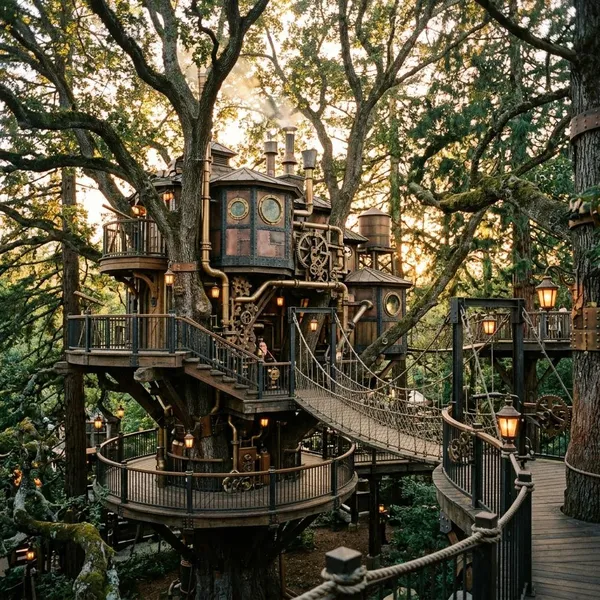
What makes a tree house steampunk
The style comes from a mix of Victorian design, industrial materials, and adventure-story details. A good version might feel like an airship lookout, a small inventor's workshop, or an explorer's hideout in the branches.
Victorian-inspired shapes and details
Victorian influence usually shows up in the silhouette first. Curved brackets, layered trim, paneled doors, small roof overhangs, arched openings, or a turret-like corner can make a simple platform feel more intentional.
You do not need a full historical replica. One shaped roof edge and a carefully trimmed doorway will often do more than ten small decorations scattered across the walls.
Reclaimed wood and aged metal
Weathered boards and dark metal give the tree house that older, handmade feel, but they should not be trusted automatically for structural work. Use sound outdoor-rated framing for the platform and supports, then bring in reclaimed wood for siding, shutters, signs, trim, or accent panels.
Pipes gears rivets and gauges
Pipes, gears, rivets, and gauges are strongest when they appear to belong to a system. A pipe can become a railing detail, a gauge can sit near a "control" panel, and riveted metal can reinforce the look of a hatch or door.
- Best places: entry doors, deck edges, shutters, vents, railings, and lighting brackets.
- Use sparingly: one bold gear detail usually looks better than twenty small ones.
- Avoid: loose props, sharp metal, or anything children might pull off or climb on.
Explorer and airship influences
Explorer and airship details give the design a story. Round windows, map-style panels, rope details, trunk storage, brass-toned hardware, and a small lookout deck can make the tree house feel like a place for discovery rather than just a decorated shed in a tree.
Mechanical features with a clear purpose
The most convincing mechanical details do something. A small pulley basket can lift books or snacks, a crank-style latch can open shutters, and an adjustable lamp arm can make the entrance easier to use at dusk. Even if the feature is partly decorative, it should look as if it has a reason to exist.
Exterior ideas that create the look
The exterior sets the mood before anyone climbs up. Choose two or three repeated cues—such as weathered wood, dark metal, and amber lighting—so the design feels collected rather than cluttered.
Weathered wood siding
Weathered wood siding gives the structure a grounded, slightly aged look. Cedar, cypress, treated boards, or properly prepared reclaimed boards can all work for visible cladding, depending on climate and budget.
If the tree house will stay up year-round, installation matters as much as color. Leave room for drainage and drying, avoid trapping water behind trim, and use exterior finishes that can be refreshed later.
Round windows and metal frames
A round window is one of the fastest ways to signal steampunk. It suggests a porthole, boiler door, or airship cabin without needing much explanation.
Real metal trim looks great but can require more upkeep outdoors. Painted wood rings, sealed composite trim, or metal-look finishes with visible bolt heads can give a similar effect with less rust risk. One round window paired with simpler rectangular windows often looks more natural than making every opening circular.
Pipe railings and riveted panels
Pipe-style railings can make a deck or bridge feel industrial, but they still need to be comfortable, stable, and suitable for the people using the space. A decorative rail that looks impressive but flexes under pressure is not worth keeping.
Riveted panels are safer as visual accents on doors, shutters, skirting, or storage boxes. They add the machine-built look without turning every surface into heavy metalwork.
Ladders bridges and lookout platforms
Ladders, bridges, and lookout platforms create the sense of arrival that suits this theme. A short bridge can feel like an airship gangway, while a small lookout deck turns the tree house into more than a box in the branches.
- For regular family use: choose stairs or a stable stair-ladder with handholds as the main access.
- For occasional supervised play: a ladder can work if it is secure and not the only safety-critical route.
- For guests or adults: prioritize wider steps, headroom, railings, and good footing over dramatic styling.
Warm lanterns and mechanical accents
Warm lantern-style lighting adds atmosphere quickly, especially if the tree house is visible in the evening. Low-voltage, solar, or battery-powered fixtures may be simpler than hardwiring, but any electrical setup should be appropriate for outdoor use.
Keep mechanical accents close to useful features: a gear-shaped vent cover, a pulley near the deck, a conduit leading to a lamp, or a gauge beside the door. These details look more believable when they are connected to light, airflow, access, or storage.
How to keep the tree house safe and durable
Style can wait; structure cannot. Before buying porthole windows or antique hardware, check whether the tree, platform, supports, railings, and access route can handle real use.
This matters even more if the tree house will be used by children, guests, or anyone who may climb up without thinking about every step. A decorative backyard feature and a frequently used elevated space are not the same risk.
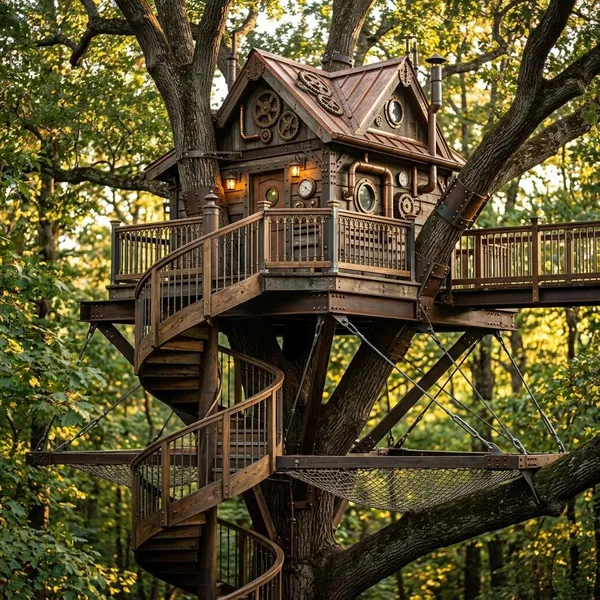
Check the health of the supporting tree
The first check is the tree itself. Look for obvious warning signs such as dead limbs, fungal growth, cracks, soft areas, root damage, major lean, or large wounds near the planned support area.
Use a professionally planned support system
A tree house moves differently from a shed or ground-level deck because the tree grows, bends, and reacts to wind. For anything elevated, enclosed, bridged, or intended for regular use, get the support system planned by someone who understands tree house construction or structural loads.
Add secure railings and safe access
Safe access depends on who will use the tree house most. For young children, the concerns are gaps, climbable rail patterns, slippery steps, and loose decorative parts. For adults, comfort and stability become just as important, especially if the space is used as a reading nook or garden hideaway.
- Stable footing first: steps or ladder rungs should not twist, flex, or become slick after rain.
- Hand support next: rails and handholds should be easy to grab on the way up and down.
- Theme last: pipework and decorative metal should never make access harder to use.
Protect the structure from water
Water damage is one of the quickest ways to ruin both the structure and the steampunk finish. A roof with proper overhang, flashing where needed, sloped surfaces, drainage gaps, and ventilation behind cladding will do more for longevity than any decorative coating.
Pay attention to the themed details too. Pipes, metal caps, ledges, and riveted panels can trap moisture if they are mounted flat against wood. If a part creates a pocket where water can sit, change the detail or leave space for drying.
Inspect fasteners and supports regularly
Plan on checking the tree house at least once a year, and more often after storms or heavy seasonal use. Look for rust, loose bolts, cracked boards, shifting brackets, soft wood, wobbly rails, and new gaps around attachment points.
How to create the look on your budget
You do not have to build a full custom fantasy structure to get the effect. Spend first on the parts that keep people safe and the structure dry, then use a few visible upgrades to carry the theme.
Decorate an existing tree house
An existing tree house can be a good starting point if the platform, supports, railings, and stairs are still sound. Fix soft boards, loose rails, leaks, and shaky access before spending money on the steampunk layer.
Add a few high-impact features
Choose features that change the shape, mood, or way people use the space. One porthole window, one lantern-lit entry, one metal-faced door, or one short bridge can define the whole design more clearly than a box of small ornaments.
| Upgrade | Best when you want | Budget note |
|---|---|---|
| Round window | An instant airship or workshop feel | Worth spending on if it becomes the main focal point |
| Lantern lighting | Atmosphere at dusk | Often affordable if outdoor-rated fixtures are used |
| Metal-faced door | A stronger industrial entrance | Can be decorative cladding over a sound door |
| Small lookout deck | A more adventurous layout | Needs proper railing and support planning |
Reuse suitable wood and hardware
Reused boards, handles, hinges, brackets, and metal plates can add character, but sort them before you design around them. Keep pieces that are solid, cleanable, and safe to touch; reject anything rotten, badly split, razor-sharp, or too corroded to fasten securely.
Spend more on structure and safety
If the budget gets tight, cut decorative extras before cutting corners on framing, support hardware, roofing, stairs, railings, or protective finishes. Those parts are harder to fix later and matter every time someone climbs up.
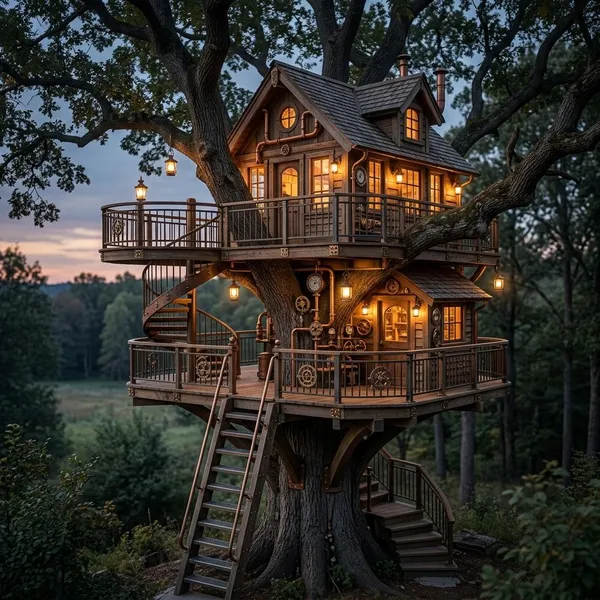
Conclusion
The best result comes from treating the project as a safe tree house first and a steampunk design second. Once the tree, support, access, and weather protection make sense, a few strong choices—aged wood, round windows, warm lanterns, riveted accents, and purposeful mechanics—can create the whole atmosphere without making the build crowded or fragile.
FAQ
What makes a tree house look steampunk?
Victorian shapes, aged wood, dark or brass-toned metal, porthole-style windows, lanterns, and mechanical details create the look. The design feels strongest when those details seem connected to a workshop, airship, or explorer theme.
Can you decorate an existing tree house?
Yes, if the existing structure is safe, dry, and stable. If it has loose rails, soft boards, or poor access, repair those first before adding trim, lighting, shutters, or metal accents.
Is a steampunk tree house suitable for children?
It can be, but child use should shape the design. Avoid sharp metal edges, loose ornaments, wide railing gaps, and ladders as the only access route for frequent play.
What makes a tree house look steampunk?
Victorian shapes, aged wood, dark or brass-toned metal, porthole-style windows, lanterns, and mechanical details create the look. The design feels strongest when those details seem connected to a workshop, airship, or explorer theme.
Can you decorate an existing tree house?
Yes, if the existing structure is safe, dry, and stable. If it has loose rails, soft boards, or poor access, repair those first before adding trim, lighting, shutters, or metal accents.
Is a steampunk tree house suitable for children?
It can be, but child use should shape the design. Avoid sharp metal edges, loose ornaments, wide railing gaps, and ladders as the only access route for frequent play.