
Steampunk overalls work best when they still look like wearable clothing, not a pile of gears sewn onto workwear. Start with dark sturdy overalls, add aged metal hardware, choose one clear style direction, and keep comfort in mind if you plan to wear them for more than a quick photo or party.
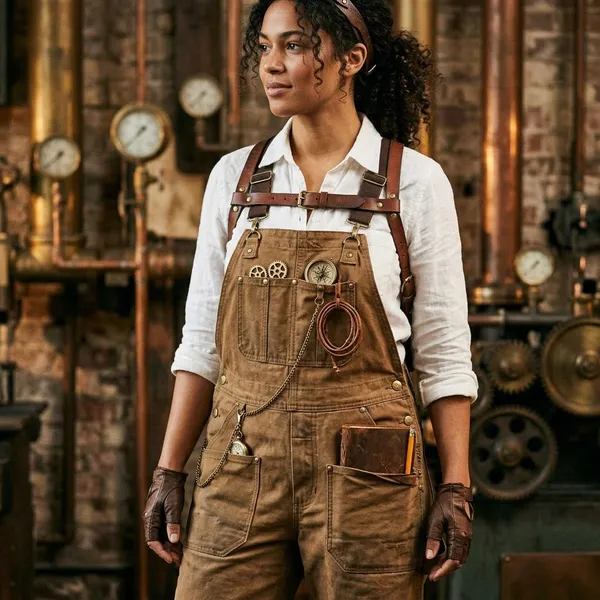
Key features of steampunk overalls
The first things to check are fabric, fit, and hardware. If those feel right, smaller details like pockets, trim, and accessories can build the steampunk mood without making the outfit hard to wear.
Canvas, denim, or faux leather
Canvas gives the strongest workshop feel and suits mechanic, inventor, and explorer outfits. Denim is easier for everyday wear because it already looks familiar, especially in black, charcoal, dark indigo, or brown. Faux leather is more dramatic, but it can feel hot or stiff, so it often works better as trim, panels, straps, or pocket flaps instead of the whole garment.
Brass buckles and metal hardware
Antique brass, bronze, aged copper, and gunmetal hardware can make plain overalls look much more intentional. The important part is consistency: clips, buttons, rivets, and belt pieces should look like they belong to the same outfit.
Avoid very shiny modern hardware if you want a vintage-industrial look. It can make the overalls feel more like regular fashion overalls with costume pieces added afterward.
Utility pockets and adjustable straps
Pockets should look useful, not just decorative. Chest pockets, side pockets, and narrow tool pockets fit the theme well when they sit close to the body and do not make the hips or bib look bulky.
- For conventions: choose pockets that can hold a phone, cardholder, and small essentials securely.
- For everyday wear: keep pocket details flatter so the overalls still look casual and easy to move in.
- For DIY projects: test pocket placement while sitting before sewing or riveting anything in place.
Dark, earthy, and weathered colors
Black, brown, rust, olive, charcoal, muted navy, and burgundy usually fit steampunk styling better than bright modern colors. These shades also make brass or bronze hardware stand out without looking too flashy.
Victorian and industrial details
Victorian details soften the workwear base, while industrial details make it feel practical and mechanical. Good choices include pinstripes, high-neck layers, shaped bibs, decorative buttons, rivets, visible stitching, and leather reinforcement.
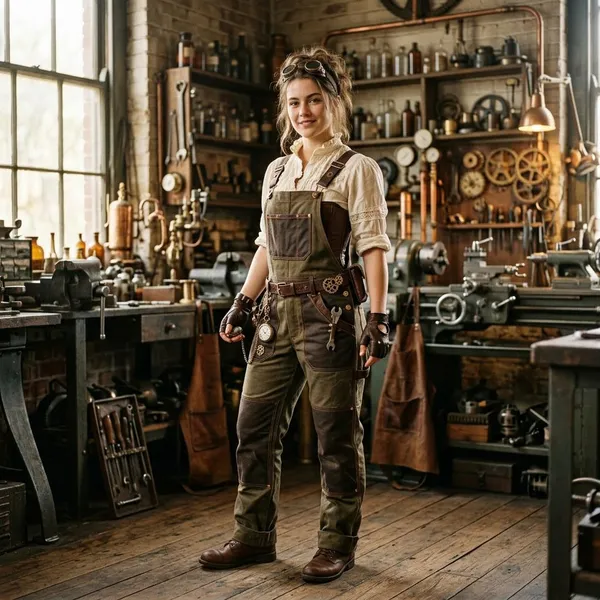
Popular steampunk overall styles
Choose the style based on where you plan to wear the overalls. A convention outfit can handle more drama, while a daily outfit needs cleaner lines, lighter accessories, and easier movement.
| Style direction | Best for | Use with caution |
|---|---|---|
| Industrial mechanic | Workwear-inspired costumes and rugged casual looks | Too many tools or straps can feel heavy |
| Victorian-inspired | Dressier events, photos, and polished outfits | Too much trim can turn it into a costume jumpsuit |
| Aviator or explorer | Conventions, themed markets, travel-inspired styling | Goggles and props can quickly look theatrical |
| Post-apocalyptic | Bold events and character costumes | Heavy distressing is harder to wear casually |
| Subtle everyday | Repeat wear and low-key steampunk fashion | Needs good hardware or boots so it does not look too plain |
How to style steampunk overalls
Build the outfit from the inside out: shirt first, then overalls, then shoes, then one or two accessories. This order keeps the look balanced and stops the accessories from doing all the work.
Add a high-collar shirt or blouse
A high-collar shirt, band-collar shirt, mock-neck top, ruffled blouse, or fitted cotton layer instantly adds a Victorian note. Cream, white, gray, muted burgundy, and soft brown are easy colors to pair with dark overalls.
This layer also protects your skin from straps and hardware. For summer events, choose lighter cotton or a breathable blouse rather than a thick costume shirt.
Wear leather boots or lace-up shoes
Boots give steampunk overalls the right weight. Ankle boots, lace-up boots, combat-inspired boots, and mid-calf boots all work, especially in black or brown leather.
If you will be standing for hours, comfort should win over decoration. A supportive boot that looks slightly worn is usually more convincing than a painful costume shoe with extra buckles.
Layer with a waistcoat or long coat
A waistcoat sharpens the silhouette and works well for everyday outfits because it adds structure without too much bulk. A long coat, duster, or military-style jacket creates a stronger event look, especially for explorer or airship-inspired styling.
Add belts, pouches, and suspenders
Belts and pouches should look like they serve a purpose. One slim belt pouch, small satchel, or narrow leather strap can be enough to suggest tools, travel, or invention.
- Good choice: one pouch that actually holds something you need.
- Risky choice: several empty pouches that pull at the waist.
- Usually too much: extra suspenders over overalls unless they are part of a clear costume design.
Finish with simple metal accessories
Small metal details can tie the outfit together: a pocket watch, collar pin, ring, cuff, or short chain. Match the tone to the overalls' hardware where possible, such as brass with brass or gunmetal with gunmetal.
Skip novelty pieces that look random. One accessory that feels practical or period-inspired usually has more impact than several gear-shaped decorations.
How to make DIY steampunk overalls
DIY steampunk overalls are often better when the changes are removable or easy to adjust. That gives you one base garment that can work for a themed event, a casual outfit, or a future redesign.
Start with plain dark overalls
Choose plain overalls in black, charcoal, olive, brown, or dark indigo. Fit and construction matter more than decoration at this stage, so check the straps, seams, bib height, and ease of movement before planning any upgrades.
Replace the buttons and buckles
Swapping bright modern buttons or plastic clips for antique brass, bronze, or gunmetal hardware is one of the quickest improvements. Use clothing-grade pieces when possible, especially on straps and side closures that need to handle tension.
Add removable straps and pockets
Removable details are useful if you want one pair of overalls to do more than one job. Clip-on pouches, snap-on pocket flaps, detachable straps, and small belt bags can make the outfit more dramatic for events and easier to simplify later.
- Use canvas or faux leather for additions that need to match rugged fabric.
- Avoid thin shiny trim unless the whole outfit has a theatrical finish.
- Place pockets carefully so they do not block sitting, bending, or walking.
Distress the fabric lightly
Light distressing can make overalls look worn-in rather than brand new. Focus on natural contact points: pocket edges, knees, hems, straps, and seams.
Work slowly. Sanding, dyeing, or painting too much at once can make the garment look dirty instead of aged. Test on an inside hem or scrap fabric first if you are unsure how the material reacts.
Finish with one statement detail
Pick one focal point: a leather bib panel, a distinctive buckle layout, a small embroidered patch, a pocket watch chain, or a compact map pouch. One strong detail gives the overalls identity; five competing details make them harder to read.
Match the detail to the role you want the outfit to suggest. A mechanic look can use tool loops, an explorer look can use a field pouch, and a Victorian version can use patterned fabric on the bib.
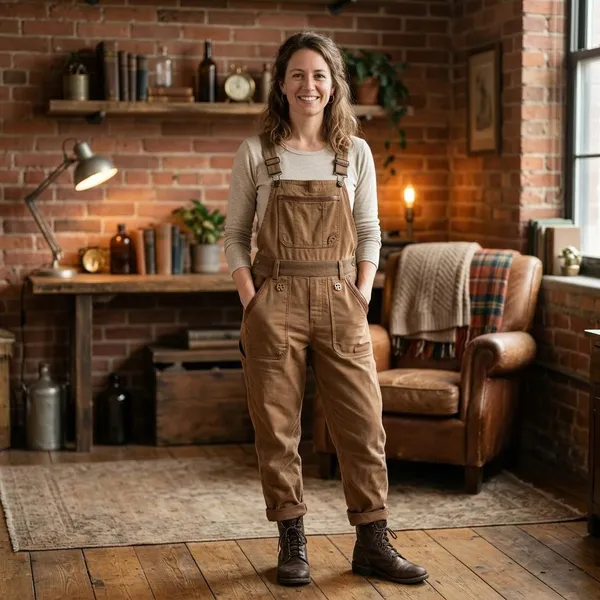
How to keep steampunk overalls comfortable
Comfort depends on weight, heat, and movement. This matters most for conventions, festivals, markets, or any day when you will walk, sit, queue, and carry things for several hours.
Adjust the straps before wearing
Set the straps while wearing the shirt or blouse you actually plan to use. A bib that sits too high can press at the chest or neckline, while a bib that sits too low can pull at the waist and shift when you walk.
Do a quick mirror check from the side as well as the front. Overalls can look fine straight-on but bunch at the back or pull at the hips once layered.
Choose breathable base layers
Cotton shirts, lightweight blouses, and moisture-wicking undershirts are safer choices than thick synthetic costume layers. They reduce rubbing and help control heat under denim, canvas, or faux leather panels.
For cold weather, layer thin pieces instead of wearing one bulky shirt. For warm weather, keep the collar detail but choose lighter fabric so the outfit still feels steampunk without trapping too much heat.
Keep heavy accessories off the shoulders
Overalls already put weight on the shoulders, so heavy harnesses, large bags, or metal pieces in the same area can become tiring. Move useful weight to the waist or hips whenever possible.
Secure loose chains and straps
Loose chains and dangling straps can catch on chairs, bags, door handles, or other people in crowded spaces. Use clips, snaps, ties, or fixed anchor points so decorative pieces stay controlled.
Check this before you leave, not after something snags. The outfit should move with you, not swing against your legs or block your pockets.
Test the outfit while moving
Put on the full outfit and walk, sit, bend, reach, and climb a few steps if possible. Pay attention to the bib, knees, waist, underarms, and shoulders.
- If straps slip: shorten them or add a more secure buckle.
- If the knees pull: the overalls may be too tight for long wear.
- If accessories bounce: move them lower, clip them down, or remove them.
- If boots hurt indoors: they will feel worse after hours outside.
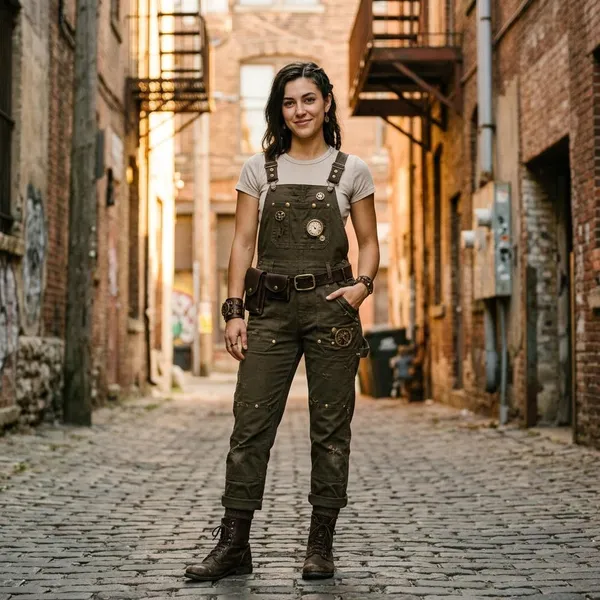
Conclusion
The most wearable steampunk overalls start with a strong base and only add details that support the look. Choose durable dark fabric, keep the hardware consistent, decide whether you want costume impact or everyday flexibility, and test the outfit in motion before committing to heavy accessories. If the overalls still feel comfortable after sitting, walking, and reaching, the styling is probably doing its job.
FAQ
Can regular overalls look steampunk?
Yes. Dark regular overalls can look steampunk with aged metal hardware, boots, a vintage-style shirt, and one focused accessory such as a belt pouch or pocket watch chain.
What should you wear under steampunk overalls?
Wear a breathable high-collar shirt, band-collar shirt, blouse, or fitted cotton top. The best layer adds period character while protecting your skin from straps and hardware.
Can steampunk overalls work for everyday fashion?
Yes, if the base is simple and the accessories are restrained. Choose normal proportions, subtle brass or leather details, and practical shoes instead of large props.
Can regular overalls look steampunk?
Yes. Dark regular overalls can look steampunk with aged metal hardware, boots, a vintage-style shirt, and one focused accessory such as a belt pouch or pocket watch chain.
What should you wear under steampunk overalls?
Wear a breathable high-collar shirt, band-collar shirt, blouse, or fitted cotton top. The best layer adds period character while protecting your skin from straps and hardware.
Can steampunk overalls work for everyday fashion?
Yes, if the base is simple and the accessories are restrained. Choose normal proportions, subtle brass or leather details, and practical shoes instead of large props.