
Steampunk military uniforms work best when they look like they belong to a specific role, not just a pile of brass, leather, and goggles. Start with a sharp jacket, choose one clear branch or character type, then add only the details that make that role easier to read. If the outfit would still make sense without half the accessories, you are probably building it the right way.
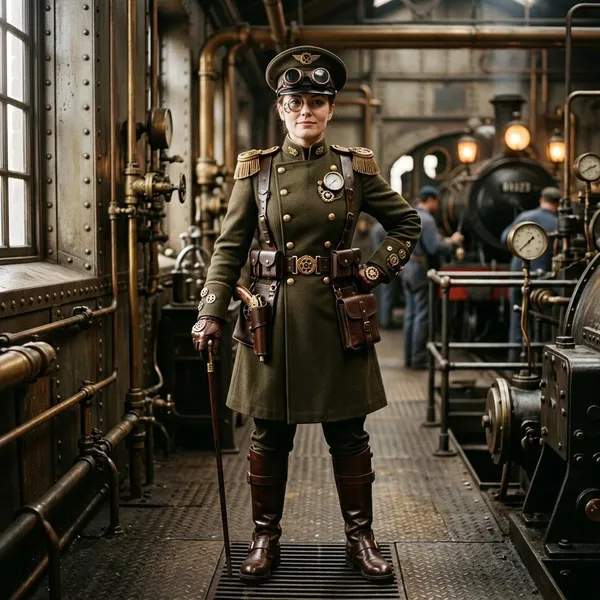
Key pieces of a steampunk military uniform
The strongest builds usually come from a few reliable pieces: a structured jacket, fitted lower half, tall boots, controlled leather gear, and one finishing piece of headwear or insignia. Check those in that order. A good silhouette matters more than adding another pouch, medal, or gear-shaped prop.
A structured military jacket
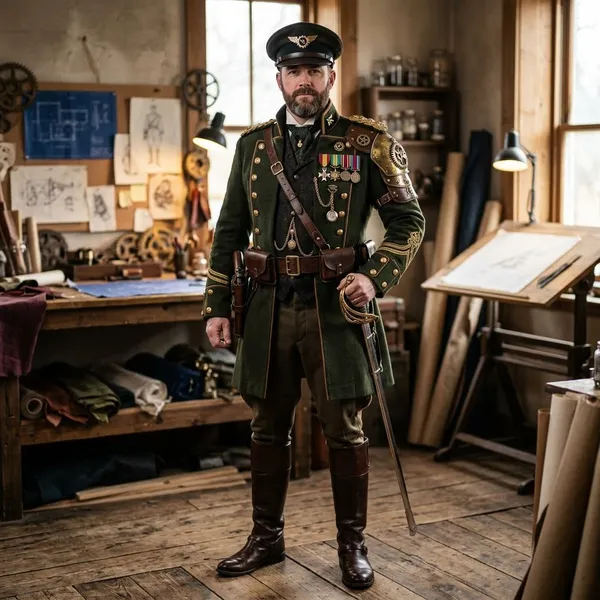
The jacket is the anchor. Look for a defined shoulder line, high or stand collar, metal buttons, epaulettes, cuff trim, braid, or a double-breasted front. It does not have to be expensive, but it should fit cleanly through the shoulders and waist.
Fitted trousers or breeches
Trousers should make the jacket look sharper, not steal attention from it. Slim uniform trousers, straight wool pants, or knee-length breeches work well with tall boots. Very loose cargo pants only make sense for a rugged field scout, mechanic, or expedition role.
- Formal officer or naval look: choose clean, dark trousers with little visible bulk.
- Cavalry look: breeches or tucked trousers make the riding-boot shape clearer.
- Field or airship crew look: sturdier cotton or canvas can work if the rest of the outfit stays intentional.
Tall leather boots
Tall boots quickly make the outfit feel more uniformed. Black boots read stricter and more formal; brown boots feel more adventurous, practical, or expedition-ready. For a one-night themed party, comfort may be enough, but for a convention or all-day event, walk-test the boots before you commit.
Belts, harnesses, and gloves
Leather gear should look useful. A cross-body belt, map pouch, holster, or gloves can add a strong steampunk layer, but too many straps will blur the military shape underneath. A simple test helps: if the item does not suggest rank, duty, travel, tools, or protection, leave it off.
Period headwear and simple insignia
A peaked cap, kepi, naval cap, bicorne, or aviator headpiece can finish the character quickly. Insignia should be even simpler: a few rank bars, shoulder marks, cuff stripes, or a unit badge are usually enough.
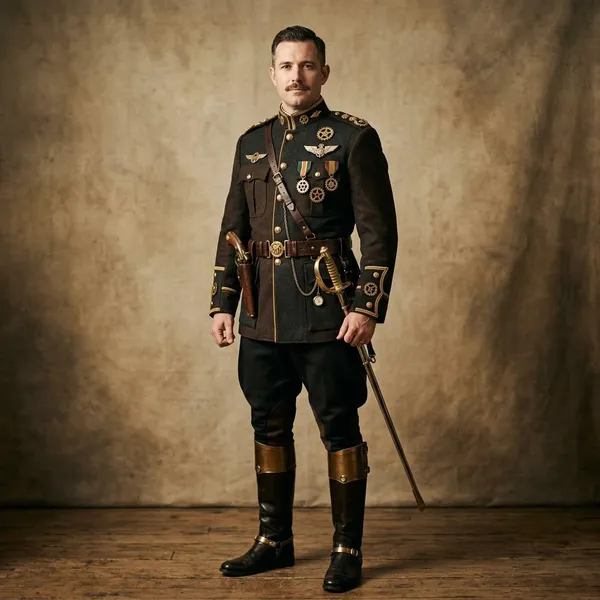
Main steampunk military uniform styles
Choose the style before you shop. A cavalry rider, naval officer, airship engineer, and field scout can all use military pieces, but they need different colors, gear, and levels of polish. This is where the outfit starts to feel like a character instead of a costume rack.
Cavalry uniform with braided details
Cavalry styling is bold and easy to recognize: braid across the chest, fitted jacket, gloves, breeches, and riding boots. Let the braid do the visual work. If you add heavy harnesses, oversized props, and too many medals, the outfit can lose the clean movement that makes cavalry looks appealing.
Officer uniform with a long coat
A long officer coat is a forgiving choice for beginners because it creates authority immediately and hides simpler base layers underneath. High collars, double-breasted fronts, brass or silver buttons, and shoulder details all help.
This is a good route if you want a polished look for photos, formal events, or a costume that does not require many props. Add gloves, a cap, and one rank detail before considering anything larger.
Naval uniform with a formal finish
Naval uniforms need restraint. Navy, black, white, or cream with brass details usually works better than heavy belts and lots of gadgets. Fit is the main check: if the jacket and trousers look crisp, the outfit can stay quite simple and still read clearly.
Airship crew uniform with practical layers
Airship crew styling gives you more room for layers: vest, scarf, gloves, utility belt, goggles, or weathered boots. The key is practical logic. A navigator might carry a map case; an engineer might use tool pouches; a security officer might keep a cleaner military jacket with fewer tools.
For a summer event, keep this version lighter with breathable base layers and removable accessories. For cooler weather or outdoor photos, layered leather and scarves can look great without becoming uncomfortable.
Field uniform with rugged accessories
A field uniform should look used, not ruined. Olive canvas, brown leather, scuffed boots, canteens, map cases, and work gloves all fit the idea of patrols, expeditions, medics, or frontier troops.
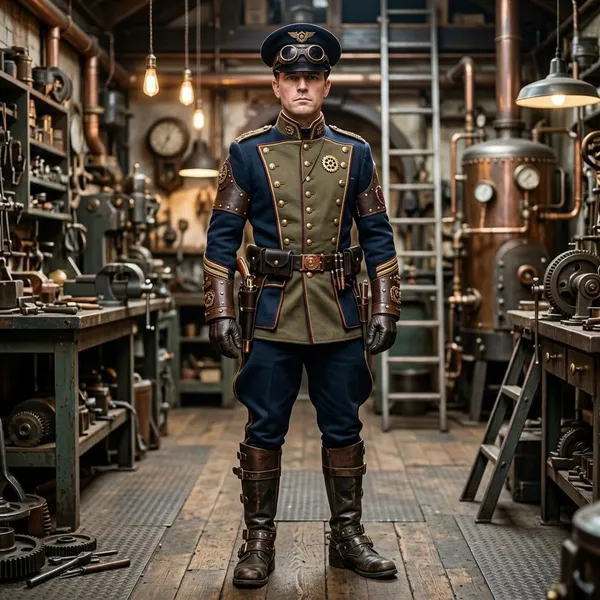
Best colors and materials for the uniform
Color decides the mood before most people notice the small details. Pick two main colors and one metal tone, then keep repeating them. Wool, heavy cotton, canvas, leather, and aged metal usually look more convincing than thin shiny costume fabric, especially on jackets and trousers.
Navy wool with brass details
Navy wool with brass feels classic, formal, and slightly maritime. It is one of the safest choices for officer and naval builds because the contrast is strong without looking loud. Brown leather makes it warmer; black leather makes it stricter.
Black fabric with silver hardware
Black and silver creates a colder, sharper uniform. It suits guards, airship security, command coats, or darker ceremonial characters. Use texture to stop the outfit from looking flat: matte wool, brushed metal, brocade panels, or leather with a slight grain all help.
Olive canvas with brown leather
Olive canvas and brown leather are ideal for practical uniforms. This combination works well for surplus jackets, expedition outfits, mechanics, scouts, and airship crew because it already suggests movement and outdoor use.
It is also forgiving for long wear. Dust, creases, and small scuffs are less obvious than they would be on cream or polished black, which makes this a smart choice for busy events.
Burgundy fabric with antique gold trim
Burgundy and antique gold can look rich, senior, and ceremonial. The risk is over-decoration. Use gold on the collar, cuffs, buttons, or braid, but avoid outlining every seam unless you want a very theatrical finish.
Cream cotton with dark leather accents
Cream cotton with dark leather feels lighter and more travel-ready. It can suit warm-weather naval looks, desert campaigns, exploration uniforms, or a less severe officer outfit.
The trade-off is maintenance. Cream shows wrinkles and dirt quickly, so it is better for controlled events than muddy outdoor wear. Dark brown or black leather keeps the shape grounded.
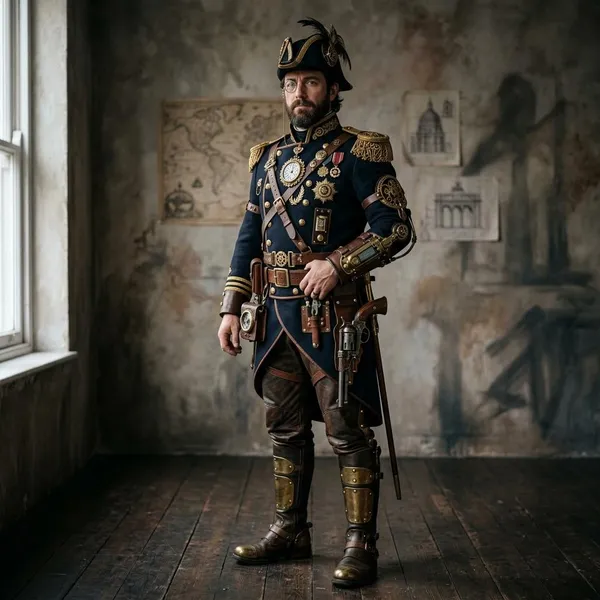
How to build a steampunk military uniform
Build from the largest visual decision to the smallest. Role first, jacket second, base garments third, accessories fourth, and finishing details last. That order prevents the most common problem: buying impressive pieces that do not belong together.
Choose a military role or character
Give the uniform a job before you buy anything. "Airship medic," "retired naval captain," "cavalry courier," or "frontier patrol officer" is enough. That small decision tells you whether the outfit should look polished, rugged, technical, ceremonial, or travel-worn.
Start with the jacket
Choose the jacket or coat that matches the role. A long coat suits officers, a braided tunic suits cavalry, a navy jacket suits naval styling, and a canvas or surplus jacket suits field use. Once the jacket is fixed, buttons, trim, trousers, and leather become much easier to choose.
Add simple base garments
Keep shirts, vests, trousers, and breeches quieter than the jacket. Solid colors usually work best. Modern dress trousers, plain waistcoats, and fitted shirts can look convincing once the coat, boots, and accessories are in place.
- For a temporary costume: borrow or adapt clean basics before buying specialty pieces.
- For repeat wear: choose breathable layers and trousers you can sit and walk in comfortably.
- For photos: prioritize fit and fabric texture over hidden historical accuracy.
Layer belts and leather gear
Add leather gear slowly. Start with one belt or cross-strap, then check the full outfit in a mirror or photo. If the jacket shape disappears under accessories, remove something.
Finish with headwear and insignia
Headwear and insignia should confirm the role, not rescue an unclear outfit. Add a cap, kepi, naval hat, helmet, or goggles only after the main clothing works. Then choose one small rank or unit system and keep it consistent.
Before wearing it out, do a quick movement check: sit down, raise your arms, walk in the boots, and see whether straps slide or props hit your legs. A slightly simpler outfit that moves well usually looks better than a dramatic one you keep adjusting.
Conclusion
A good steampunk military outfit starts with discipline, then adds imagination. Choose the role, make the jacket and boots do the heavy lifting, and treat accessories as proof of the character rather than decoration for its own sake. If the uniform looks clear from across the room and still feels wearable up close, it has enough detail.
FAQ
Are steampunk military uniforms historically accurate?
Usually no. They borrow from historical uniforms, but the final look often mixes periods, fantasy ranks, and fictional technology. If you need reenactment accuracy, keep the steampunk elements separate or very subtle.
What jacket works best for a steampunk officer uniform?
A fitted long coat or structured military jacket works best. Look for a high collar, defined shoulders, metal buttons, and a clean front; those details create authority before accessories are added.
Do steampunk military outfits need goggles?
No. Goggles fit pilots, engineers, and some airship crew characters, but they can weaken a formal officer or naval look. Use them only when they match the role.
Are steampunk military uniforms historically accurate?
Usually no. They borrow from historical uniforms, but the final look often mixes periods, fantasy ranks, and fictional technology. If you need reenactment accuracy, keep the steampunk elements separate or very subtle.
What jacket works best for a steampunk officer uniform?
A fitted long coat or structured military jacket works best. Look for a high collar, defined shoulders, metal buttons, and a clean front; those details create authority before accessories are added.
Do steampunk military outfits need goggles?
No. Goggles fit pilots, engineers, and some airship crew characters, but they can weaken a formal officer or naval look. Use them only when they match the role.