
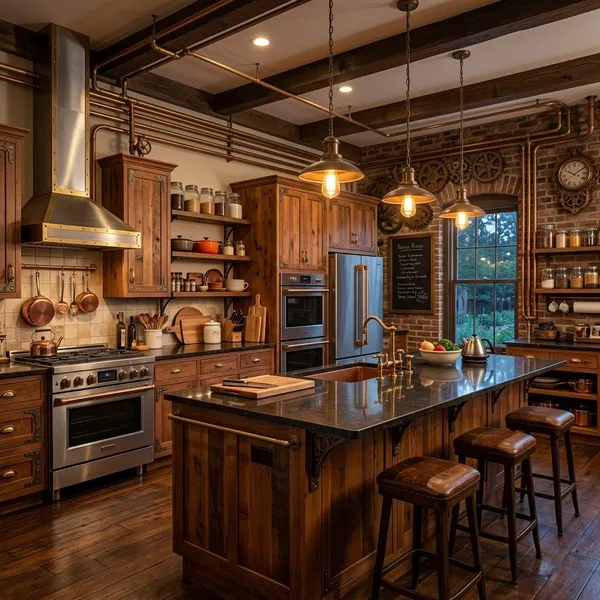
A steampunk kitchen works best when the vintage details support real cooking instead of competing with it. Start with the practical parts first: layout, lighting, cleaning, storage, and durable fixtures. Then layer in warm metals, dark wood, exposed hardware, and one or two mechanical details that feel useful rather than decorative for the sake of it.
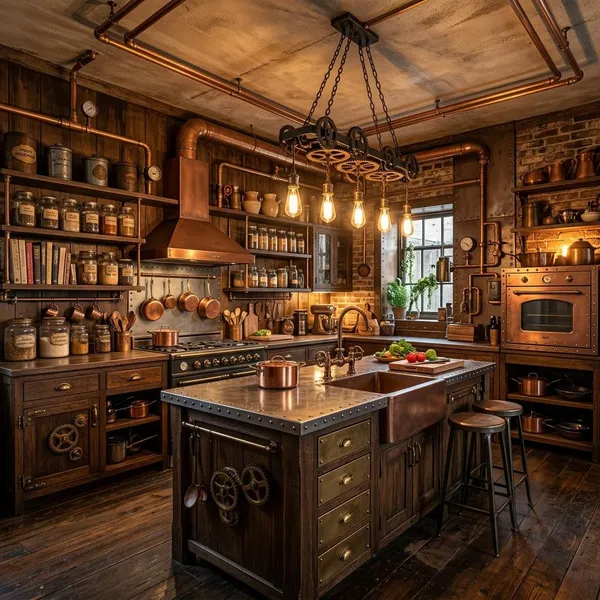
What makes a kitchen look steampunk
The look comes from a mix of Victorian character and visible utility. Think framed cabinetry, brass or copper tones, darker woods, mechanical-looking fittings, and lighting that feels old-world without making the room dim or awkward to use.
Victorian-inspired shapes and details
Victorian influence usually shows up in the shapes: raised cabinet panels, glass-front doors, corbels, turned legs, framed range hoods, and curved shelf brackets. These details soften the industrial side of the style, so the kitchen still feels like part of a home rather than a workshop.
Brass copper and aged metal
Warm metal is one of the fastest ways to make the style read clearly. Antique brass, aged copper, bronze, and blackened steel all work, but mixing too many finishes can make the room feel messy. For most kitchens, choose one main metal and use a darker finish as support.
- Best first choice: faucet, cabinet pulls, or pendant lighting.
- Good secondary detail: shelf brackets, pot rails, switch plates, or stool frames.
- Common mistake: adding bright chrome pieces that fight the aged look.
Dark wood and exposed hardware
Dark wood gives the room weight and warmth. Walnut, stained oak, reclaimed wood, or a deep brown painted finish can all work, especially on lower cabinets, an island, shelves, or a freestanding pantry piece.
Exposed hardware should look like it belongs there. Strap hinges, visible brackets, sliding rails, and sturdy latches feel convincing because they suggest function. Fake gears glued to cabinets usually have the opposite effect; they make the space look themed rather than designed.
Mechanical accents with a clear purpose
The strongest mechanical details earn their place. A pipe shelf holds mugs, a pot rack frees cabinet space, a pulley-style light brightens a work zone, and a gauge-inspired clock adds character without stealing counter space.
Modern function behind a vintage look
The room can look old, but it should not behave like an old kitchen. Soft-close drawers, pull-out bins, strong ventilation, task lighting, and reliable appliances matter more than another decorative fitting.
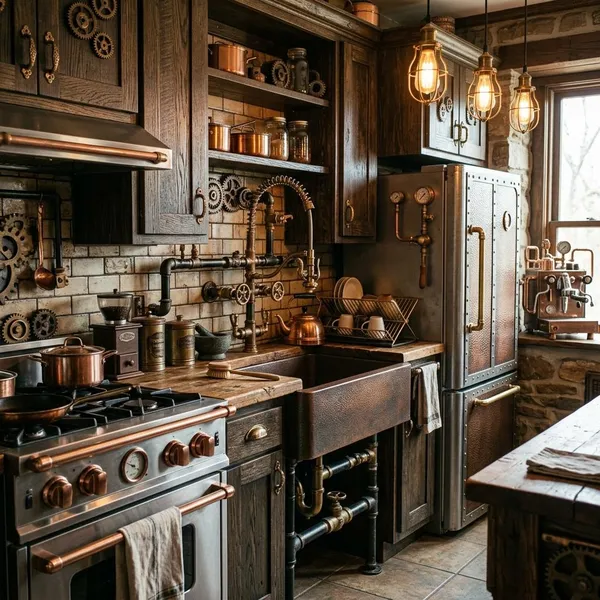
How to choose sinks faucets and appliances
Sinks, faucets, and appliances decide whether the kitchen feels intentionally steampunk or just decorated around standard modern pieces. Choose these items by use first, then by finish: a beautiful faucet is not worth much if it splashes, sticks, or feels awkward every day.
Farmhouse or metal sinks
A farmhouse sink is the safer, more flexible choice if you want vintage character without heavy maintenance. It works with dark wood, brass fittings, and lighter walls, and the deep basin is useful for pans and baking trays.
A copper or brass-toned sink makes a stronger statement, but it should be a deliberate feature. Expect the finish to change over time, and check the care instructions before buying. If you dislike patina or water marks, use copper in lighting or cookware instead.
Bridge faucets and industrial fittings
Bridge faucets suit the style because the exposed connection looks closer to old plumbing. Antique brass, bronze, or aged nickel usually feels more natural than shiny chrome.
- Check reach: the spout should land comfortably in the basin.
- Check handles: they should turn easily with wet hands.
- Check cleaning: very detailed fittings can trap grime around the base.
Retro-look appliances for a stronger theme
Retro-look appliances are useful when you want one big visual anchor. A rounded refrigerator, heritage-style range, or oven with brass knobs can set the tone so you do not need to overdecorate the rest of the room.
Integrated appliances for a cleaner finish
Integrated appliances are better when the kitchen is small, open-plan, or already rich in wood and metal. A paneled dishwasher or concealed fridge lets the cabinetry and lighting create the mood instead of adding another large visual surface.
For a long-term renovation, this quieter route often ages well. Appliance styles change, but a calm cabinet run with strong hardware and good lighting is less likely to feel dated.
Practical surfaces that resist heat and moisture
Countertops and splash zones need to handle steam, spills, hot cookware, and frequent wiping. Matte quartz, soapstone, sealed wood in lower-risk areas, and some darker stones can suit the look while staying practical.
| Area | Better choice | Be careful with |
|---|---|---|
| Sink run | Moisture-resistant stone or quartz | Unsealed wood close to standing water |
| Cooking zone | Heat-tolerant, easy-wipe surfaces | Finishes that stain or scorch easily |
| Island or serving area | Sealed wood or darker stone | Materials chosen only for appearance |
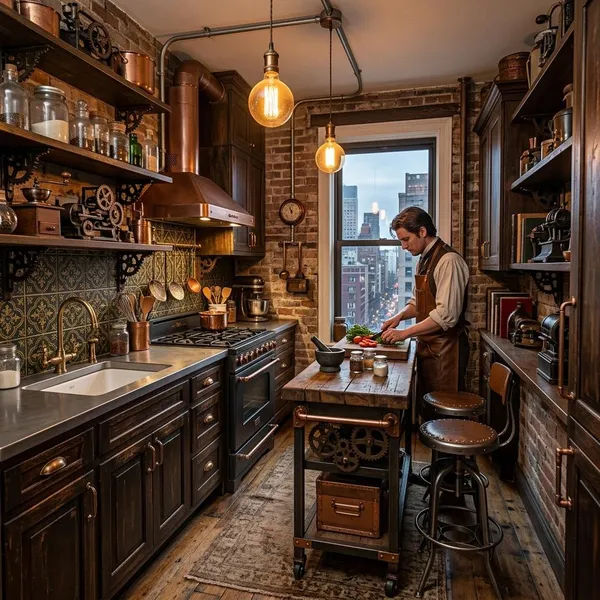
How to design a small steampunk kitchen
A small kitchen needs a lighter hand. The style can handle dark wood and metal, but not on every surface at once. Pick one strong direction, keep the work areas clear, and use detail where it gives the room character without shrinking it visually.
Use one main metal finish
One dominant metal keeps a compact room calm. Brass is usually the easiest because it feels warm and vintage; copper is stronger and should be used more sparingly. Black iron can support either one through brackets, rails, or stool legs.
Keep upper walls visually light
Light upper walls stop the room from feeling boxed in. Cream, warm gray, soft stone, muted beige, or pale clay tones all work better than stark white if you want a vintage mood.
Choose compact open storage
Open storage can help if it is edited tightly. A narrow shelf for mugs, a rail for daily utensils, or a small rack for pans can add the workshop feel while keeping useful items close.
- Display what you use: mugs, plates, jars, pans, or tools.
- Avoid dust collectors: random ornaments make cleaning harder.
- Keep it away from heavy grease: shelves near the cooktop need frequent wiping.
Add one strong focal feature
Choose one feature that gives the room its identity: a hammered sink, a dramatic pendant, a dark wood island cart, a rivet-style hood trim, or a bridge faucet. One good focal point looks more intentional than many small themed objects scattered around the room.
Limit dark decor to selected areas
Dark decor works best in controlled zones. Try dark lower cabinets with lighter counters, black metal shelves on one wall, or a deep wood island against softer surrounding colors.
The warning sign is when the room starts to lose contrast. If the cabinets, walls, shelves, lighting, and accessories are all dark, the details blur together and the kitchen feels smaller. Leave some breathing space so the best features stand out.
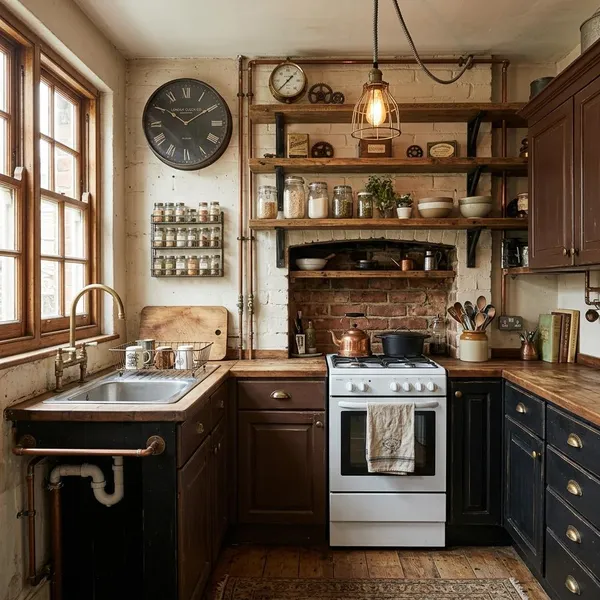
How to create the look on a budget
You can move a kitchen toward this style without a full remodel. Spend first on visible pieces you touch every day, then add atmosphere through lighting, wood tone, and small metal details. Decorative extras should come last.
Replace handles and cabinet hardware
Cabinet hardware is the best low-cost starting point because it changes a large visual area quickly. Cup pulls, latches, aged brass knobs, and darker backplates can make plain cabinets feel more crafted.
Check the hole spacing before buying. Reusing existing holes saves time, avoids patching, and keeps the upgrade simple. If the old pulls were large, choose replacements that cover marks or faded areas on the cabinet fronts.
Upgrade lighting and switch plates
Lighting changes the mood more than most small accessories. A metal pendant over a table, a warm sconce, or a vintage-style fixture above an island can make wood and brass finishes feel richer.
Add pipe shelves and metal brackets
Pipe shelves and metal brackets add the exposed-utility look without major construction. They work well over a coffee station, on a blank wall, or in place of one upper cabinet.
Refinish existing wood surfaces
Refinishing is often more convincing than buying new themed furniture. Staining a pale island darker, waxing open shelves, or painting stools in a muted black-brown can add age and depth.
Use low-sheen finishes where possible. Very glossy wood can look too new for the style, while a softer finish usually pairs better with aged metal and vintage lighting.
Spend more on durable working fixtures
Save on decorative details, but be careful about the fixtures that work hardest. The faucet, sink, busy countertop areas, ventilation, and daily appliances should be reliable before they are dramatic.
- Start with hardware and lighting for the fastest visible change.
- Add shelves or rails only where they improve storage.
- Refinish wood if the existing pieces are solid but too plain.
- Upgrade sink or faucet last unless the current ones already need replacing.
Conclusion
The best result is not the kitchen with the most gears, copper, or dark paint; it is the one where the vintage mood and daily function support each other. Choose a strong metal finish, protect the work zones, keep small spaces edited, and spend properly on the fixtures you use every day. When the practical choices are right, the steampunk details feel natural instead of forced.
FAQ
Can you turn a modern kitchen into a steampunk kitchen?
Yes. Start with hardware, lighting, faucet finish, and one warm wood or metal feature before changing cabinets or appliances. If those updates already make the room feel balanced, a full remodel may not be necessary.
What colors work best in a steampunk kitchen?
Deep brown, charcoal, warm black, brass, copper, bronze, cream, stone, and muted green-gray all work well. In a small room, keep the darkest colors lower or limited to one feature so the kitchen does not feel closed in.
Is a copper sink necessary?
No. A copper sink is only one possible focal point, and it comes with patina and care considerations. A farmhouse sink, brass faucet, copper cookware, or aged-metal lighting can create the same direction with less commitment.
Can you turn a modern kitchen into a steampunk kitchen?
Yes. Start with hardware, lighting, faucet finish, and one warm wood or metal feature before changing cabinets or appliances. If those updates already make the room feel balanced, a full remodel may not be necessary.
What colors work best in a steampunk kitchen?
Deep brown, charcoal, warm black, brass, copper, bronze, cream, stone, and muted green-gray all work well. In a small room, keep the darkest colors lower or limited to one feature so the kitchen does not feel closed in.
Is a copper sink necessary?
No. A copper sink is only one possible focal point, and it comes with patina and care considerations. A farmhouse sink, brass faucet, copper cookware, or aged-metal lighting can create the same direction with less commitment.