
A steampunk dining room works best when it feels collected, warm, and usable—not like a themed restaurant set. Start with dark wood, aged metal, and soft amber lighting, then add Victorian and mechanical details only where they make the room richer rather than busier.
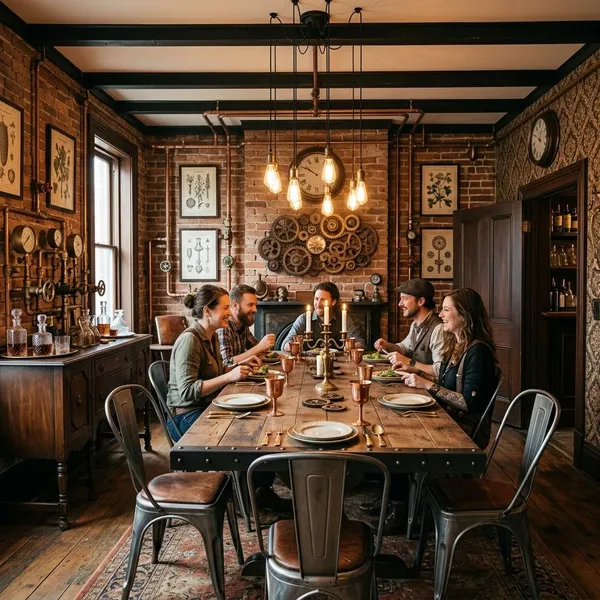
The key elements of a steampunk dining room
The strongest steampunk dining rooms get the big choices right before any small decor appears. If the table, lighting, wall color, and metal finishes already feel grounded, you need far fewer gears, props, or novelty pieces.
Think of the style as Victorian warmth with industrial weight: carved or curved shapes, deep colors, worn wood, brass, iron, glass, and objects that suggest travel, invention, or old workshops.
Dark wood furniture
Dark wood gives the room its anchor. Walnut, mahogany, and distressed oak all work because they have depth and visible character, especially on a dining table, sideboard, or display cabinet.
Aged brass and black iron
Aged brass and black iron are the easiest metal pairing to get right. Brass adds warmth, while black iron gives the room a stronger industrial edge.
- Use brass on lighting, cabinet pulls, mirrors, trays, or candlesticks.
- Use black iron on shelving, chair frames, brackets, or table bases.
- Avoid shiny chrome unless the rest of the room is intentionally more modern.
Warm layered lighting
Lighting is usually the fastest way to make the room feel steampunk without adding clutter. A warm pendant or chandelier over the table should set the mood, but it should not be the only light source.
For everyday dinners, dimmable overhead light is practical. For evening meals or entertaining, sconces, buffet lamps, or candle-style bulbs create the softer glow that makes dark wood, brass, and leather look better.
Victorian shapes and details
Victorian details keep the room from looking like a plain industrial space. Curved chair backs, carved legs, paneled cabinet doors, tufted upholstery, framed mirrors, and patterned wallpaper all help soften the metal and wood.
Mechanical and scientific accents
Mechanical and scientific accents should feel like part of a thoughtful collection. A clock with visible movement, an antique-style map, a globe, patent prints, magnifying lenses, or apothecary jars can add character without turning the dining room into a costume.
Best steampunk colors and materials
The right palette should feel deep and comfortable, not simply dark. Choose colors and materials that look good under warm lighting and have some texture, patina, grain, or softness.
Build the room in this order: backdrop first, main wood tone second, metal finishes third, and fabrics last. That keeps the space from becoming a random mix of "old-looking" pieces.
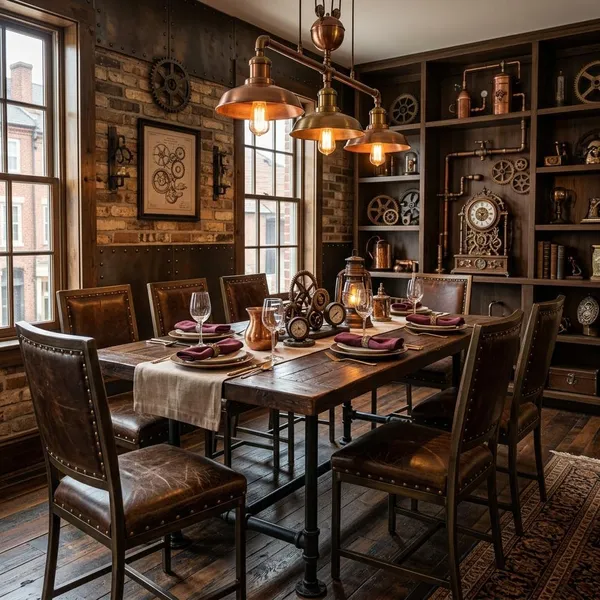
Charcoal, deep green, and oxblood
Charcoal, deep green, and oxblood are reliable steampunk dining room colors because they make brass, leather, and dark wood look richer. Charcoal feels moody and architectural, deep green adds a historic feel, and oxblood brings warmth without becoming bright.
Walnut and distressed oak
Walnut is the better choice for a more elegant, Victorian-leaning room. Distressed oak suits a rougher, workshop-inspired look. Both are better than pale, glossy finishes if you want the room to feel aged and grounded.
Brass, copper, and iron
Brass, copper, and iron can all work, but they need limits. For most homes, aged brass and black iron should do most of the work, with copper used as a smaller accent on barware, trays, candle holders, or a single light detail.
Too many metal finishes make the room look assembled piece by piece rather than designed. If you already have brass lighting, repeat brass in two or three smaller places instead of introducing polished gold, silver, chrome, and copper all at once.
Leather, velvet, and heavy linen
Leather is practical for dining chairs because it wipes down more easily than delicate fabric and looks better as it wears. Velvet brings a richer Victorian note, especially on host chairs, curtains, or a bench cushion. Heavy linen is useful when the room needs to feel less formal.
- Daily-use dining room: choose leather or durable woven fabric first.
- Occasional entertaining space: velvet chairs or drapes can feel more dramatic.
- Family home: keep delicate fabrics away from the seats used most often.
Brick, glass, and aged wallpaper
Brick adds industrial texture, glass keeps dark rooms from feeling too heavy, and aged wallpaper brings in the Victorian side of the style. Damask, botanical, faded stripe, and antique map patterns all fit the mood if the colors stay muted.
Steampunk dining room furniture
Furniture should carry most of the style. A good steampunk dining room does not need every object to be "on theme" if the main pieces already have weight, texture, and character.
Choose the table and chairs first because they affect comfort every day. Storage, shelving, and a bar cart can then add atmosphere without making the room harder to use.
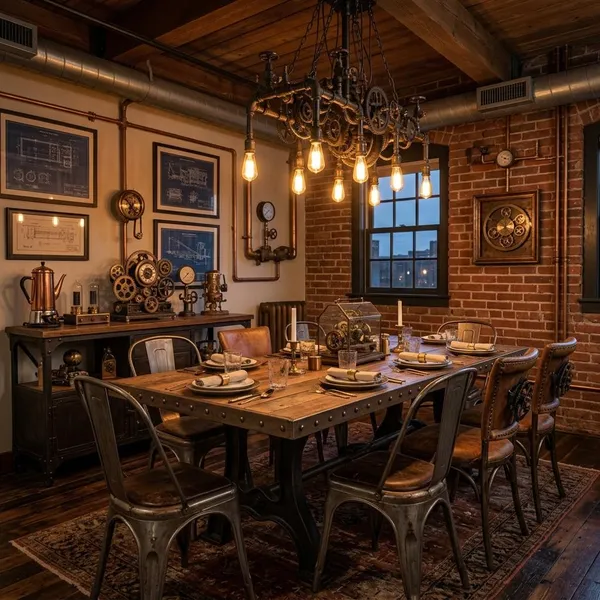
A solid wood dining table
A solid wood dining table is the safest place to invest because it sets the tone from the center of the room. Look for visible grain, a sturdy base, and a finish that feels warm rather than shiny.
Rectangular tables usually suit the style because they feel traditional and substantial. In a tight dining nook, a round pedestal table can still work if the wood is rich and the shape has some classic detail.
Leather or carved wood chairs
Leather chairs make the room more comfortable and slightly club-like. Carved wood chairs lean more Victorian and can look beautiful with a simpler table.
If the dining room doubles as a work area, game table, or long gathering spot, comfort matters more than perfect style. Supportive backs and padded seats will make the room more usable than dramatic chairs no one wants to sit in.
A vintage sideboard or cabinet
A vintage sideboard or cabinet adds storage and gives the room a natural place for lamps, framed prints, glassware, or a few scientific accents. It is also one of the best pieces for making an open-plan dining area feel like its own zone.
Open metal and wood shelving
Open metal and wood shelving is useful when you want industrial character without adding another bulky cabinet. It works well for glassware, old books, decanters, framed prints, and a small collection of objects.
Leave empty space on the shelves. A few well-chosen pieces look more intentional than a full display of clocks, bottles, gears, and books competing for attention.
A compact bar cart or serving trolley
A compact bar cart suits the style because it is both decorative and practical. Brass, iron, wood, smoked glass, or small wheels can all feel right in the room.
For a small steampunk dining room, a bar cart can replace a larger cabinet. Keep it simple: a tray, a few glasses, two or three bottles, and one decorative object are usually enough.
How to decorate without overdoing it
The main mistake is buying themed accessories before the room has a strong foundation. Good materials, warm lighting, and a limited palette will make the space feel steampunk more convincingly than shelves full of novelty gears.
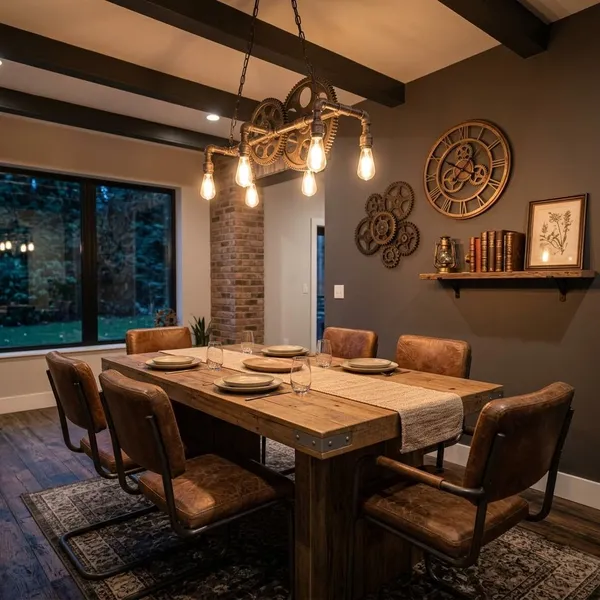
Choose one strong focal point
Pick one feature that carries the room: a brass chandelier, dramatic wallpaper, a tall cabinet, a large mirror, or a dark wood table. One clear focal point makes the design feel intentional and stops the eye from bouncing between too many dramatic pieces.
Use maps, clocks, and patent prints
Maps, clocks, and patent prints are safer than obvious novelty decor because they connect to travel, timekeeping, engineering, and invention while still looking like normal home decor.
- Large wall: try one oversized antique-style map.
- Small wall: use two or three framed patent prints.
- Sideboard: place one statement clock instead of several small objects.
Repeat the same metal finishes
Repeating metal finishes is one of the easiest ways to make mixed pieces feel connected. If your chandelier is aged brass, echo it in cabinet pulls, candlesticks, or a mirror frame. If your shelves use black iron, repeat black iron on chair legs or wall brackets.
Keep the dining table mostly clear
A steampunk dining table should still be easy to use. A narrow runner, low bowl, small tray, or a few candlesticks can be enough; tall centerpieces and busy displays often interfere with serving food and conversation.
This is also where the room can quietly feel more expensive. Let the wood grain show, keep sightlines open, and save the more detailed objects for the sideboard or shelves.
Limit gears and novelty decor
Gears, pipes, and mechanical props can be fun, but they lose impact quickly when they appear everywhere. One visible-mechanism clock or sculptural object is usually stronger than several small gear decorations scattered across the room.
If you are unsure, remove half the themed items and look at the room again in evening light. The space should still read as steampunk through color, material, and mood—not only through props.
Conclusion
A steampunk dining room looks best when the atmosphere comes from lasting choices: a strong table, warm light, aged metal, deep color, and a few objects with real visual purpose. If the room feels comfortable for dinner before the accessories are added, the final details will feel collected rather than forced.
FAQ
Can modern furniture work in a steampunk dining room?
Yes, modern furniture can work if the materials feel compatible. Simple modern pieces in dark wood, black metal, leather, or aged brass blend far better than glossy white, chrome, or very minimal furniture.
How do you make steampunk decor look elegant?
Use fewer themed pieces and better materials. One strong light fixture, repeated metal finishes, clear tabletops, and framed artwork will look more elegant than filling the room with gears and novelty signs.
Is steampunk closer to Victorian or industrial style?
It sits between the two, but dining rooms usually look better when Victorian warmth leads and industrial details add contrast. Too much industrial metal can make the space feel cold; too much ornament can make it feel heavy.
Can modern furniture work in a steampunk dining room?
Yes, modern furniture can work if the materials feel compatible. Simple modern pieces in dark wood, black metal, leather, or aged brass blend far better than glossy white, chrome, or very minimal furniture.
How do you make steampunk decor look elegant?
Use fewer themed pieces and better materials. One strong light fixture, repeated metal finishes, clear tabletops, and framed artwork will look more elegant than filling the room with gears and novelty signs.
Is steampunk closer to Victorian or industrial style?
It sits between the two, but dining rooms usually look better when Victorian warmth leads and industrial details add contrast. Too much industrial metal can make the space feel cold; too much ornament can make it feel heavy.