
A believable steampunk castle is not just a medieval fortress with gears glued to the walls. It works best when the stone defenses, steam engines, lifts, docks, and workshops all explain how the place survives, moves people, and protects what matters. Start with the castle's purpose first; the machinery should solve problems, not decorate empty space.
What makes a castle steampunk
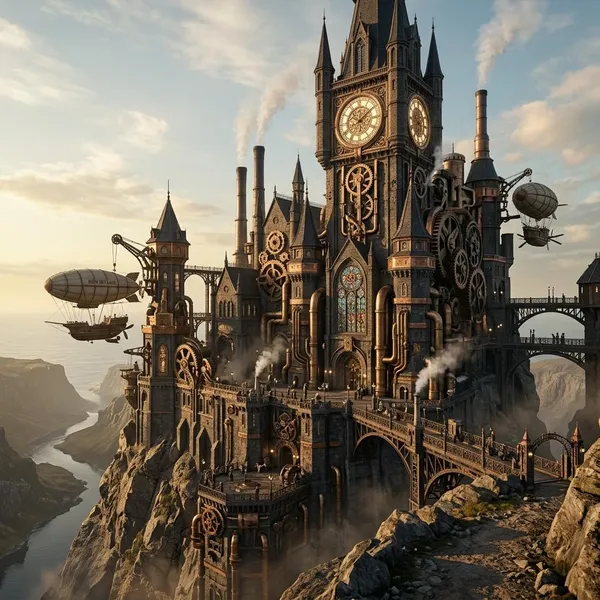
A castle starts to feel steampunk when old defensive architecture meets visible industrial systems. The walls still need weight, height, gates, towers, and controlled access. The steampunk layer adds boilers, pipes, pistons, cranes, gauges, lamps, clockwork, and retro-futurist machines that change how the fortress operates.
Medieval fortress architecture
Keep the medieval logic visible first. Curtain walls, gatehouses, towers, battlements, courtyards, inner wards, and elevated keeps give the design a strong defensive skeleton. Even a fantasy version feels more convincing when attackers still have to pass through choke points and defenders still need sight lines.
Victorian industrial machinery
The Victorian industrial side should feel heavy, hot, and maintained. Think riveted iron, brass gauges, flywheels, chain drives, pressure tanks, furnaces, cranes, and soot-stained service doors. These details work because they suggest labor as much as invention.
- Use boilers where heat, pressure, or motion is needed.
- Use cranes where cargo or weapons are too heavy to move by hand.
- Use pistons and counterweights for gates, lifts, shutters, and bridges.
- Use gauges and valves where pressure must be watched and controlled.
Retro-futurist technology
Steampunk technology can be more advanced than real Victorian engineering, but it should still look mechanical. Airship moorings, pressure elevators, signal machines, rotating observatory domes, and automated defenses all fit if their power source and moving parts are at least partly visible.
Mechanical details with a clear purpose
The strongest mechanical details answer a practical question: how does the castle raise the gate, heat the upper halls, move cargo from the dock, warn guards, pump water, or repair damage? Purpose is what separates a believable machine from a decorative cog.
- Defense: locks, barriers, shutters, alarms, searchlights.
- Movement: lifts, rail carts, cranes, retractable bridges.
- Survival: heat, water, fuel, ventilation, maintenance access.
Essential parts of a steampunk castle
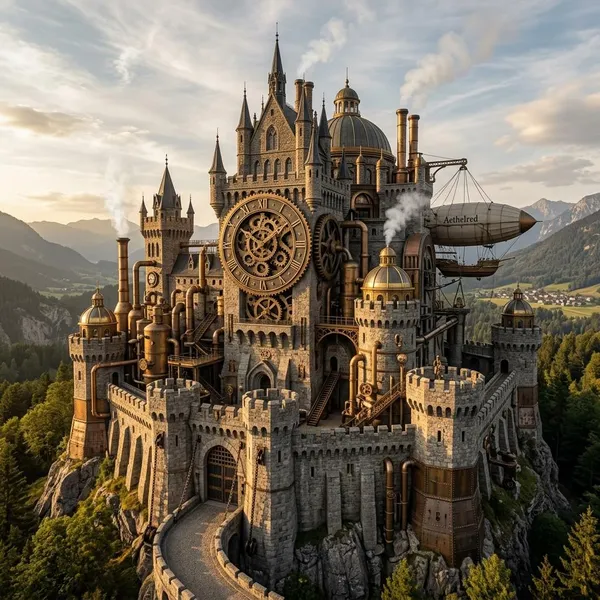
The essential parts should tell you how the castle defends itself, powers itself, receives supplies, and keeps daily life moving. A dramatic silhouette helps, but the layout matters more. Put vulnerable machinery behind protection, put cargo systems near access points, and keep repair crews close to the machines they must maintain.
Fortified walls and mechanical gatehouses
The gatehouse is the easiest place to make steampunk machinery feel necessary. It already handles risk, traffic, and defense, so pressure-assisted portcullises, counterweight doors, rotating locks, alarm bells, and speaking tubes all make sense there.
Boiler rooms and engine chambers
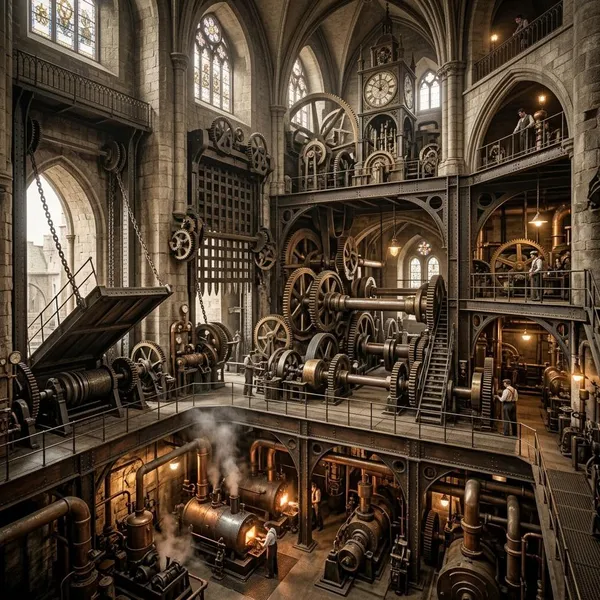
Boiler rooms are the castle's working heart. They need thick foundations, water access, fuel storage, ventilation, pressure relief, and enough space for engineers to move around safely. A tiny decorative furnace cannot plausibly run gates, lifts, lights, cranes, and heating across a whole fortress.
Clock towers and observation domes
Clock towers are not just scenery. They can regulate shifts, mark curfews, coordinate guards, and act as public symbols of order. In a city castle, the clock may matter almost as much politically as it does mechanically.
Lifts bridges and internal railways
Use lifts, bridges, and railways where distance or height would otherwise make the castle impractical. A cliffside citadel needs lifts because stairs alone would slow food, coal, ammunition, and injured people. A trade fortress needs rail carts because cargo cannot be carried through noble corridors all day.
| System | Best use | Design caution |
|---|---|---|
| Freight lift | Moving coal, crates, weapons, or water between levels | Keep it near loading yards and workshops, not private halls |
| Retractable bridge | Controlling access across gaps, courtyards, or ravines | Show the lock, counterweight, or steam piston that moves it |
| Internal railway | Regular cargo flow in a large or industrial castle | Avoid putting noisy freight routes through elite spaces |
Airship docks and cargo platforms
Airship docks are iconic, but they should fit the castle's job. A diplomatic palace might need a refined landing platform for envoys. A frontier fortress might need rough mooring towers, repair cranes, signal flags, and storm anchors. A small inland castle may not need airships at all.
How the castle machinery works
The machinery should follow a chain the reader can understand: power is created, pressure or motion travels through the castle, and specific systems use it. You do not need exact engineering math, but you do need limits. Machines that never overheat, break, run out of fuel, or need operators feel closer to magic than steampunk.
A central source of power
A central boiler, geothermal engine, alchemical furnace, water-driven turbine, or fictional pressure core can all work if the castle is built around it. The power source should affect nearby rooms: heat, noise, vibration, soot, guarded access, fuel routes, and emergency valves.
For a war castle, add backup engines or sealed secondary chambers so one hit does not cripple everything. For a scholarly observatory, choose a steadier system with less vibration, even if it produces less force. The best option depends on what the castle cannot afford to lose.
Pipes that distribute steam and pressure
Pipes should behave like a visible circulation system. Large trunk lines can run through protected service tunnels, while smaller branches feed gates, kitchens, baths, lifts, workshops, and heating systems. Add valves where crews would need to isolate damage.
Mechanical defenses and surveillance
Mechanical defenses work best when they assist trained guards rather than replace them. Steam shutters can close arrow slits, rotating barricades can slow attackers, searchlights can scan the walls, and pressure alarms can warn of forced doors. Human operators keep the tension alive because they can make mistakes, panic, or improvise.
Surveillance can include periscope towers, rotating lenses, signal boards, speaking tubes, acoustic listening horns, and clockwork patrol indicators. Give these systems weaknesses: fog blinds searchlights, pressure drops after heavy use, and exposed signal lines can be cut. Limits make the defenses feel more real.
Transport systems for people and cargo
Separate clean movement from dirty movement whenever the castle is large enough. Nobles, scholars, officers, prisoners, workers, coal, food, and ammunition should not all use the same route unless the castle is cramped or poorly planned.
- People routes should be safer, better lit, and easier to guard.
- Cargo routes should connect docks, storage, kitchens, workshops, and engine rooms.
- Emergency routes should let guards and engineers bypass blocked public areas.
Workshops for repairs and maintenance
Every machine-heavy castle needs repair spaces. Add workshops, tool stores, spare pipe racks, small foundries, drafting benches, inspection pits, and greasy service corridors. Without them, the castle feels like it was built for a poster rather than for daily operation.
Steampunk castle ideas for different settings
The same steampunk ingredients can create very different castles depending on terrain and purpose. A floating fortress should worry about balance and resupply. A mountain citadel should care about vertical transport and weather. An urban palace should show politics, ceremony, and controlled industry.
A floating island fortress
A floating island fortress needs visible answers for lift, balance, anchoring, storms, and resupply. Massive underside propellers, buoyancy chambers, pressure vents, stabilizing fins, or chain anchors can make the impossible feel internally consistent.
The practical problem is survival. Food, water, fuel, spare parts, and people must arrive by airship, crane, or lift platform. If the setting is high-risk and storm-heavy, add redundant lift engines and emergency moorings; if it is more romantic and low-conflict, elegant docking towers and wind vanes may be enough.
A mountain citadel
A mountain citadel is one of the most believable steampunk settings because the terrain demands machinery. Cable lifts, tunnel railways, heated pipes, enclosed bridges, and pressure doors all solve real problems caused by cliffs, snow, thin paths, and difficult supply routes.
An urban clockwork palace
An urban clockwork palace should feel controlled, watched, and symbolic. It may have fewer rugged defenses than a border fortress, but guarded gates, civic clock towers, pneumatic message tubes, elevated service rails, and polished machine halls can show how power is organized in the city.
This version works well when you contrast public elegance with hidden labor. Visitors see marble stairs, brass clocks, and ceremonial lifts. Workers use hot service corridors, cargo hoists, and restricted machine courts behind the palace face.
How to design your own steampunk castle
The easiest way to design your own version is to work from function to detail. Decide what the castle is for, choose a form that supports that role, then add power, movement, access, maintenance, and atmosphere. Small gears and brass trim should come near the end, after the big decisions already make sense.
Define the castle's purpose
- Military purpose: prioritize defenses, repair access, fuel reserves, and command visibility.
- Trade purpose: prioritize docks, cranes, warehouses, customs rooms, and cargo flow.
- Research purpose: prioritize stable power, quiet rooms, archives, domes, and restricted access.
- Residential purpose: prioritize comfort, status, heating, privacy, and controlled service routes.
Choose the main architectural form
Choose the large shape before the small details. A concentric fortress supports layered defense. A cliffside citadel supports lifts and bridges. A palace complex supports ceremony and class division. A floating island supports dramatic docks and survival machinery.
Create a believable power system
Answer four questions: what creates the energy, what fuel or resource it needs, how power moves through the castle, and what fails first under stress. These answers do not need to be scientific, but they should be consistent.
A mountain castle might use geothermal heat or water pressure. An urban palace might import coal and hide compact engines below formal halls. A floating fortress might need multiple lift engines because a single failure would be catastrophic. Match the power system to the setting's risks.
Plan movement and access routes
Movement is where many designs become believable or fall apart. Mark the paths for visitors, guards, workers, prisoners, fuel, food, weapons, waste, and repairs. If all of them cross the same grand staircase, the castle probably needs service routes.
Add machinery where it serves a function
Add machinery only when it solves a problem. A pump belongs where water must climb. A crane belongs where cargo is heavy. A steam piston belongs where force and speed matter. A clockwork signal board belongs where people need coordinated information quickly.
Finish with materials color and atmosphere
Materials should support both age and industry. Stone gives the fortress weight. Iron and steel give structure. Brass and copper add warmth and mechanical detail. Glass suits domes, lamps, instruments, and enclosed walkways. Timber, leather, soot, oil stains, rust, and scratched metal make the place feel used.
- Do not overuse brass: too much turns the castle into a prop rather than a fortress.
- Show wear where people work: cargo decks, levers, stairs, boiler doors, and workshop floors.
- Keep stone dominant: the castle should still read as a protected stronghold.
- Use smoke and light carefully: atmosphere should reveal function, not hide weak design.
Conclusion
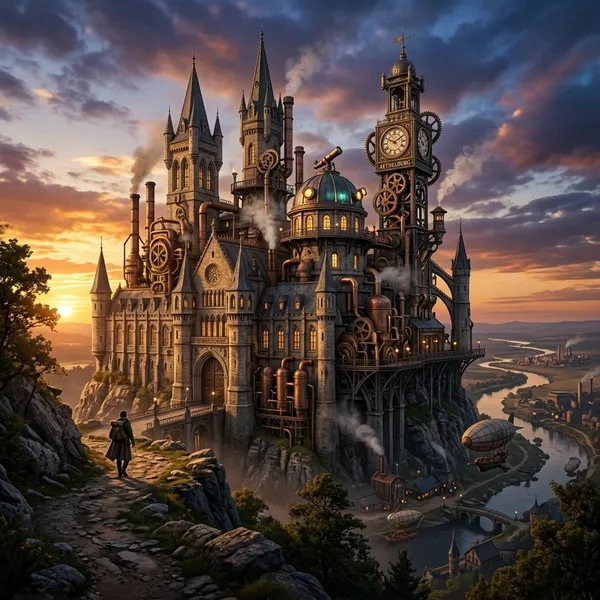
A strong steampunk castle feels believable when every impressive detail has a job: walls protect, engines power, pipes distribute, lifts move, workshops repair, and docks connect the fortress to the wider world. If you are unsure what to add next, do not add another gear; check the castle's purpose, its power source, and its movement routes first. Once those foundations work, the brass, smoke, glass, and clockwork details will feel earned instead of pasted on.
FAQ
Can a steampunk castle still look medieval?
Yes. It usually works better when the medieval structure remains clear, because stone walls, towers, battlements, and gatehouses give the machinery a believable defensive setting.
Does a steampunk castle need airships?
No. Airships are useful for sky fortresses, trade hubs, and diplomatic palaces, but a mountain citadel or observatory castle can feel fully steampunk with lifts, boilers, railways, domes, and mechanical defenses instead.
Which materials suit a steampunk castle?
Stone, iron, steel, brass, copper, timber, glass, leather, and weathered metal all suit the style. Use stone for mass and protection, then reserve brighter metals for machines, fittings, instruments, and places touched by human use.
Can a steampunk castle still look medieval?
Yes. It usually works better when the medieval structure remains clear, because stone walls, towers, battlements, and gatehouses give the machinery a believable defensive setting.
Does a steampunk castle need airships?
No. Airships are useful for sky fortresses, trade hubs, and diplomatic palaces, but a mountain citadel or observatory castle can feel fully steampunk with lifts, boilers, railways, domes, and mechanical defenses instead.
Which materials suit a steampunk castle?
Stone, iron, steel, brass, copper, timber, glass, leather, and weathered metal all suit the style. Use stone for mass and protection, then reserve brighter metals for machines, fittings, instruments, and places touched by human use.