
A steampunk ball gown works best when the dress feels like formal Victorian eveningwear first, then adds industrial fantasy with restraint. Start by checking the silhouette, bodice structure, skirt shape, and fabric before you buy gears, goggles, or props. If those basics are right, even a thrifted or simple gown can look polished instead of costume-cluttered.
What makes a ball gown steampunk
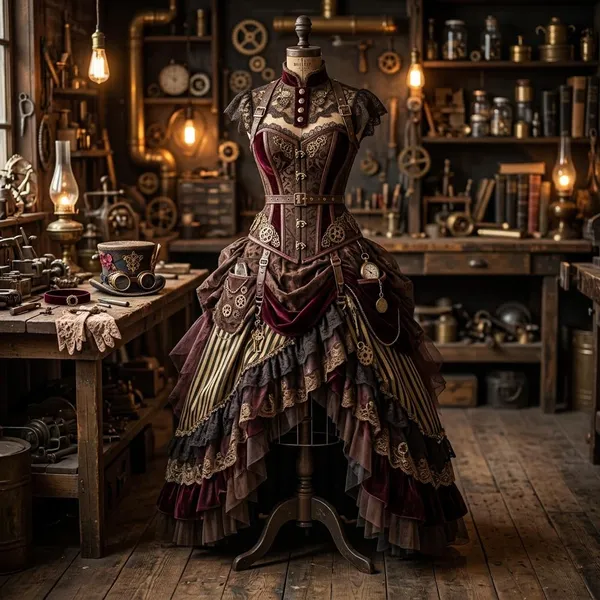
A ball gown starts to read as steampunk when it mixes a Victorian-inspired formal shape with aged, mechanical, or adventurous details. The priority order is simple: shape first, fabric second, accents last. If the dress has a modern prom shape, adding a few gears will not usually be enough.
A Victorian-inspired silhouette
Look for a fitted waist, a full skirt, draped layers, a bustle effect, or a train. These details do more than any single accessory because they change the whole outline of the gown. A high-low hem or lifted overskirt is especially useful if you want boots to show.
A corseted or structured bodice
The bodice should look shaped and intentional, whether it uses real corsetry, corset-style lacing, boning, panel seams, or a firm fitted construction. You do not need a tight historical corset unless you actually want one.
- For a long event: choose comfort, breathing room, and the ability to sit.
- For photos or cosplay: a more dramatic corset shape can work, but test movement first.
- For bridal styling: subtle lacing or antique buttons often look more elegant than heavy hardware.
A layered skirt bustle or train
Layers, ruffles, bustles, overskirts, and trains give the gown its formal drama. A small bustle panel can be enough; the dress does not have to become heavy or difficult to walk in.
For a crowded convention or a dance floor, detachable layers are often smarter than a fixed train. For a ceremony, portrait session, or seated dinner, a longer train can feel more appropriate because you are not moving through crowds all day.
Brass leather and mechanical accents
Brass buttons, worn leather belts, buckles, chains, keys, watch pendants, and antique-style fasteners are the details that push the look from Victorian-inspired to steampunk. Place them where they make sense: waist, neckline, cuffs, bodice front, or bustle joins.
Rich fabrics in dark or metallic tones
Velvet, brocade, satin, taffeta, lace, organza, and jacquard-style fabrics tend to suit the look because they hold shape and catch light well. Good colors include black, burgundy, deep green, plum, navy, chocolate brown, bronze, antique gold, cream, and champagne.
Very shiny synthetic fabric can make a gown look more like a costume. Muted metallics, dark jewel tones, and textured fabrics usually feel more expensive and easier to style.
Popular steampunk ball gown styles
The right style depends on where you plan to wear the gown. A wedding look needs a different level of restraint than a convention outfit, and a romantic gown will not use the same accessories as a gothic one.
Romantic steampunk gowns
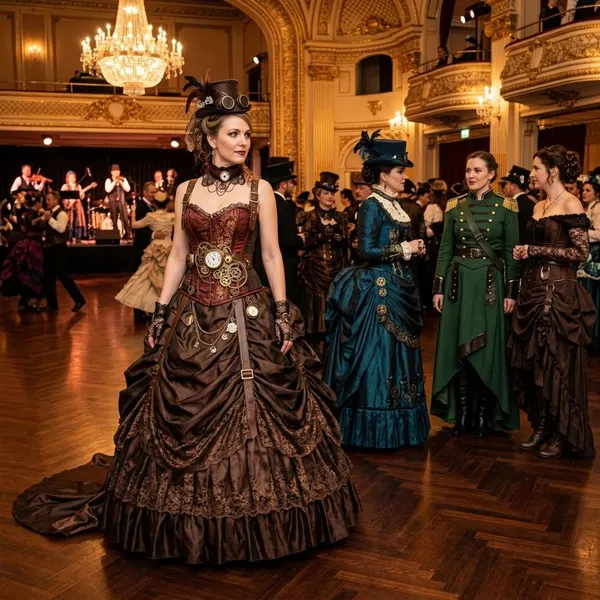
Romantic versions are soft, decorative, and formal rather than heavily mechanical. Think lace overlays, off-the-shoulder sleeves, warm metallic trim, cameo jewelry, soft brown leather, and flowing layers.
Gothic steampunk gowns
Gothic steampunk gowns lean darker and sharper: black velvet, deep red satin, lace sleeves, high collars, fitted bodices, and stronger metal or leather accents. The difference from regular gothic formalwear is the inventor-like detail—buckles, brass, watch motifs, belts, or structured accessories.
Because this style can become visually heavy fast, choose one dominant feature. If the skirt is dramatic, keep the headpiece quieter. If the bodice is heavily detailed, let the jewelry support it rather than compete with it.
Steampunk wedding gowns
A steampunk wedding gown can look beautiful when the theme is handled with a light hand. Ivory, champagne, taupe, antique white, and muted gold usually pair more naturally with brass, lace, and brown leather than stark bright white.
- Best for a formal wedding: corseted back, lace sleeves, bustle skirt, vintage boots, and one or two antique accents.
- Risk to avoid: too many novelty gears or props that date the photos quickly.
- Easy compromise: keep the dress bridal and put more theme into the bolero, jewelry, bouquet wrap, or shoes.
Cosplay and convention gowns
Convention gowns can be bolder because the setting allows more theatre. Goggles, character props, utility belts, mechanical wings, or a dramatic hat may all work, but the gown still has to survive walking, sitting, transport, and crowds.
Thrifted and upcycled gowns
Thrifted formal dresses, old prom gowns, bridesmaid dresses, and secondhand wedding dresses can be excellent bases. The best candidates already have a defined waist, a supportive bodice, and enough skirt volume to accept layers or draping.
How to style a steampunk ball gown
Styling should make the gown look intentional, not overloaded. Choose one clear mood—romantic, gothic, bridal, or convention-ready—then repeat the same metal tone, leather tone, and level of formality across the outfit.
Choose boots or vintage-style heels
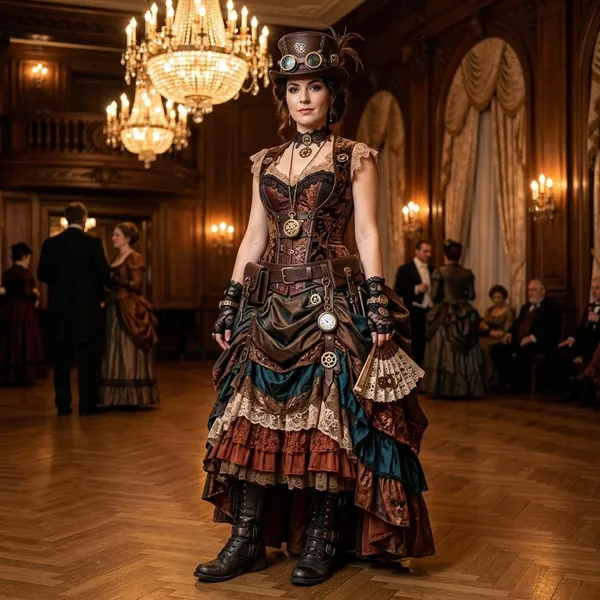
Lace-up boots, button boots, heeled ankle boots, and Victorian-style shoes usually fit better than sleek modern pumps. Boots are a strong choice with high-low skirts or bustled hems because they become part of the design rather than something hidden underneath.
For a wedding, ball, or formal dinner, vintage-style heels may feel more polished. Just avoid shoes that look too minimalist or contemporary, especially if the gown has a strong historical shape.
Add gloves jewelry and a choker
Gloves, jewelry, and a choker can finish the neckline and hands without changing the dress itself. Lace gloves, mesh gloves, cameo necklaces, lockets, watch pendants, chain bracelets, and antique-finish earrings all work well.
- Simple bodice: use a stronger necklace or gloves.
- Detailed bodice: keep jewelry smaller and less shiny.
- High neckline: skip the choker and use earrings or a hairpiece instead.
Use hats goggles or headpieces sparingly
A mini top hat, fascinator, decorated comb, feather clip, or jeweled headband is often enough. Goggles are not mandatory, and on a formal gown they can look awkward if they seem added only because "steampunk needs goggles."
Layer with a jacket shrug or bolero
A cropped jacket, lace shrug, velvet bolero, structured capelet, or fitted military-style coat can make the outfit look more complete while adding coverage. This is useful for cool venues, outdoor photos, or dresses that feel too bare at the shoulders.
The layer should follow the waist rather than hide it. A boxy cardigan may be comfortable, but it usually weakens the shape that makes the gown work.
Keep bags and props visually consistent
Choose a frame purse, clasp bag, embroidered evening bag, leather pouch, or small structured handbag with an aged finish. A plain modern handbag can break the mood faster than almost any other accessory.
Props depend on the setting. A parasol or character item can make sense at a convention, while a wedding or formal party usually looks better with fewer extras. If a prop does not match the gown's colors, metal tone, or formality, leave it out.
How to turn a plain gown into a steampunk gown
A plain gown can become steampunk if you change the visual order correctly: silhouette first, texture next, aged details after that, then accessories. Starting with random gears or charms usually creates a messy result.
Start with a suitable Victorian silhouette
Begin with the dress shape. A fitted bodice, defined waist, and full skirt give you something to build on. If the gown is strapless, a bolero, lace sleeves, or a shrug can make the upper line feel more period-inspired.
A secondhand wedding dress is often easier to adapt than a modern evening dress because it already has structure, volume, and sometimes a train. A very narrow sheath dress can still be styled, but it will not give the same ball gown effect without major changes.
Add lace ruffles and layered fabric
Lace panels, ruffled underskirts, draped overskirts, contrast fabric, and bustle sashes add depth quickly. You do not need to cover the whole gown; one visible underskirt or one asymmetric drape can change the mood enough.
Replace modern trim with aged details
Modern details are often what make an altered gown look unfinished. Bright rhinestones, plastic gems, glossy bows, and very shiny zipper pulls can be replaced or covered with antique-look buttons, braided cord, darker lace, aged ribbon, or brass-toned findings.
If the dress is borrowed, valuable, or sentimental, use removable stitching, clip-on trim, or belts instead of glue. That gives you the look without permanently damaging the base.
Attach belts buckles and metal accents
Put hardware where it has a reason to exist. The waist is usually the safest place because a belt or buckle emphasizes the shape and visually connects the bodice to the skirt. Neckline edges, cuffs, and bustle attachment points can also work.
- Use aged finishes: antique brass, bronze, and worn leather usually look better than bright gold or chrome.
- Limit the zones: one or two decorated areas look more polished than hardware scattered everywhere.
- Check weight: heavy chains can pull fabric out of shape or become uncomfortable.
Complete the look with coordinated accessories
Lay the full outfit together before the event: gown, shoes, gloves, jewelry, bag, headpiece, and any prop. Remove anything that looks too shiny, too modern, or unrelated to the main color story.
This last check matters most when you are mixing thrifted pieces. A simpler outfit with consistent brass, brown leather, and deep fabric tones will usually look more convincing than a more expensive outfit where every accessory is from a different visual world.
Conclusion
The strongest choice is usually the gown that already has the right shape, not the one with the most decorations. If the bodice, skirt, fabric, and main accessories point in the same direction, the steampunk details can stay selective and still feel clear. That is what keeps the look formal, wearable, and memorable instead of busy.
FAQ
Do you need a corset for the look?
No. A structured bodice, fitted waist, or corset-style lacing can create the same visual effect without a separate corset.
Are goggles necessary for a formal outfit?
No. Goggles are optional, and for formal events a fascinator, comb, or small hat often looks more refined.
Can you use a thrifted dress as the base?
Yes, if the base has a useful shape. Prioritize a fitted bodice, defined waist, and adaptable skirt before worrying about trim or color.
Do you need a corset for the look?
No. A structured bodice, fitted waist, or corset-style lacing can create the same visual effect without a separate corset.
Are goggles necessary for a formal outfit?
No. Goggles are optional, and for formal events a fascinator, comb, or small hat often looks more refined.
Can you use a thrifted dress as the base?
Yes, if the base has a useful shape. Prioritize a fitted bodice, defined waist, and adaptable skirt before worrying about trim or color.