
A steampunk apartment works best when it feels moody and useful, not like a room filled with costume props. Start with one strong focal point, repeat a small set of dark colors and aged materials, then add only the vintage details that make the space feel lived in.
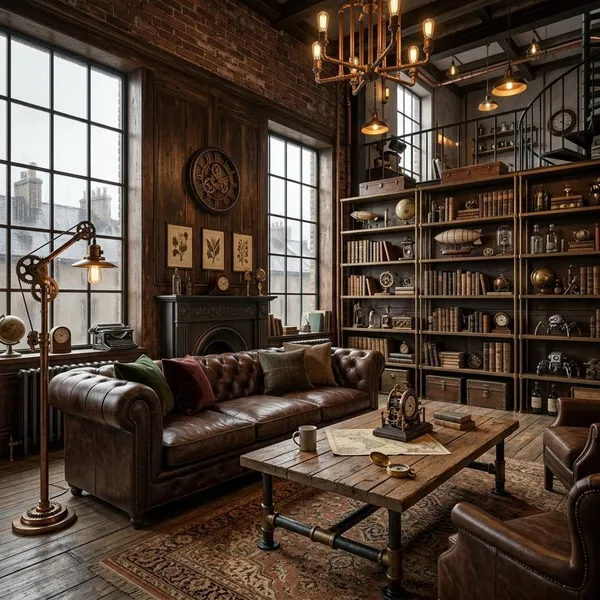
The best steampunk apartment ideas
The most convincing steampunk rooms usually get three things right first: background, lighting, and restraint. A dark wall, warm lamps, wood, brass, leather, and a few collected-looking objects will do more than shelves full of gears.
Create a dark feature wall
A dark feature wall is the quickest way to make a plain apartment feel more Victorian industrial. Charcoal, deep olive, smoky navy, or burgundy works well behind a sofa, bed, desk, or media unit because it gives brass, leather, and wood something richer to stand against.
If you rent, use removable wallpaper, a large dark tapestry, or a set of oversized framed prints instead of paint. Choose a finish that looks faded, textured, or slightly aged rather than glossy and new.
Mix reclaimed wood with aged metal
Wood keeps the room warm; metal gives it the mechanical edge. A walnut shelf with black iron brackets, a dark oak desk with brass pulls, or a trunk-style coffee table can create the look without needing real antiques.
- Best for daily living: wood-and-metal storage, desks, shelving, and tables.
- Use carefully: shiny chrome, polished steel, and bright laminate finishes.
- Common mistake: adding metal everywhere until the room feels cold and unfinished.
Use warm industrial lighting
Lighting often matters more than any single decorative object. Warm bulbs, shaded lamps, banker's lamps, cage pendants, and brass floor lamps bring out the depth in dark paint and aged materials.
Add leather or velvet furniture
Leather and velvet add the weight that steampunk rooms need. A brown leather chair, tobacco-colored sofa, dark green velvet accent chair, or burgundy cushions can make the space feel richer without adding clutter.
Display vintage maps and scientific prints
Maps, astronomy charts, botanical illustrations, patent drawings, and old transit prints add story without taking up floor space. They suggest travel, invention, and curiosity, which fits steampunk better than obvious novelty decor.
In a compact room, two larger framed pieces usually look cleaner than a wall full of small prints. Use black, brass, or dark wood frames so the art feels connected to the rest of the palette.
Choose one mechanical statement piece
Pick one object that feels engineered and useful: a large iron clock, a pipe-style lamp, a trunk coffee table, an industrial bar cart, or an open metal bookcase. One strong piece gives the room a focal point; too many mechanical items can make it look like a theme display.
Best steampunk colors and materials
A steampunk palette should feel dark, warm, and tactile. Before buying anything, choose one main dark color, one wood tone, and one metal finish. That simple limit keeps the apartment from turning into a mix of unrelated vintage objects.
Charcoal, deep green, and burgundy
Charcoal is the easiest base because it works with almost every steampunk material. Deep green gives a study or reading corner a scholarly mood, while burgundy adds warmth and a more Victorian feel.
Use the darkest color where it has a clear purpose: one wall, a rug, curtains, or a chair. In a small apartment, covering every major surface in dark tones can make the room feel smaller than intended.
Walnut, oak, and worn leather
Walnut, smoked oak, and worn brown leather make the style feel grounded rather than theatrical. If your budget is limited, look for matte finishes and believable textures instead of trying to buy perfect antiques.
Brass, copper, and black iron
Brass and copper add warmth; black iron adds structure. Repeating one metal finish in lamps, picture frames, shelf brackets, drawer pulls, or curtain rods makes the room feel planned.
| Metal finish | Best use in an apartment | Watch out for |
|---|---|---|
| Brass | Lamps, mirrors, frames, cabinet pulls | Too many shiny gold pieces |
| Copper | Small accents, planters, clocks, desk items | Competing with chrome or stainless steel |
| Black iron | Shelves, table legs, curtain rods, brackets | Making the room feel too heavy |
Brick, glass, and aged paper
Brick gives the room an industrial shell, even if it is only removable wallpaper or a subtle wall panel. Glass helps balance the heaviness of dark wood and metal, especially in small spaces where a solid cabinet or bulky table could feel too dense.
Velvet, linen, and heavy cotton
Textiles stop the room from feeling like a workshop. Velvet works well for accent chairs, cushions, and curtains; linen softens the look; heavy cotton is practical for bedding and drapes.
Small steampunk apartment ideas
Steampunk can work in a small apartment, but the style has to be edited. The main rule is simple: give the room one clear place to look, then keep the rest useful and calm.
Choose one clear focal point
In a studio, choose the most visible zone first: the sofa wall, bed wall, desk corner, or reading chair. Add the strongest steampunk details there, such as a dark backdrop, a brass lamp, framed prints, or a leather accent.
Use slim furniture with open frames
Open-frame furniture keeps the room from feeling blocked. A narrow console, slim desk, iron bookshelf, or table with visible legs gives you the right materials while still letting light and floor space show through.
Move storage onto the walls
Wall storage is one of the best small-space moves. Floating wood shelves with iron brackets, kitchen rails, book ledges, and tall narrow shelving add function while supporting the steampunk look.
- Display: books, maps, one brass object, or a framed print.
- Hide: cables, spare linens, paperwork, and everyday clutter.
- Edit: leave some shelf space open so the wall does not feel crowded.
Keep the color palette limited
A small apartment can handle dark colors if the palette is controlled. Charcoal, walnut, and brass can carry an entire room; deep green or rust can appear as one accent color rather than a second full theme.
Leave large surfaces mostly clear
Clear surfaces are not empty space wasted; they are what make the darker details look deliberate. Keep coffee tables, counters, and desks mostly open, then use one strong object instead of several small ones.
If you like collecting vintage pieces, rotate them. A few items on display will look more special than every object competing for attention at once.
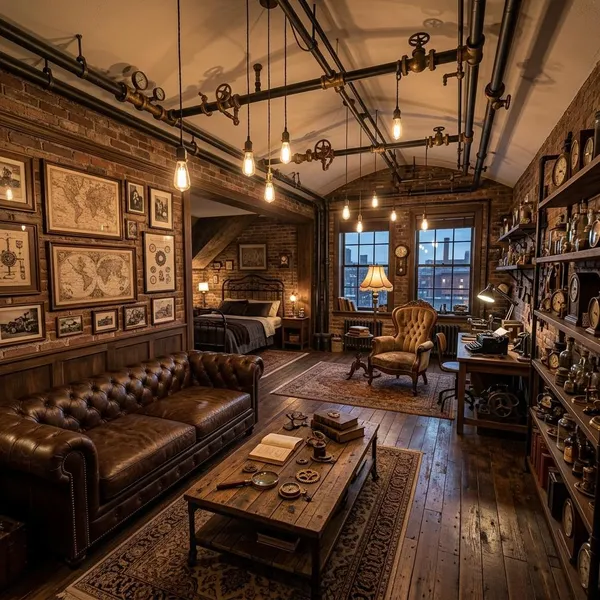
How to create the look step by step
The easiest way to decorate a steampunk apartment is to build in layers: mood first, anchor piece second, then walls, lighting, furniture, storage, and accents. This order prevents the common mistake of buying decorative objects before the room has a clear direction.
Set the mood and color palette
Decide whether you want the apartment to feel more like a Victorian study, an industrial loft, or a darker vintage lounge. That choice affects every later decision.
- Choose one dark base: charcoal, espresso, smoky navy, or deep green.
- Choose one wood tone: walnut, smoked oak, or another dark matte finish.
- Choose one main metal: brass, copper, or black iron.
Choose one anchor piece
The anchor piece is the item that tells the room what it wants to be. It could be a leather sofa, dark wood bed, iron bookshelf, trunk coffee table, brass floor lamp, or substantial desk.
Choose something useful enough to earn its space. A dramatic object that does nothing for your routine will start to feel like clutter, especially in a small apartment.
Upgrade the lighting and walls
Change the lighting before you buy more decor. Warm bulbs and shaded lamps can make existing furniture look richer, while cool white light can flatten even good materials.
Then look at the walls. If paint is allowed, use one dark feature wall. If not, try removable wallpaper, large framed art, a fabric wall hanging, or a tall shelf that creates the same darker backdrop.
Add furniture and storage
Add practical pieces only after the mood and anchor are clear. The room still needs comfortable seating, storage, work surfaces, and walking space, so do not let the theme override how you actually live.
- Place the anchor first so the layout has a clear center.
- Add lighter secondary pieces such as slim tables, open shelves, or compact desks.
- Use storage that fits the style like trunks, wood boxes, baskets, or iron shelving.
- Edit once the basics are in before adding more decor.
Finish with a few themed accents
Accents should suggest invention, travel, or history without turning the apartment into a stage set. A globe, magnifying glass, framed patent drawing, old-style clock, brass sculpture, or stack of hardcovers can be enough.
Conclusion
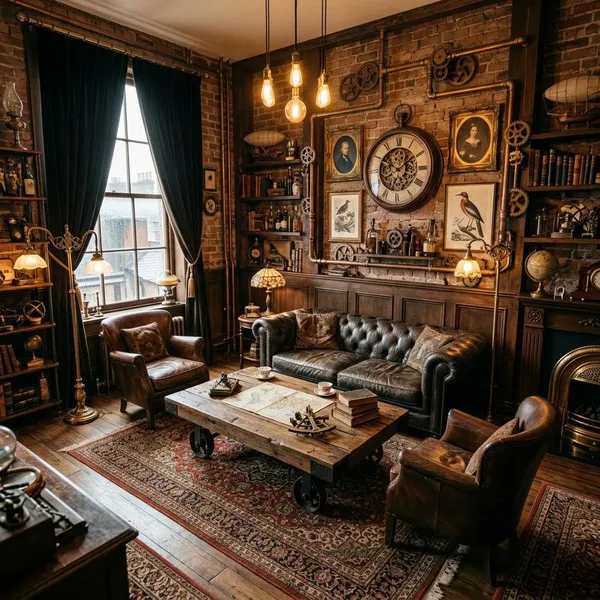
A good steampunk apartment should feel atmospheric, comfortable, and edited. Start with one focal point, repeat dark wood and aged metal, use warm lighting, and leave enough open space for the room to breathe. If the apartment still works for reading, relaxing, storing things, and moving around easily, the style is doing its job.
FAQ
Can steampunk decor work in a small apartment?
Yes, if you keep the look focused. Use one focal point, slim furniture, wall storage, and a limited palette so the room feels atmospheric instead of crowded.
How can renters create a steampunk apartment?
Use removable wallpaper, plug-in lamps, framed art, freestanding shelves, trunks, textiles, and vintage-style hardware on furniture you own. Avoid changes that would damage walls, floors, or built-in fixtures.
What colors work best for steampunk interiors?
Charcoal, deep green, burgundy, smoky navy, brown, black, brass, and copper work especially well. In smaller rooms, keep the darkest shade to one main area and repeat lighter warm materials around it.
Can steampunk decor work in a small apartment?
Yes, if you keep the look focused. Use one focal point, slim furniture, wall storage, and a limited palette so the room feels atmospheric instead of crowded.
How can renters create a steampunk apartment?
Use removable wallpaper, plug-in lamps, framed art, freestanding shelves, trunks, textiles, and vintage-style hardware on furniture you own. Avoid changes that would damage walls, floors, or built-in fixtures.
What colors work best for steampunk interiors?
Charcoal, deep green, burgundy, smoky navy, brown, black, brass, and copper work especially well. In smaller rooms, keep the darkest shade to one main area and repeat lighter warm materials around it.