
Choose a steampunk airship model by starting with its real job: shelf display, building project, gaming piece, gift, or custom collectible. A fragile resin showpiece can be perfect in a cabinet and annoying on a game table, while a simple plastic kit may be better if you want to learn painting without risking an expensive model. Check purpose first, then size, material, detail level, and how much work you actually want to do.
What makes an airship model steampunk
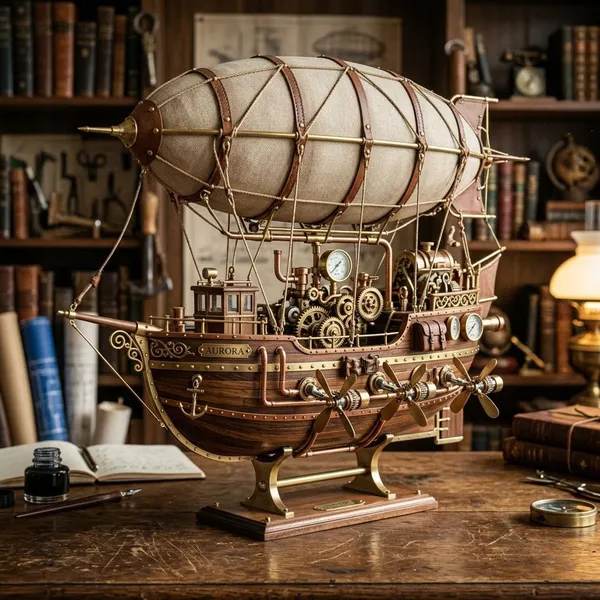
A steampunk airship is not just a blimp with gears attached. It should feel like a flying machine from an imagined Victorian industrial world: old-world shapes, exposed machinery, warm metal tones, and enough visual logic to make the fantasy believable.
Victorian-inspired shapes
Start with the silhouette. Long gasbags, ship-like gondolas, curved fins, railings, cabin windows, smokestacks, and ornate hull shapes instantly push an airship toward steampunk. If the outline looks too modern or too plain, brass paint and glued-on gears will not fully fix it.
Gears, pipes, and propellers
Mechanical details should look as if they belong somewhere. Put propellers near engines, pipes near boilers or tanks, and gears where motion or control would make sense. That small bit of logic keeps the model from looking like a craft project covered in spare parts.
Brass, copper, and aged finishes
Finish does a lot of the work. Brass, copper, dark iron, aged wood, and soot-darkened recesses give the model the antique industrial mood most buyers expect. A glossy gold surface often looks toy-like; a muted metallic finish with light weathering usually feels more believable.
If you are repainting a cheap plastic model, primer, a dark wash, and a few dry-brushed highlights can make a bigger difference than adding more parts.
Fantasy machinery and exposed parts
The fantasy parts are where the model gets its personality: boilers, pistons, pressure tanks, external engines, fins, vanes, ladders, or strange lifting devices. They do not need to be technically real, but they should suggest a purpose. A viewer should be able to imagine how the airship lifts, steers, or powers itself, even if the engineering is fictional.
Types of steampunk airship models
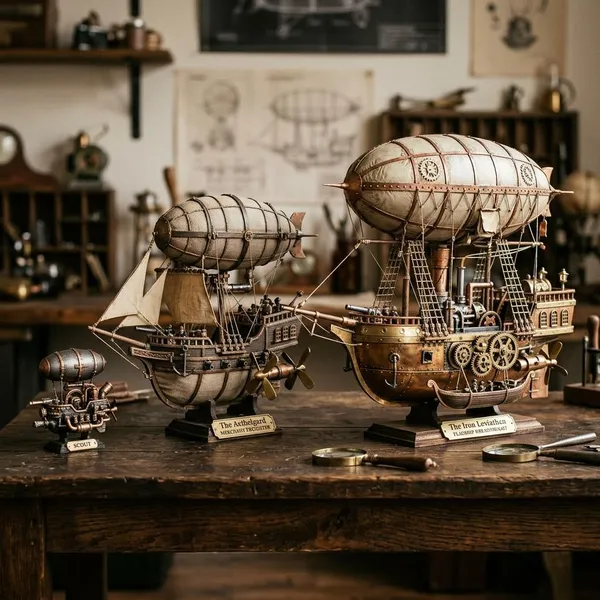
The main types differ less by style and more by how they are meant to be used. Some are finished objects for display, some are hobby projects, and some are built to survive handling during games or transport.
Prebuilt display models
Choose a prebuilt display model if you want the finished look without tools, glue, paint, or cleanup. This is the safest option for home decor, office shelves, or a gift where the final appearance needs to be predictable.
Assembly kits
An assembly kit is the better choice if you want the satisfaction of building but do not want to design the whole airship from scratch. Plastic kits are usually more beginner-friendly; resin or mixed-media kits often reward experienced builders with sharper detail but need more prep.
- Good for: hobbyists who enjoy painting and weathering.
- Watch for: missing tools in the listed price, such as glue, primer, filler, and brushes.
- Beginner tip: start with clear instructions and fewer fragile parts.
Tabletop miniatures
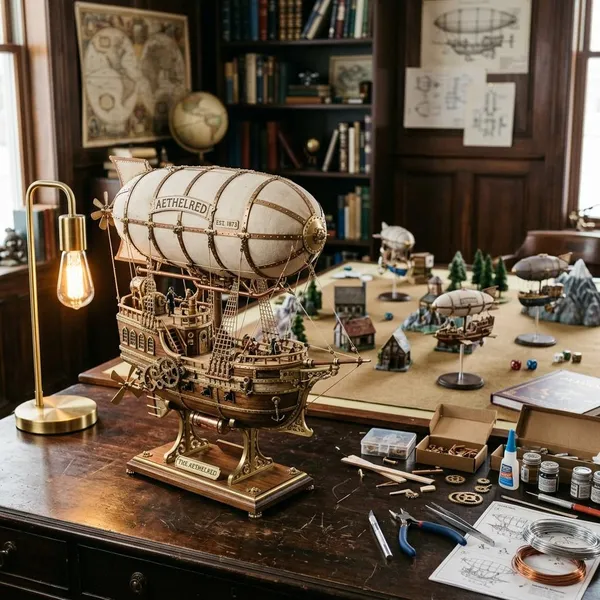
For games and role-playing scenes, durability matters more than delicate decoration. A gaming airship should be easy to move, stable on its base, and readable from table distance. Thin rails, tiny propellers, and narrow supports may look great in close-up photos but can become a problem after repeated handling.
DIY and kitbash builds
DIY and kitbash builds suit makers who enjoy problem-solving. You can combine toy parts, spare model pieces, wire, cardboard, bottle caps, beads, and small hardware into a one-off design.
Handmade custom models
A handmade custom model is worth considering when originality matters more than speed or price. It can be tailored to a room, a fictional setting, a collection theme, or a gift recipient's taste.
Ask the maker about size, materials, timeline, display base, and whether progress photos or sketches are included. Clear expectations are important because custom work often takes weeks and usually costs more due to labor, not just materials.
Which steampunk airship model fits your needs
The most useful way to choose is to match the model to the situation. A collector may care about finish and originality, a beginner may need forgiving materials, and a gamer should care about strength before tiny surface detail.
| Use case | Best fit | Check first |
|---|---|---|
| Quick room decor | Prebuilt display model | Size, base stability, finish quality |
| Weekend hobby project | Assembly kit | Skill level, tools, painting needs |
| Regular tabletop play | Miniature | Durability, scale, storage |
| Personal gift or collection piece | Custom handmade model | Budget, lead time, customization details |
| Full creative control | DIY or kitbash build | Structure, scale matching, material compatibility |
Best materials for steampunk airship models
Material affects the way the model looks, feels, handles, and ages. A shelf model can be heavier and more delicate, while a gaming model should be lighter, stronger, and easier to repair.
Plastic for easy assembly
Plastic is the easiest starting material for most builders. It is light, simple to cut or sand, and usually forgiving when parts need adjustment. Once primed and painted, it can look far better than the bare material suggests.
Choose plastic if you are learning assembly, testing a paint scheme, or building something that may need repairs later.
Resin for fine detail
Resin is excellent for crisp rivets, decorative trim, tiny gears, and textured surfaces. It suits display models and painters who want sharp detail.
The trade-off is handling. Resin can be brittle, and parts may need washing, trimming, sanding, or gap filling. For regular gaming, avoid very thin resin fins or propellers unless you are prepared to repair them.
Wood for a handmade look
Wood gives an airship a warm, crafted feel that fits steampunk naturally. Laser-cut kits and handmade wooden builds can look especially good with stained panels, brass accents, and dark metal details.
- Good for: decorative builds and vintage workshop style.
- Check: thin parts, untreated surfaces, and humidity-sensitive pieces.
- Finish idea: combine stain with painted metal accents for contrast.
Metal for strength and weight
Metal adds weight, strength, and an industrial feel. It works well for stands, propellers, engine details, and decorative display pieces that should feel substantial.
It can also complicate assembly. Some metal parts need stronger adhesive, careful surface prep, or small tools. If the model is a gift for someone who will only display it, that weight may be a plus; if it will be moved often, it may become inconvenient.
Mixed media for custom builds
Mixed media is often the most convincing choice for custom steampunk work because real objects bring varied texture. A builder might use wood for a hull, wire for pipes, resin for trim, and metal for engine accents.
The important step is visual unification. Prime compatible surfaces where needed, repeat a limited color palette, and use consistent weathering so the final model looks designed rather than patched together by accident.
How to build a steampunk airship model
A good build usually follows a simple order: decide the purpose, block out the shape, build the strong structure, add mechanical detail, then paint, seal, and mount it. That order prevents the common beginner mistake of decorating too early and discovering later that the airship is unbalanced or too fragile.
Plan the shape and scale
Decide where the model will live before cutting or buying parts. Measure the shelf, cabinet, desk, or gaming area, then sketch the balloon, gondola, engine positions, fins, and stand. A rough side-view sketch is enough to catch proportion problems early.
If you are building for tabletop use, place a figure or terrain piece beside the sketch or parts. That quick check helps prevent an airship that looks impressive alone but wrong in the scene.
Build the main structure
Assemble the balloon, hull, gondola, supports, and major engine housings before adding small decoration. Dry-fit the parts and view the model from the front, side, and above. If the gondola hangs awkwardly or the engines overpower the hull, fix it now.
Add fins, gears, and pipes
Once the core is solid, add the details that explain the machine. Group them by function rather than scattering them evenly.
- Propulsion: propellers, engine pods, exhausts.
- Steering: fins, rudders, rear vanes.
- Power: boilers, tanks, gears, pipe clusters.
- Crew detail: ladders, railings, hatches, windows.
Leave some open space. Plain panels make busy mechanical areas stand out and keep the model readable.
Paint and weather the surface
Use primer first, especially when mixing materials. Then choose a limited palette: aged brass, copper, dark iron, faded cream, weathered wood, deep green, or soot black all work well for the style.
Weathering should match the airship's story. A luxury explorer may have polished brass with light edge wear; a patched trader or scavenger craft can carry smoke marks, rust streaks, chipped paint, and mismatched panels. Keep the wear intentional instead of dirtying every surface equally.
Seal and mount the finished model
Seal the paint once you are happy with it. Matte or satin finishes usually suit steampunk better than high gloss because they keep the metal and wood tones from looking too new.
Mounting is part of the design, not an afterthought. A clear flight stand works for games, while a wooden or industrial-style base can make a display model feel finished. Test the model in its intended spot and adjust lighting or shelf space if the details disappear.
Conclusion
The right choice is the model that fits your use, not the one with the most gears or the biggest product photo presence. Pick prebuilt for easy display, a kit for a satisfying project, a sturdy miniature for gaming, custom work for a special piece, or DIY when you want complete control. Once purpose and handling needs are clear, material, scale, and finish become much easier decisions.
FAQ
Do steampunk airship models need painting?
No. Prebuilt models are usually finished already, but unpainted kits and DIY builds normally look much better with primer, paint, and light weathering.
What scale works best for tabletop gaming?
The best scale is the one that matches your figures, terrain, and table space. If unsure, choose a smaller, sturdier model that is easy to move and does not block play.
Are handmade steampunk airship models worth the price?
They can be worth it if you want a one-of-a-kind display piece or a meaningful gift. For casual decor, a good prebuilt model may give better value.
Do steampunk airship models need painting?
No. Prebuilt models are usually finished already, but unpainted kits and DIY builds normally look much better with primer, paint, and light weathering.
What scale works best for tabletop gaming?
The best scale is the one that matches your figures, terrain, and table space. If unsure, choose a smaller, sturdier model that is easy to move and does not block play.
Are handmade steampunk airship models worth the price?
They can be worth it if you want a one-of-a-kind display piece or a meaningful gift. For casual decor, a good prebuilt model may give better value.