
Start by deciding whether the pot must actually serve tea or only look spectacular on a shelf. A steampunk teapot can be both, but only if the materials, interior finish, lid, handle, and spout are built for hot liquid. If you plan to brew with it, check usability first and treat the gears, pipes, and aged finish as secondary.
What makes a teapot steampunk
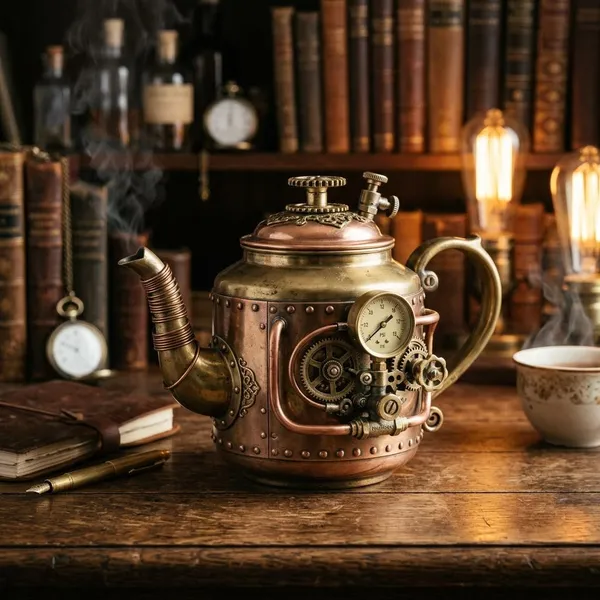
A teapot feels steampunk when it mixes old-world tea-room elegance with industrial fantasy. The best designs do not simply glue a gear onto a pot; they make the whole object look as if it belongs in a Victorian workshop, airship cabin, or eccentric inventor's kitchen.
The balance matters. A subtle teapot might use a classic shape with a coppery glaze and a few rivet details. A bold display piece may look more like a miniature boiler or mechanical sculpture. Neither is wrong, but they suit different homes and uses.
Victorian shapes and ornament
Victorian influence usually shows up in the silhouette: rounded bodies, curved handles, domed lids, formal spouts, raised feet, and decorative trim. These details keep the teapot connected to traditional tea service, which is why they work especially well if you want a piece that still looks at home beside cups and saucers.
Gears, pipes, and rivets
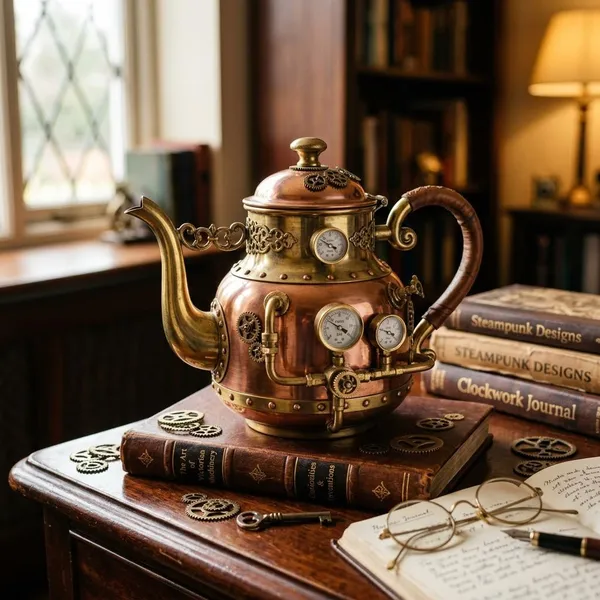
Gears, pipes, rivets, bolts, and valve-like accents give the teapot its mechanical character. For a display piece, these can be dramatic and oversized. For a usable teapot, they should stay out of the way of the lid, grip, spout, and cleaning areas.
- Good for use: low-profile raised details, secure attachments, smooth areas near the handle.
- Better for display: dangling chains, fragile pipes, sharp protrusions, or tightly packed decoration.
Brass, copper, and aged finishes
Brass, copper, bronze, gunmetal, and darkened metallic finishes create the worn industrial look people expect from steampunk decor. On ceramic, this often comes from glazes or surface treatments rather than actual metal.
If the teapot will be handled often, choose a finish that can tolerate gentle cleaning. A dramatic patina is less useful if every fingerprint, water spot, or wipe mark becomes a problem.
Mechanical fantasy details
Steampunk also leaves room for imagination: gauges, clock faces, wings, goggles, propellers, miniature engines, or laboratory-style parts. These details are best when they add a story without making the teapot awkward. A collector may enjoy a wildly sculptural airship-style pot, while a weekend tea drinker will usually be happier with a simpler piece that pours cleanly.
Types of steampunk teapots
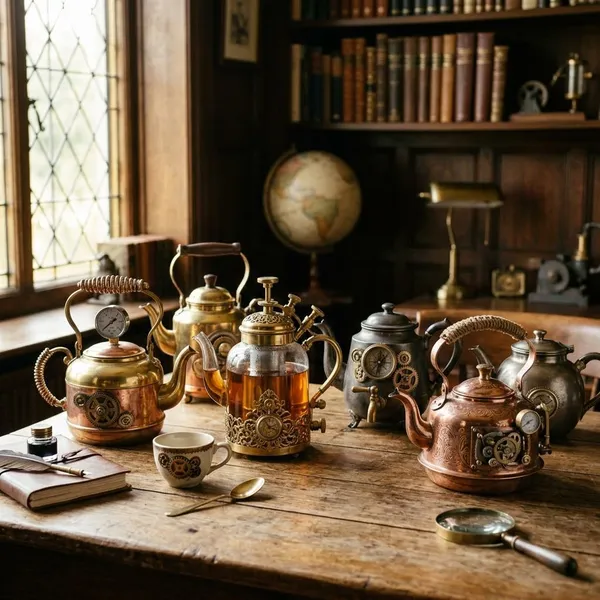
The main mistake is assuming every teapot-shaped object is meant for tea. Some pieces are kitchenware, some are shelf art, and some sit in the middle. Match the type to your real plan before comparing price or style.
Functional ceramic teapots
Functional ceramic teapots are usually the safest starting point for people who want to brew tea. Look for a glazed interior, comfortable handle, fitted lid, and a spout that is shaped for pouring rather than just appearance.
This type suits light weekly use, themed tea service, or someone who wants one piece to move between the kitchen and a display shelf. The steampunk styling can be strong, but the structure should still behave like a normal teapot.
Decorative display pieces
Display pieces are made to be seen, not filled. They may have fixed lids, narrow openings, resin parts, painted surfaces, delicate attachments, or shapes that would pour badly. That does not make them inferior; it simply means they should be judged as decor.
Choose this route if the teapot will live in a cabinet, on a mantel, or as part of a themed room. It is also the safer gift choice when you know someone loves steampunk style but you do not know their tea habits.
Mixed-media art teapots
Mixed-media pieces combine materials such as ceramic, metal, resin, wire, glass, wood, or found objects. They often have the strongest visual personality because every material adds a different texture.
- Best use: display, collecting, themed decor, photography props.
- Be cautious with: hot water, washing, glued parts, and anything that might absorb moisture.
Handmade collector pieces
Handmade collector teapots are worth considering when originality matters more than perfect uniformity. Small glaze variations, hand-shaped details, and uneven aged finishes can make the piece feel more alive than a mass-produced version.
For a collector, ask about the maker's process, materials, and whether the piece is one-of-a-kind or part of a small batch. For a tea drinker, ask the more boring but important questions first: is it food-safe, does it pour well, and how should it be cleaned?
Custom commissioned designs
A custom commission makes sense when you want a specific size, color palette, theme, or level of decoration. It is also the best path if you want a functional teapot with strong steampunk styling, because the artist can plan the usable parts from the beginning.
Be clear about the intended use before discussing decoration. "For display only" gives the maker more freedom. "For hot tea" means the inside, spout, lid, handle, and attached parts need stricter choices.
How to tell if a steampunk teapot is usable
Look for food-safe materials
Start with anything that touches the tea. Ceramic clay and glaze should be described as food-safe. Any metal lining, rim, filter, or interior detail should be suitable for hot beverages, not just decorative.
Check the interior glaze
The inside of a functional ceramic teapot should look smooth, sealed, and easy to rinse. Patchy glaze, exposed raw clay, cracks, rough texture, or an interior that is never shown in photos are all reasons to pause.
Test the lid and handle
The lid should sit securely enough that it will not slide when the pot is tilted. The handle needs enough clearance for a comfortable grip, especially when the pot is full and hot. A handle that looks elegant but forces your knuckles against the body will become annoying quickly.
Inspect the spout and balance
A usable spout should have a clean opening, a sensible angle, and a position that does not make the pot feel front-heavy. You cannot always test pouring online, but you can still spot risky designs: tiny spouts on large bodies, extreme forward decoration, or a handle too small for the pot's size.
If you plan to use the teapot regularly, choose boring balance over dramatic imbalance. A slightly less theatrical design will usually be more enjoyable after the novelty wears off.
Avoid loose decorative parts
Loose gears, dangling chains, thin wire, lightly glued fittings, or fragile resin details are warning signs for tea service. Steam, washing, and repeated handling can weaken decorations even when the body itself is fine.
- Ask whether the teapot is functional or display-only.
- Confirm which materials touch the tea.
- Check the interior photo, lid fit, handle clearance, and spout shape.
- Choose simpler decoration if the pot will be used often.
Best materials for steampunk teapots
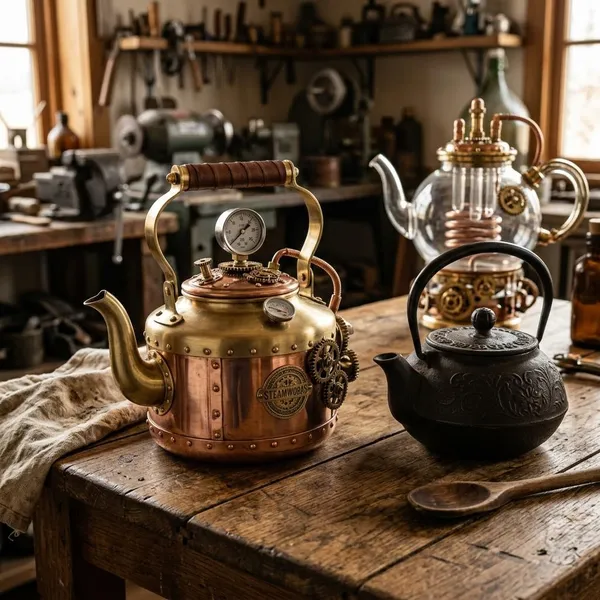
Material decides more than appearance. It affects heat, weight, cleaning, durability, and whether the teapot belongs on the table or behind glass. For most buyers, ceramic is the practical choice; metal, resin, and mixed media are more situation-dependent.
Ceramic for practical tea service
Ceramic is usually the best material if you want the teapot to work as actual tea ware. It can hold hot liquid, take a food-safe glaze, and still carry raised ornament or metallic-looking finishes.
Metal for an industrial look
Metal gives the strongest industrial impression, especially in brass, copper, steel, or dark aged finishes. It can look fantastic in a cabinet or on a tea cart.
For use, be more selective. The metal must be appropriate for hot drinks, the surface should not be merely decorative coating, and the handle should not become uncomfortable when the pot is hot. A ceramic teapot with metal-style accents is often easier to live with than a fully metal novelty piece.
Resin for decorative detail
Resin is useful for sculpted gears, gauges, pipes, and fantasy details because it can create crisp shapes without much weight. It is best kept on decorative exteriors or display-only designs.
Mixed media for art pieces
Mixed media is ideal for art teapots because it can combine ceramic bodies, metal fittings, glass lenses, wirework, wood, and painted detail. The result can feel much richer than a single-material pot.
| Material choice | Best fit | Main caution |
|---|---|---|
| Ceramic | Serving tea with decorative style | Confirm food-safe glaze |
| Metal | Strong industrial display | Heat, finish care, beverage safety |
| Resin | Detailed exterior decoration | Usually not for hot liquid contact |
| Mixed media | Collector and art pieces | Cleaning and long-term durability |
How to display a steampunk teapot
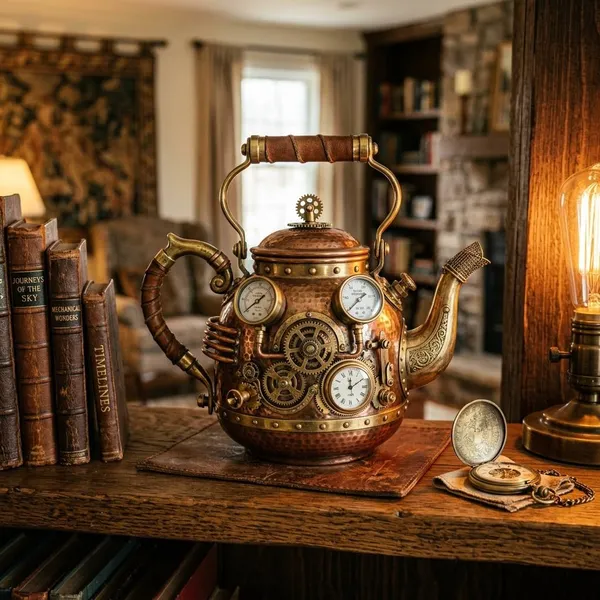
A steampunk teapot usually looks better when it has a little context. Give it enough surrounding detail to suggest a story, but not so much that the teapot disappears into clutter. The right display also depends on whether you still need to reach it for tea.
Style it on a tea cart
A tea cart works well for a functional or semi-functional piece because it keeps the teapot visible and easy to use. A dark wood cart, metal frame, or antique-style tray will support the brass-and-copper mood without trying too hard.
Keep the setup practical: the teapot, two cups, a small tin, and a folded cloth may be enough. If you actually serve tea from it, leave space to lift and pour without knocking into props.
Place it in a display cabinet
A cabinet is the better home for fragile handmade, mixed-media, or custom pieces. It reduces dust, handling, and accidental bumps, which matters when the teapot has small attachments or delicate finishes.
Leave room around the silhouette. A crowded shelf makes the piece harder to read, especially if the teapot already has gears, pipes, and layered surface detail.
Pair it with vintage cups
Vintage cups bring out the Victorian side of the style. Floral china, transferware, silver-toned spoons, or a worn tray can soften the industrial parts and make the display feel more collected.
You do not need a perfectly matched set. A few coordinated pieces often look more natural than a rigid matching display, especially if the teapot itself is quirky or handmade.
Add books, clocks, and brass decor
Books, clocks, magnifiers, candlesticks, keys, and brass objects can build a small steampunk scene around the teapot. Pick two or three supporting items rather than filling every gap. A little empty space makes the details on the teapot easier to notice.
Conclusion
The best choice depends on whether the teapot needs to earn its place at the table or simply look wonderful on display. For serving tea, choose food-safe ceramic, a sealed interior, a secure lid, a comfortable handle, and decoration that will not get in the way. For collecting or decorating, you can lean further into metal, resin, mixed media, and handmade fantasy details, as long as you treat the piece according to what it was actually built to do.
FAQ
Can every steampunk teapot hold hot tea?
No. Many are decorative only, especially pieces with resin, glued parts, painted interiors, fixed lids, or fragile attachments. Use one for tea only when the maker clearly says it is functional and food-safe.
Are handmade steampunk teapots worth the price?
They can be, if you value originality and craft more than a low price. For a usable handmade piece, the higher cost should also come with clear information about materials, glaze, and care.
Can you commission a functional custom teapot?
Yes, but say that it must be functional before the design starts. Ask the maker to plan the interior, spout, lid, handle, and exterior decoration around hot tea use, not just appearance.
What is a good steampunk teapot gift?
For a tea drinker, choose a functional ceramic pot with moderate decoration. For someone who mainly loves the aesthetic, a display piece with strong visual character may feel more special and carries less risk of choosing the wrong tea ware.
How can you tell if a teapot is decorative only?
Look for missing food-safe information, no interior photos, fixed or awkward lids, resin-heavy construction, delicate add-ons, or wording that focuses only on display. If the seller cannot confirm hot-tea use, treat it as decor.
Can every steampunk teapot hold hot tea?
No. Many are decorative only, especially pieces with resin, glued parts, painted interiors, fixed lids, or fragile attachments. Use one for tea only when the maker clearly says it is functional and food-safe.
Are handmade steampunk teapots worth the price?
They can be, if you value originality and craft more than a low price. For a usable handmade piece, the higher cost should also come with clear information about materials, glaze, and care.
Can you commission a functional custom teapot?
Yes, but say that it must be functional before the design starts. Ask the maker to plan the interior, spout, lid, handle, and exterior decoration around hot tea use, not just appearance.
What is a good steampunk teapot gift?
For a tea drinker, choose a functional ceramic pot with moderate decoration. For someone who mainly loves the aesthetic, a display piece with strong visual character may feel more special and carries less risk of choosing the wrong tea ware.
How can you tell if a teapot is decorative only?
Look for missing food-safe information, no interior photos, fixed or awkward lids, resin-heavy construction, delicate add-ons, or wording that focuses only on display. If the seller cannot confirm hot-tea use, treat it as decor.