
Steampunk style works best when it looks intentional, not like every brass gear and vintage prop was added at once. Start with a Victorian-inspired shape, keep the palette dark and warm, then use leather, aged metal, and one strong accessory to make the outfit feel inventive rather than cluttered.
What defines steampunk style
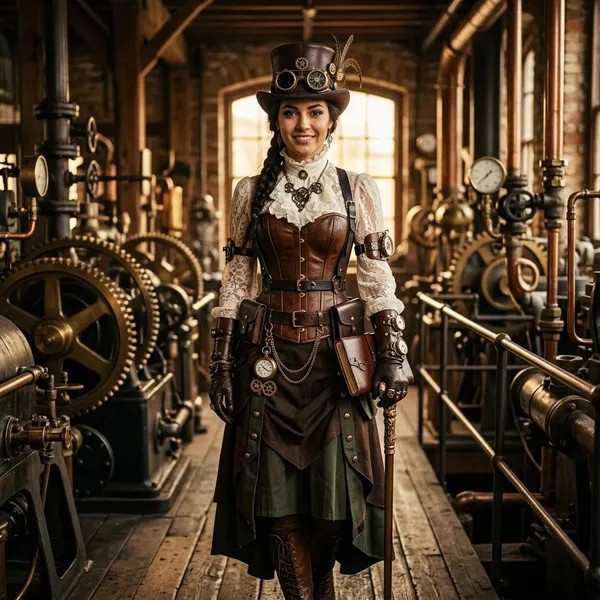
The look is built from old-world tailoring, industrial materials, and a fantasy version of technology where steam, brass, gears, and hand-built machines shape the world. It does not need to be historically perfect. The important part is that the clothing or decor suggests Victorian influence, visible mechanics, and a sense of adventure.
Victorian-inspired shapes
Victorian-inspired shapes give the style its backbone. Waistcoats, fitted coats, high collars, corsets, long skirts, lace blouses, and structured jackets all create the period feeling before any accessories are added.
Industrial materials
Leather, brass, copper, iron, dark wood, and canvas bring in the workshop side of the look. These materials should feel sturdy and slightly aged, as if they belong to a traveler, mechanic, or inventor rather than a glossy modern showroom.
- Best first check: does the material look handmade, worn, or functional?
- Use sparingly: one leather belt with aged metal can do more than several random gear pieces.
- Avoid: shiny plastic accessories that imitate metal too obviously.
Retro-futuristic details
This is where steampunk separates itself from plain Victorian fashion. Pocket watches, goggles, compass motifs, mechanical wings, tool belts, clock faces, and fictional gadgets suggest an alternate future imagined through 19th-century technology.
Layered textures
Texture keeps the outfit from feeling flat. Try pairing rough leather with lace, velvet with metal buttons, or canvas with polished wood. Even a simple brown-and-black outfit looks more steampunk when the surfaces are varied.
Aged finishes
Aged finishes make the style feel lived-in. Tarnished brass, distressed leather, weathered wood, matte fabric, and antique-toned hardware all work better than pieces that look brand new and overly polished.
Key steampunk colors and materials
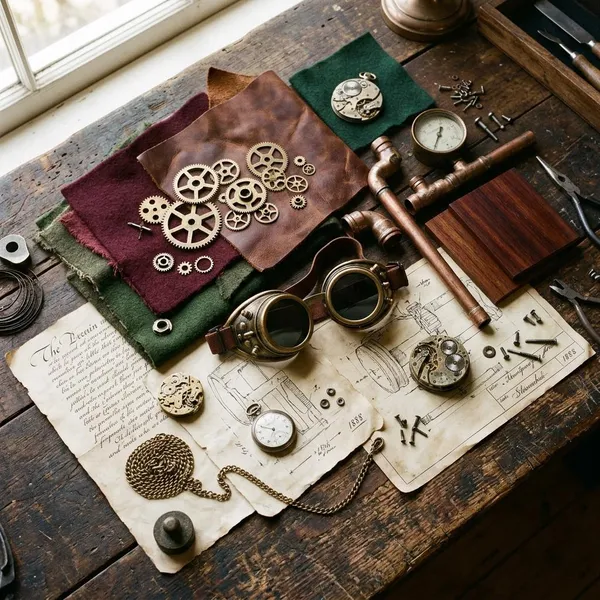
The strongest palettes are usually dark, warm, and slightly muted. Think leather trunks, old machinery, Victorian interiors, military coats, field journals, and antique instruments. If you are building your first outfit, choose a neutral base first, then add one rich color or one metal finish.
Brown, black, and charcoal
Brown, black, and charcoal are the easiest foundation colors because they already match leather, boots, belts, coats, and metal hardware. Brown feels adventurous and worn-in, black adds drama, and charcoal softens the look so it does not become too harsh.
Burgundy, navy, and deep green
These colors add personality without breaking the vintage mood. Burgundy feels romantic or gothic, navy can suggest military or airship styling, and deep green works well for explorer-inspired outfits.
Use one of these as the main accent rather than mixing all three. A burgundy waistcoat, navy coat, or forest green skirt will look more deliberate than several competing dark colors.
Brass, copper, and iron
Brass and copper create the classic mechanical warmth associated with clocks, instruments, valves, and steam machinery. Iron or gunmetal feels tougher and suits mechanic or darker gothic looks.
- Brass: best for explorer, aviator, and inventor details.
- Copper: warmer and more decorative, especially in jewelry or small hardware.
- Iron or gunmetal: stronger for industrial mechanic or gothic styling.
Leather, velvet, and lace
These three fabrics create the main tension in steampunk fashion. Leather adds utility, velvet adds richness, and lace brings in the Victorian softness. You do not need all three in one outfit; two well-chosen textures often look cleaner.
Wood, canvas, and distressed fabric
Wood, canvas, and distressed fabric are useful when you want the style to feel practical rather than decorative. A canvas satchel, faded coat, wooden cane handle, or weathered bag can make the look feel like travel gear instead of costume props.
Popular steampunk style directions
Choosing one direction before you buy accessories prevents the common beginner mistake: mixing aviator goggles, gothic lace, mechanic tools, and explorer gear until nothing has a clear story. Pick the mood first, then let the colors, fabrics, and accessories support it.
Victorian explorer
This direction suits anyone who likes adventure more than machinery. Think fitted coats, brown leather, field bags, gloves, boots, maps, journals, compass details, and dark green or tan fabrics.
It is also one of the easiest versions to make wearable. A waxed jacket, sturdy boots, and a canvas satchel can hint at the style for a casual day, while a pocket watch or brass compass detail can push it further for a themed event.
Industrial mechanic
The industrial mechanic look is rougher and more practical: rolled sleeves, work boots, aprons, belts, harnesses, fingerless gloves, and darker metal hardware. The pieces should look ready for use, not just decoration.
- Works well for: casual outfits, conventions, maker-style characters, and rugged styling.
- Keep in mind: oversized tools and too many straps can look bulky fast.
Airship aviator
Airship aviator styling is the most instantly recognizable version because goggles, flight jackets, scarves, gloves, and tall boots communicate the idea quickly. It works best when the silhouette stays clean and the accessories do not compete.
For a costume party, goggles can be the focal point. For a subtler outfit, a short leather jacket, scarf, and brass-toned watch may be enough to suggest the aviator mood.
Gothic steampunk
Gothic steampunk leans darker, using black, burgundy, plum, lace, velvet, corsets, fitted coats, ornate jewelry, and antique metal details. The key is to keep the mechanical element visible; otherwise, it may read as Victorian goth rather than steampunk.
A brass brooch, watch chain, or mechanical pendant can make the difference. You do not need to brighten the palette if the textures and metalwork carry the industrial side.
Subtle modern steampunk
This is the most realistic direction for everyday wear. Use modern basics, then add one or two old-world details: lace-up boots, a structured coat, a leather bag, a vintage-style watch, brass jewelry, or a waistcoat over a plain shirt.
How to create a steampunk outfit
A strong outfit usually comes from editing, not adding more. Build in this order: direction, base outfit, structured layer, material contrast, then one focal accessory. That order keeps the look readable and helps you avoid buying pieces that do not work together.
Choose one clear style direction
Decide whether your outfit is explorer, mechanic, aviator, gothic, or subtle modern before choosing individual items. This gives you a filter for every purchase or styling choice.
Start with a simple base outfit
Your base should be comfortable and easy to layer. A shirt with trousers and a waistcoat works well. So does a blouse with a skirt, a simple dress with boots, or dark jeans with a structured jacket for a modern version.
- For a low-key outfit: dark jeans, boots, a white shirt, and one antique-style accessory.
- For an event outfit: stronger silhouette first, then accessories after.
- For a long day: choose shoes and layers you can actually move in.
Add one structured layer
A structured layer is often the piece that makes the outfit click. A fitted coat, long vest, corset, bolero jacket, tailcoat, or sharp blazer gives shape and makes the look feel more period-inspired.
If you only invest in one statement piece, make it this layer. Accessories can be changed later, but a strong coat or vest can make ordinary clothes look intentional.
Mix leather with aged metal
Leather and aged metal are the fastest way to bring in the industrial side. Try a leather belt with brass hardware, boots with buckles, a satchel with antique fittings, or a watch chain against a waistcoat.
Match finishes where you can. Antique brass with antique brass looks cleaner than bright gold, chrome, copper, and gunmetal all fighting for attention.
Finish with one focal accessory
Choose one piece that completes the outfit: goggles, a pocket watch, a cane, a statement hat, a corset belt, a brooch, or a small fictional gadget. One clear focal point usually looks more confident than many small novelty items.
Conclusion
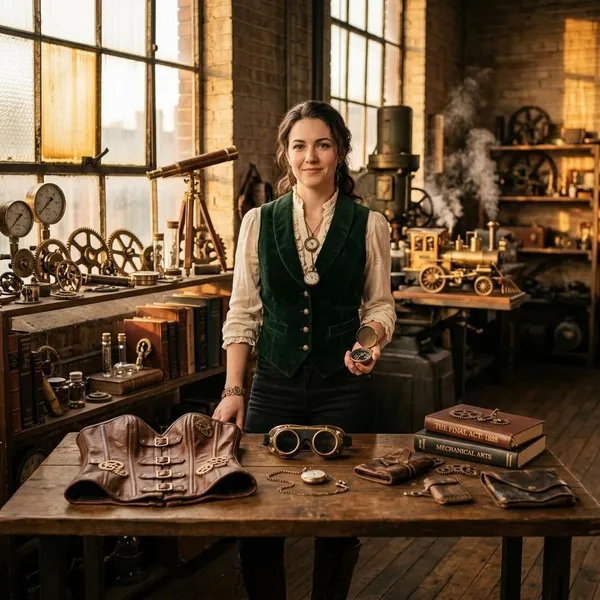
The most convincing steampunk looks have a clear point of view: a strong silhouette, a restrained palette, a few textured materials, and one detail that suggests invention or travel. If you are new to the style, start smaller than you think you need to; a well-fitted coat, aged leather, and one brass accessory will usually look better than a crowded outfit full of unrelated props.
FAQ
Why is the style called steampunk?
The "steam" part points to steam-powered machinery and 19th-century industry. The "punk" part comes from genre naming, though the fashion is usually more inventive and theatrical than rebellious.
What colors are common in steampunk fashion?
Common colors include brown, black, charcoal, burgundy, navy, deep green, brass, copper, and gunmetal. Bright colors can work, but they are usually easier to handle as small accents.
Do you need goggles for a steampunk outfit?
No. Goggles are useful for aviator looks, but a waistcoat, pocket watch, lace-up boots, corset, leather belt, or antique metal jewelry can create the style just as clearly.
Why is the style called steampunk?
The "steam" part points to steam-powered machinery and 19th-century industry. The "punk" part comes from genre naming, though the fashion is usually more inventive and theatrical than rebellious.
What colors are common in steampunk fashion?
Common colors include brown, black, charcoal, burgundy, navy, deep green, brass, copper, and gunmetal. Bright colors can work, but they are usually easier to handle as small accents.
Do you need goggles for a steampunk outfit?
No. Goggles are useful for aviator looks, but a waistcoat, pocket watch, lace-up boots, corset, leather belt, or antique metal jewelry can create the style just as clearly.