
The easiest way to style steampunk hair accessories is to pick the piece around your hairstyle first, not the other way around. Small clips and pins suit everyday looks, while hats, goggles, and larger fascinators need stronger hair support and a reason to stand out. If the accessory feels heavy, blocks your face, or competes with the outfit, it will probably look less polished once you wear it.
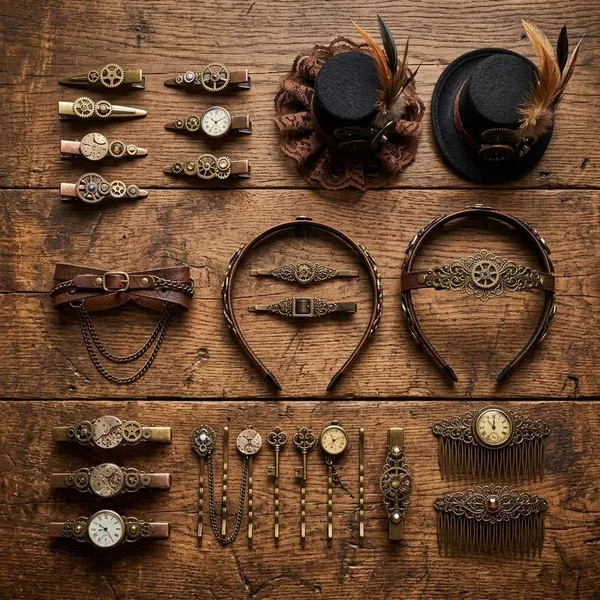
Popular steampunk hair accessories
Most steampunk pieces fall somewhere between Victorian softness and mechanical detail. The useful question is not only "Does it look steampunk?" but also "Can my hair hold it, and does it match the setting?" A tiny gear pin can look better than a dramatic hat if the rest of the outfit is simple.
Gear hairpins and clockwork clips
Gear hairpins and clockwork clips are the safest starting point because they add the theme without taking over the whole hairstyle. They work well in buns, braids, half-up styles, and even tucked near one side of loose hair.
- Best for: beginners, daily outfits, small themed details.
- Watch for: sharp edges, weak clips, or heavy metal pieces that pull at fine hair.
- Easy styling idea: place one brass clip near a low bun instead of scattering pins everywhere.
Mini top hats and fascinators
Mini top hats feel playful and theatrical, while fascinators usually look more elegant. Both work best when placed slightly to one side rather than flat on top of the head. If you are dressing for a wedding or formal dinner, a smaller lace fascinator with one metal accent often looks more refined than a tall hat covered in details.
Goggles and decorated headbands
Goggles are the quickest way to make a hairstyle read as steampunk, but they are also one of the easiest pieces to overdo. They suit conventions, costumes, and character looks better than ordinary daytime outfits. Decorated headbands are the more wearable version: they can include small gears, lace, velvet, studs, or tiny lens details without the bulk of full goggles.
Hair combs and decorative chains
Hair combs are useful when you want decoration and hold in the same piece. They slide well into buns, twists, and updos, especially if the hair has enough texture to grip the teeth.
Chains need more care. Fine draped chains can make a braid or chignon look beautifully engineered, but thick chains may pull, snag, or loosen the style. Before wearing them out, tilt your head forward and side to side; if the chain shifts or catches, adjust it before the event.
Feathered and lace headpieces
Feathers and lace soften the metal-heavy side of steampunk styling. They are a good choice when your outfit already includes velvet, corsetry, brocade, lace sleeves, or vintage jewelry. Black lace feels gothic, ivory lace feels more bridal, and burgundy or deep green feathers can add color without making the hair look crowded.
Best accessories for different hairstyles
Your hairstyle decides how much weight, height, and movement the accessory can handle. Structured hair can support combs, chains, and fascinators. Loose or short hair usually needs lighter pieces, bands, or clips with stronger grip.
Hairpins and combs for buns
Buns are one of the easiest bases for steampunk accessories because they give pins and combs something solid to anchor into. A sleek low bun looks good with one or two brass gear pins, while a fuller textured bun can handle a more ornate comb.
Fascinators for chignons and updos
Chignons and formal updos give fascinators enough structure to stay visible and secure. Place the fascinator off-center, slightly above the ear or toward the back curve of the updo, so it frames the face instead of sitting like a separate object on top of the head.
- For weddings: choose lace, veiling, pearls, or soft metallic accents.
- For evening events: darker feathers, bronze trim, or cameo details can look richer.
- For heavy outfits: keep the fascinator smaller so the hair does not compete with the clothing.
Clips and chains for braids
Braids are ideal for small clips because the woven sections create natural attachment points. A side braid with two or three gear clips can look intentional without much effort. For a more dramatic event look, a fine chain can connect two clips across a crown braid or braided half-up style.
Headbands for curls and loose hair
Headbands are practical for curls, waves, and loose hair because they do not need a bun or braid to hold them. Look for a band with a comfortable underside, a little grip, or hidden comb teeth if your hair is smooth. For a casual outfit, velvet or lace with a few antique-brass details usually looks more natural than a full row of large gears.
Mini hats and goggles for short hair
Short hair can carry mini hats and goggles surprisingly well because the accessory becomes the main shape of the style. Pixie cuts, bobs, and cropped curls often look best with a side placement, angled forward just enough to feel deliberate.
Use a clip, slim headband, or comb base rather than relying on bobby pins alone. For very short or slippery hair, a little texture at the roots helps the accessory grip without needing a complicated hairstyle.
How to choose accessories for the occasion
The right piece depends on how visible, secure, and comfortable it needs to be. A clip for a coffee date can be delicate. A headpiece for a convention needs to survive walking, photos, crowds, and several hours of wear.
Subtle metal clips for everyday outfits
For everyday wear, choose one small metal clip, barrette, or pair of pins in an aged finish. Antique brass, bronze, or dark gunmetal looks easier to blend with regular clothes than shiny gold or oversized gears.
Elegant fascinators for weddings
Weddings call for polish and comfort. A fascinator should sit securely through photos, greetings, dinner, and dancing, so lightweight construction matters more than maximum decoration. If your outfit already has lace, embroidery, or a corset-style bodice, choose a fascinator that echoes one detail instead of repeating all of them.
Secure headpieces for conventions
For conventions, security comes first. Choose pieces with more than one anchor point, such as a headband plus clips or a comb backed up with pins. You may be moving through crowds, posing for photos, and wearing the piece much longer than expected.
- Do a movement test: walk, sit, turn your head, and look down.
- Pack backup pins: especially for goggles, chains, or larger hats.
- Avoid fragile edges: crowded spaces are not kind to delicate feathers or loose charms.
Dramatic goggles and hats for costumes
Costumes can handle the boldest pieces: goggles, tall mini hats, feathered hats, veils, and layered chains. The trick is to let one item tell the story. Goggles with victory rolls, a mini hat with a sleek bun, or a feathered side hat with a braid all work because the main feature is clear.
Lightweight accessories for long events
For long events, pick the piece up before you buy or wear it. If it feels heavy in your hand, it will feel heavier on your head after an hour. Resin gears, fabric bases, hollow metal-look charms, and short chains are usually easier to wear than dense metal parts.
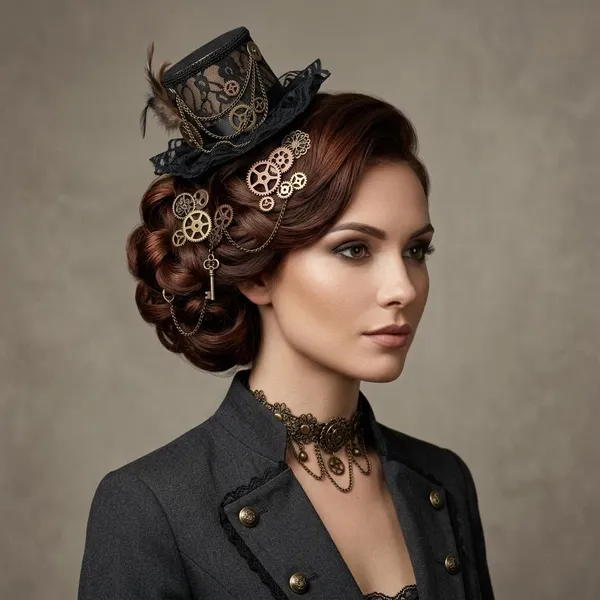
How to build a balanced steampunk hairstyle
A good steampunk hairstyle looks edited, not overloaded. Start with the accessory you most want people to notice, then make every other choice support that piece. This matters even more when your outfit already includes strong textures like leather, lace, velvet, buckles, or jewelry.
Choose one main focal accessory
Pick one main focal point: a fascinator, mini hat, goggles, decorative comb, or chain detail. Smaller accents can support it, but they should not compete. If you are unsure, remove one accessory before leaving; steampunk styling usually looks stronger when the best detail has room to stand out.
Repeat the same metal finish
Keeping the metal finish consistent makes separate pieces feel planned. Antique brass with antique brass is easy. Bronze with warm brown leather also works well. Mixing silver, copper, brass, and bright gold in the same hairstyle can look accidental unless the outfit is deliberately eclectic.
Match the colors to the outfit
The colors do not need to match exactly, but they should connect. Black lace in the hair can echo black boots, burgundy feathers can pick up lipstick or a skirt panel, and ivory netting can soften a cream blouse or bridal look.
- Soft and formal: ivory, champagne, bronze, muted gold, lace.
- Gothic or evening: black, burgundy, dark green, oxidized metal.
- Explorer or costume style: brown leather tones, brass, tan, olive, aged copper.
Balance detailed pieces with simple hair
If the accessory has gears, chains, lace, feathers, or veiling, keep the hair shape simpler. A clean bun, controlled braid, or soft wave gives the decoration a calm background. This is especially helpful if you are not confident with complicated hairstyling; the accessory can do the visual work.
Keep accessories clear of the face
Nothing ruins a good headpiece faster than having to push it away from your eyes all day. Keep chains, veils, feathers, and goggles clear of your mouth, forehead, and eye line. This is not just about comfort; it also keeps your face visible in photos and stops the accessory from looking like it is wearing you.
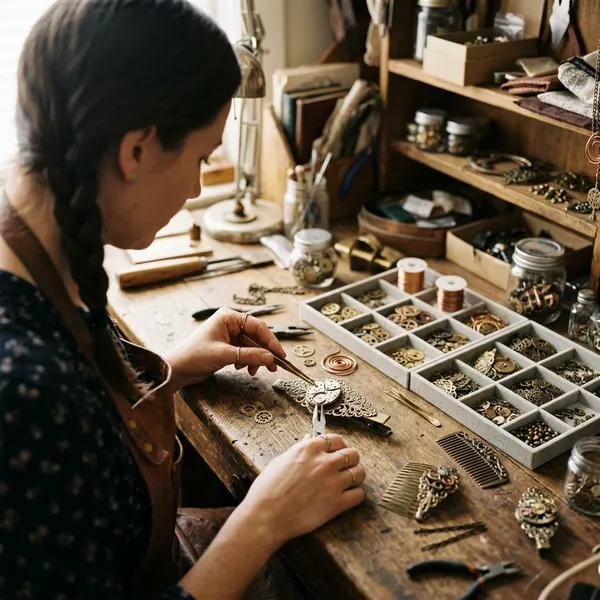
How to make your own steampunk hair accessories
DIY pieces are worth trying when you want a specific color, a lighter design, or something that matches one outfit exactly. The main rule is simple: build it like something you will actually wear, not like a decoration that only looks good lying flat on a table.
Start with a clip comb or headband
Choose the base before choosing the decoration. Clips are best for side placement, combs suit buns and twists, and headbands work well for loose hair, curls, and short styles. If the base is wrong, even beautiful gears and lace will not save the finished piece.
Add lightweight gears and metal charms
Use lightweight gears, charms, keys, faux watch parts, or resin pieces where possible. Real metal can look appealing, but it often adds more weight than your hair can comfortably support.
Lay everything out before gluing. One central charm with two or three smaller accents usually looks cleaner than covering every empty space.
Layer lace ribbon or feathers
Lace, ribbon, netting, and feathers add softness behind the mechanical details. Attach flatter materials first, then place gears or charms on top so the design has depth. For a wedding-style piece, keep the feathers controlled and the metal accents small; for a costume piece, you can push the height and contrast further.
Secure every part with suitable adhesive
Use adhesive that suits the materials: fabric glue for ribbon and lace, stronger craft glue for charms or resin gears, and stitching where soft layers need extra support. Let each layer dry fully before adding the next one. Rushed glue work is the reason many DIY accessories lose pieces during wear.
- Check edges: nothing should lift where it can catch in hair.
- Check the back: rough glue blobs can scratch or snag.
- Check pressure points: decorations should not sit where the clip bends or presses.
Test the weight and comfort before wearing
Wear-test the finished accessory for at least twenty to thirty minutes before relying on it. Turn your head, sit down, look down, and move the way you expect to move at the event. If it tips, pulls, or pinches, remove weight or change the base.
Conclusion
Steampunk styling works best when the accessory suits the hair, the event, and your comfort level at the same time. Start with one strong piece, keep the supporting details controlled, and test anything heavy before wearing it for hours. When the balance is right, even a small clip or comb can make the whole hairstyle feel intentional.
FAQ
Are steampunk hair accessories only for cosplay?
No. Small clips, combs, and headbands can work with everyday vintage, gothic, or alternative outfits; goggles and large hats are usually better for costumes or themed events.
Can you wear them with short hair?
Yes. Short hair often looks great with side clips, slim headbands, mini hats, or goggles, as long as the piece has a secure base rather than relying only on loose pins.
How many accessories should you wear at once?
Usually one main accessory plus one or two small accents is enough. If you are wearing goggles, a hat, or a large fascinator, let that be the feature.
Are steampunk hair accessories only for cosplay?
No. Small clips, combs, and headbands can work with everyday vintage, gothic, or alternative outfits; goggles and large hats are usually better for costumes or themed events.
Can you wear them with short hair?
Yes. Short hair often looks great with side clips, slim headbands, mini hats, or goggles, as long as the piece has a secure base rather than relying only on loose pins.
How many accessories should you wear at once?
Usually one main accessory plus one or two small accents is enough. If you are wearing goggles, a hat, or a large fascinator, let that be the feature.