
If you want a steampunk engine, decide first whether you want a display piece, a working steam model, or something in between. The best ones do not just have brass and gears added for decoration; they look mechanically believable and, if they run, they handle heat, steam, motion, and maintenance safely enough for your space and skill level.
What makes an engine look steampunk?
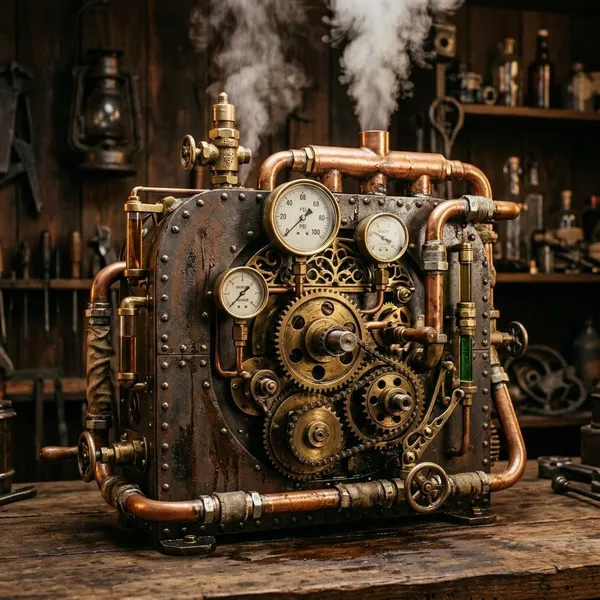
A steampunk look comes from the feeling that the machine could belong in a Victorian workshop, locomotive shed, or inventor's bench. The strongest designs combine warm metals, exposed movement, pressure hardware, and worn industrial details in a way that still feels functional.
Brass, copper, and aged steel
Brass and copper give a steampunk engine its warm antique character, while aged steel keeps it from looking too polished or toy-like. On a working model, these materials are not only decorative: brass fittings and copper pipes also make visual sense around heat, water, and steam.
Exposed gears and moving parts
Visible motion is what makes a working engine interesting to watch. A moving piston rod, crank, flywheel, or valve linkage gives the eye a clear path to follow.
- Good detail: parts that clearly connect and move together.
- Weak detail: loose decorative gears that do not drive anything.
- Best for display: a flywheel or crank large enough to see from a normal viewing distance.
Pipes, valves, and pressure gauges
Pipes and valves make the engine look like it controls steam rather than merely imitates it. Copper tubing, small shutoff valves, threaded fittings, and a readable pressure gauge all help the model feel more convincing.
For a working steam model, a gauge can also be useful because it gives you a visible sign of what is happening before the engine starts moving. For a decorative piece, the same detail still adds credibility, as long as it looks connected to the rest of the design.
Rivets and Victorian details
Rivets, engraved plates, turned knobs, curved brackets, and nameplates add the Victorian part of the style. They soften the heavy industrial look and make the engine feel crafted rather than purely mechanical.
Weathered industrial finishes
A controlled patina can make a new model feel like it has spent time in a workshop. Tarnished brass, darker corners, mild heat staining, and worn edges usually look more believable than heavy fake rust or random distressing.
How does a working steam engine work?
A working steam engine turns heat into motion. Water is heated in a boiler, steam pressure is sent into a cylinder, the piston moves, and a crank changes that back-and-forth movement into rotation. That is why even a small tabletop model can feel so satisfying: you can actually see the energy path.
The boiler turns water into steam
The boiler holds water and is heated by the fuel system the model was designed for, such as solid fuel tablets, an alcohol burner, or gas. As the water heats, it produces steam and pressure inside the boiler.
This is the first place to be careful. Never treat a small boiler like a harmless decoration when it is being fired. Use the recommended water level, the correct fuel, and a stable heat-safe surface, because too little water, the wrong fuel, or a wobbly setup can turn a fun demonstration into a risky one.
Steam pressure moves the piston
When steam reaches the cylinder, it pushes the piston. The piston moves in a straight line, and that repeated movement becomes the engine's basic power stroke.
The crank turns the flywheel
The crank converts the piston's straight motion into rotation, while the flywheel helps carry the engine through the weaker parts of the cycle. On small models, this is especially important because a light engine can stall more easily if the load is too high or the motion is not smooth.
If you mainly want a demonstration model for guests, choose one where the crank and flywheel are easy to see. If you want to drive a small accessory, the flywheel and output shaft matter more than decoration because they affect how steadily the model runs.
Valves control the steam flow
Valves decide when steam enters and leaves the cylinder. Simple models keep this mechanism basic, while more advanced engines may include visible valve gear or even forward and reverse control.
- Beginner model: fewer controls, easier starting, less tuning.
- Hobby model: more visible valve motion, more adjustment, more learning value.
- Display-first model: valve details may be mostly visual, so check whether it actually runs.
Exhaust steam escapes or condenses
After steam has pushed the piston, it has to go somewhere. Many model steam engines simply release exhaust steam into the air, which can mean a little hissing, visible vapor, and moisture around the engine.
That matters for where you run it. A kitchen table may be fine for an occasional short demonstration if it is protected and stable, but a polished wood shelf, cluttered desk, or poorly ventilated corner is a poor choice. Give the engine room, expect moisture, and let it cool before wiping or moving it.
How to choose a working steampunk engine
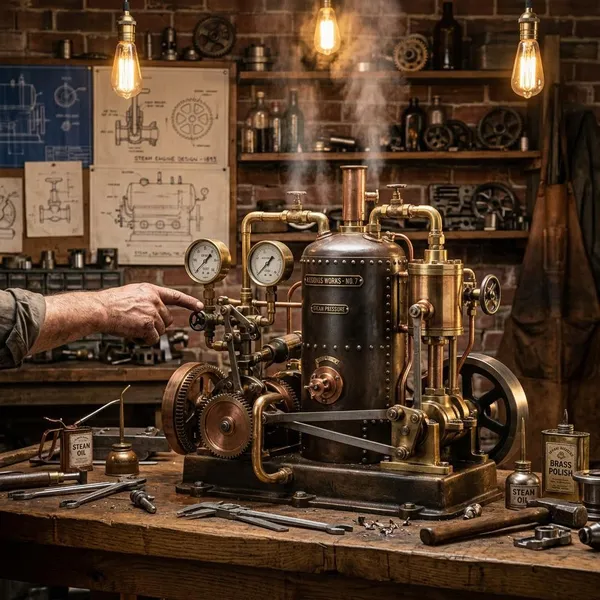
Choose the engine around how you will actually use it, not just how it looks in a product photo. The first checks should be safety, skill level, fuel type, parts support, and display space. Decoration matters, but it should come after the model is practical enough for your situation.
Choose a kit or finished model
A finished model is usually the better first choice if you mainly want to run the engine, display it, or learn the basics of steam power. It removes the frustration of alignment and assembly errors, so you can focus on filling, heating, running, and shutting down correctly.
A kit makes more sense if building is part of the appeal. You learn how the shafts, seals, bearings, and linkages fit together, but you also accept more risk of small mistakes. For a gift or a first steam model, finished is usually safer; for a patient hobbyist, a kit can be more rewarding.
Match it to your skill level
For a first engine, look for a simple stationary layout with clear instructions, stable construction, and easy access to the moving parts you need to oil. A visible piston and flywheel are enough to make it interesting without adding too many controls.
More experienced users may enjoy a dynamo, whistle, reversing gear, or accessory drive. Those features are fun, but they also add more things to adjust and maintain. If you only plan to run the engine a few times a year, simpler often stays enjoyable longer.
Check the boiler and fuel type
The boiler and fuel system shape the whole ownership experience. Solid fuel tablets are common and simple, alcohol burners feel traditional but need careful handling, and gas systems can be cleaner and more adjustable when the model is designed for them.
| Use situation | What to prioritize |
|---|---|
| Occasional display run | Simple fuel, clear instructions, easy cleanup |
| Regular hobby use | Durable boiler, service parts, reliable burner |
| Small apartment or indoor desk | Stable base, modest size, controlled exhaust moisture |
| Accessory or generator demo | Steady flywheel, suitable output shaft, low accessory load |
Compare size and display needs
Measure the place where the engine will sit and the place where it will run; they are not always the same. A model may fit nicely on a shelf but still need a wider heat-safe surface during operation.
Weight also changes the experience. A heavier model may feel more stable and premium, while a lighter one is easier to move for cleaning or short demonstrations. If the engine will mostly be décor, proportions and finish matter more; if it will run often, access for filling, oiling, and wiping matters more.
Review the safety features
Safety features should be treated as part of the purchase decision, not as a bonus. Look for a proper safety valve, stable burner placement, clear filling guidance, and sensible access to controls. A pressure gauge is helpful on many working models because it gives you another way to monitor what is happening.
Check parts and maintenance support
A working engine is only enjoyable if you can keep it working. Before buying, check whether common service items such as seals, wicks, gaskets, burners, belts, and suitable oil are available.
- Good sign: manuals, diagrams, and replacement parts are easy to find.
- Warning sign: no brand name, no parts list, and no clear fuel instructions.
- Practical test: search for the model name plus "spares" or "manual" before you buy.
How to care for a working steam engine
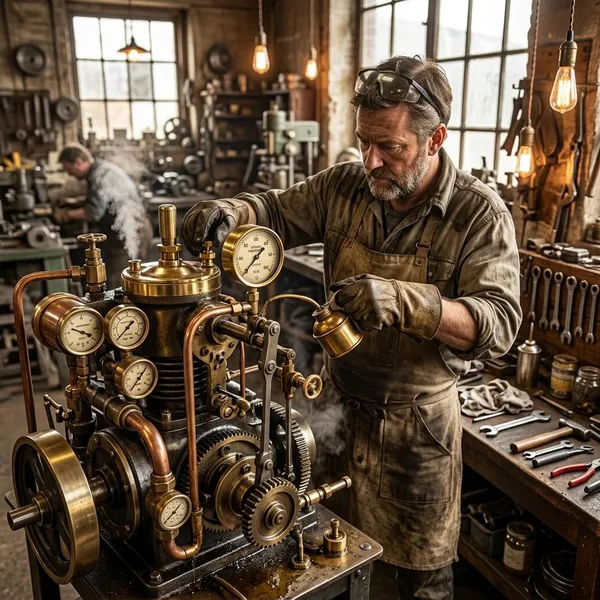
Care is mostly about preventing water, heat residue, and friction from doing slow damage. A short after-run routine matters more than occasional deep cleaning, especially if you run the engine regularly.
Drain leftover water
Once the engine has cooled and depressurized, drain leftover water if the manufacturer's instructions allow it. Standing water can encourage mineral buildup or corrosion, especially if you use hard tap water.
For regular running, distilled water is often a sensible choice because it leaves fewer deposits. For occasional display use, the bigger mistake is simply forgetting water inside the boiler for weeks after a short run.
Wipe away moisture
Moisture can collect around the exhaust, boiler, cylinder, base, and nearby surface. Wipe it gently with a soft cloth after the engine cools.
- Avoid harsh scrubbing: it can remove intentional patina or coating.
- Check under the base: trapped moisture can mark shelves or tabletops.
- Use a workshop cloth: oil and water residue can stain household fabrics.
Lubricate moving parts
Bearings, crank pins, piston rods, and valve linkages need the right oil to reduce friction. Use lubricant intended for model steam engines or the oil recommended by the maker, not a random household oil that may thin out, gum up, or smell under heat.
Check seals and fittings
Small leaks often show up as weak running, early pressure loss, sputtering, or visible moisture where it should not appear. Before a run, glance over the filler cap, pipe joints, seals, and fittings. After a run, look for residue that suggests steam escaped from the wrong place.
If the engine suddenly performs worse than usual, do not keep firing it harder to compensate. Let it cool, check the obvious fittings first, and replace worn service parts rather than forcing the model to run through a leak.
Store it somewhere dry
Dry storage protects both the mechanism and the finish. A living-room shelf or cabinet is usually better than a damp garage, basement, or shed, unless that space is controlled and clean.
A light cover helps keep dust out of bearings and linkages, but avoid sealing the engine away while it is still damp. Let it cool, wipe it, drain it if needed, then store it where humidity and temperature swings are low.
Conclusion
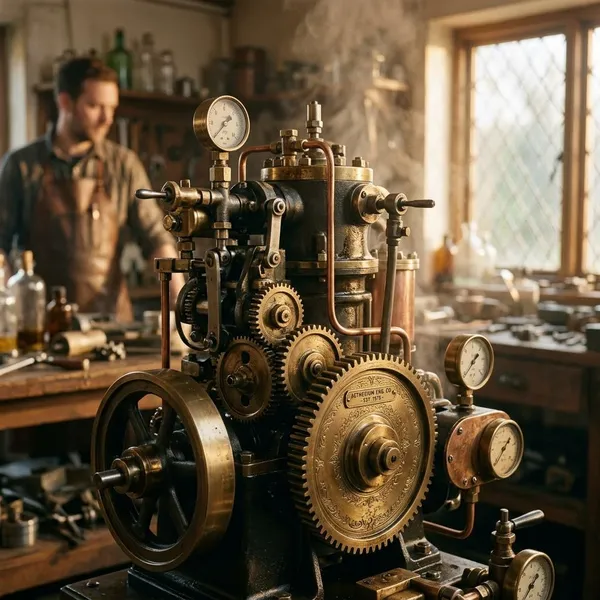
A good steampunk engine should satisfy both sides of the interest: it should look like a believable old workshop machine and, if it is a working model, it should be safe and practical enough that you will actually use it. Choose function before ornament, match the model to your confidence level, and keep the after-run care simple but consistent.
FAQ
Can a miniature steam engine generate electricity?
Yes, some miniature steam engines can turn a small dynamo or generator. Expect it to power a tiny lamp or demonstrate the principle, not supply useful household electricity.
Can a model steam engine power other accessories?
Yes, if the accessory is light enough for the engine. Small fans, pulleys, pumps, or workshop-style add-ons are common, but too much load can slow the flywheel or stall the engine.
Is a Stirling engine the same as a steam engine?
No. A steam engine uses pressurized steam from heated water, while a Stirling engine uses a sealed gas that expands and contracts with heating and cooling.
Can a miniature steam engine generate electricity?
Yes, some miniature steam engines can turn a small dynamo or generator. Expect it to power a tiny lamp or demonstrate the principle, not supply useful household electricity.
Can a model steam engine power other accessories?
Yes, if the accessory is light enough for the engine. Small fans, pulleys, pumps, or workshop-style add-ons are common, but too much load can slow the flywheel or stall the engine.
Is a Stirling engine the same as a steam engine?
No. A steam engine uses pressurized steam from heated water, while a Stirling engine uses a sealed gas that expands and contracts with heating and cooling.