
A strong steampunk alchemist character starts with one clear choice: what kind of alchemist are they? Pick the role first, then build the clothing, props, and one standout invention around that role. That keeps the look from turning into random goggles, bottles, and gears.
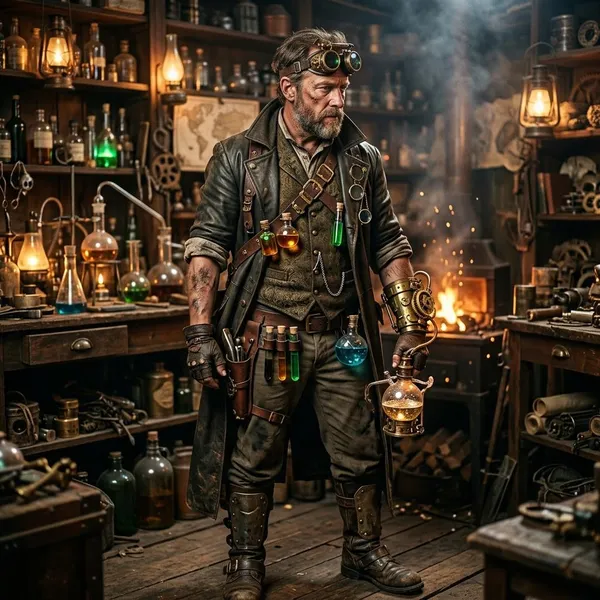
What does a steampunk alchemist wear?
A steampunk alchemist usually wears Victorian-inspired layers with practical laboratory or field details. The outfit should show three things quickly: social setting, working conditions, and level of danger. A polished researcher, a traveling chemist, and a black-market brewer can all use the same genre, but they should not look like the same person with different bottles.
Shirts, waistcoats, and fitted coats
Start with a collared shirt or blouse in cream, white, charcoal, muted stripes, or another soft period-looking fabric. It does not need to be historically perfect, but it should avoid looking like a modern office shirt if the rest of the costume is detailed.
A waistcoat gives the outfit structure, while a fitted coat makes the character read as Victorian from a distance. Tweed, brocade, cotton, wool, and distressed leather all work, depending on status. A university potion scholar might look neat and controlled; a workshop alchemist can get away with worn cuffs, reinforced elbows, and slightly stained hems.
Corsets, aprons, and utility belts
Corsets can work well when they support the character rather than becoming the whole costume. A polished underbust corset suits a refined laboratory owner, while a simpler leather or canvas version feels better for a practical field chemist.
- Apron: Best for a hands-on brewer, experimenter, or shop apothecary.
- Utility belt: Best for carrying small bottles, labels, tools, and notes.
- Corset: Best when you want a stronger silhouette and a more dressed-up Victorian feel.
Trousers, skirts, and leather bracers
Trousers should look tailored but still allow movement. Riding pants, slim wool trousers, cropped Victorian-style trousers, or dark work pants can all fit if the silhouette feels intentional. Suspenders, side buttons, patched knees, or weathered hems help plain trousers look more connected to the world.
Skirts can be just as practical if they match the character's setting. A split skirt suits travel and action scenes, while layered or bustle-inspired shapes fit a shop owner, academic, or eccentric laboratory figure. Leather bracers are useful on either version because they suggest protection from heat, spills, or broken glass without adding too much bulk.
Boots, gloves, and protective gear
Footwear should be chosen for the event first and the photograph second. Lace-up ankle boots, riding boots, or vintage-style work boots are usually safer choices than delicate costume shoes, especially for conventions, outdoor fairs, or long roleplay sessions.
Gloves and protective gear tell the reader of the costume what kind of risks the character faces. Fingerless gloves suggest dexterity; full gloves suggest heat, fumes, or dangerous mixtures. Goggles, tinted lenses, masks, reinforced sleeves, or a stained apron can all work, but you only need one or two safety signals for the idea to land.
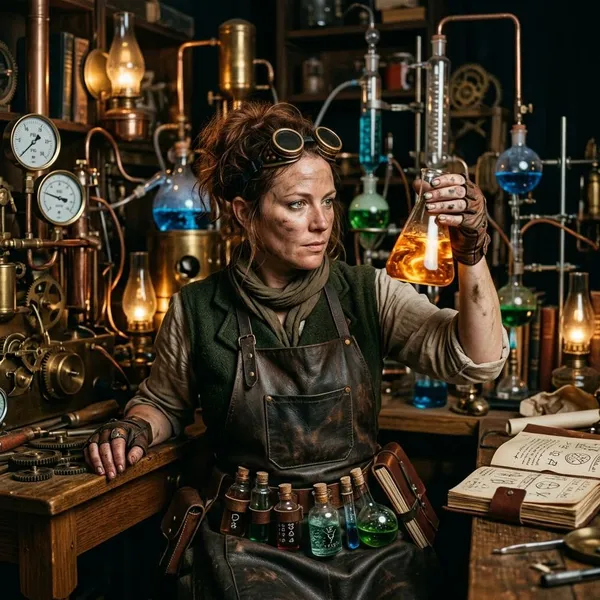
Steampunk alchemist character ideas
The character idea should decide the outfit, not the other way around. Before buying props, choose where the alchemist works and what they make. Healing tonics, experimental fuels, illegal enhancers, clockwork medicine, and unstable transformation brews all point to different clothing, storage, and color choices.
- Indoor convention or photoshoot: Academic or eccentric laboratory designs can be more detailed and delicate.
- Outdoor event or long day of walking: Traveling field chemist is easier to wear comfortably.
- Tabletop roleplay or LARP: Black-market brewer or mechanical apothecary gives you clearer hooks for interaction.
Academic potion researcher
This version is precise, educated, and probably connected to a college, royal society, museum, or private library. Keep the clothing cleaner: a crisp shirt, neat waistcoat, long coat, pocket watch, formula notebook, and carefully labeled vials.
The danger with this archetype is making it too tidy. Add one working detail, such as ink-stained fingers, a specimen case, cracked spectacles, or a satchel full of field notes. That small imperfection keeps the researcher from looking like a formal Victorian character who happens to carry bottles.
Traveling field chemist
A traveling field chemist should look ready to collect ingredients in ruins, forests, factories, or border towns. Use tougher fabrics, secure bags, rolled sleeves, practical boots, and containers that would survive being carried all day.
- Good props: sample tags, herb bundles, mineral pouches, pocket maps, compact tools.
- Good wear marks: dusty hems, patched knees, stained cuffs, scratched cases.
- Avoid: loose glass bottles swinging from thin chains in crowded spaces.
Mechanical apothecary
A mechanical apothecary mixes chemistry with engineering. The look should feel like a healer, shopkeeper, and inventor combined: Victorian clothing, practical storage, and one or two visible mechanisms that seem useful rather than decorative.
Brass syringes, pump tubes, pressure gauges, gear-shaped clasps, calipers, or a belt-mounted dispenser can all support this role. The best version looks like the character uses machines to measure, heat, filter, or dispense remedies, not like gears were glued on at the end.
Eccentric laboratory alchemist
This is the most theatrical option, so it can handle richer colors, mismatched lenses, unusual layers, burn marks, crystal details, and a slightly chaotic tool arrangement. The key is controlled chaos: choose a limited palette first, then let the props get strange.
Underground black-market brewer
This character works best when the outfit suggests secrecy and speed. Dark coats, hidden pockets, wrapped bottles, coded labels, compact tools, and quiet storage all make sense. The brewer should look like they can pack up quickly if a deal goes wrong.
Use this role when you want a morally gray character for a campaign, LARP, or story setting. A black-market brewer does not need the biggest costume; they need the sharpest details. One hidden distillation kit or locked satchel says more than ten exposed potion bottles.
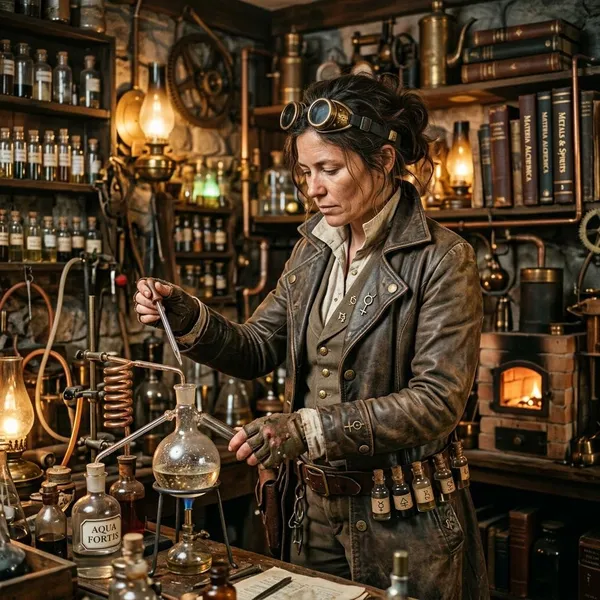
How to create a steampunk alchemist look
Build the look in stages so every piece has a reason to be there. The priority order is role, base outfit, color palette, props, signature invention, then comfort testing. If you start with accessories first, the costume can easily become busy without becoming clearer.
Choose the character role
Decide whether the character is a healer, scholar, inventor, smuggler, merchant, explorer, or unstable experimenter. Then add three traits, such as cautious, ambitious, secretive, generous, obsessive, or reckless. These few choices will tell you what to buy, what to skip, and how clean or battered the outfit should look.
Build a Victorian base outfit
Choose the main clothing before the props: shirt or blouse, waistcoat or corset, coat or apron, then trousers or skirt. If the base outfit already looks believable from across the room, the alchemy details will feel earned instead of forced.
Thrifted and altered clothing can work well here. Look for texture, fit, and silhouette rather than perfect historical accuracy. A modern piece can disappear into the look if the fabric, color, and layering feel right.
Pick a consistent color palette
Limit the palette before adding bottles and metalwork. Two main colors, one accent color, and one metal finish are usually enough. Brown and cream with brass feels classic and workshop-friendly; charcoal and burgundy with dull silver feels darker and more secretive.
| Character direction | Palette that usually works | What it suggests |
|---|---|---|
| Academic researcher | Cream, navy, moss, brass | Order, study, credibility |
| Field chemist | Brown, olive, rust, aged brass | Travel, durability, outdoor work |
| Black-market brewer | Charcoal, oxblood, dark green, gunmetal | Secrecy, risk, hidden trade |
Keep the clothing controlled if you want potion colors to stand out. A single bright green or blue vial is more dramatic against muted fabric than against an outfit full of competing colors.
Add potion and science props
Props should explain the work. Labeled bottles, notebooks, measuring spoons, herb bundles, tongs, specimen jars, folding lenses, wax seals, and stained paper all help, but only if the character would realistically carry them.
- For crowded events: use lightweight plastic or resin bottles instead of real glass.
- For tabletop photos: delicate glass and paper labels can look great if they stay off the costume.
- For LARP: choose soft, secure, easy-to-reach props that will not spill or snap.
Placement matters. A field chemist needs quick-reach pouches; an academic can use an organized satchel; a smuggler should hide the most suspicious items.
Include one signature invention
One standout invention makes the character memorable. It could be a self-heating flask, a silent distillation satchel, a steam-powered reagent pump, a brass inhaler, or a wrist-mounted measuring device.
Tie the invention to the role. A mechanical apothecary might carry a dose-mixing dispenser, while an underground brewer might hide a compact still inside a worn doctor's bag. The invention does not need to be large; it needs to feel specific.
Test comfort and movement
Try the full outfit before the event and move like you actually will: sit, walk, bend, reach, crouch, climb stairs, and carry your bag. Watch for swinging bottles, slipping goggles, tight corsets, sharp bracers, heavy belts, and coat hems that catch behind your knees.
Conclusion
The strongest alchemist designs feel chosen, not collected. Start with the role, keep the outfit readable, and give every prop a job. If someone can guess what your character does before you explain it, the look is already working.
FAQ
Can a steampunk alchemist use magic?
Yes, if the setting allows it. Keep the rules consistent: decide whether the magic comes from formulas, machines, rare ingredients, symbols, or personal power.
Does the costume need goggles?
No. Goggles are useful shorthand for experiments and hazards, but gloves, tinted spectacles, a mask, or a stained apron can communicate the same risk more naturally for some characters.
Can a steampunk alchemist work in Dungeons and Dragons?
Yes. The concept can fit an artificer, wizard, rogue, or homebrew potion-maker, especially if the campaign allows unusual technology or experimental science.
Can a steampunk alchemist use magic?
Yes, if the setting allows it. Keep the rules consistent: decide whether the magic comes from formulas, machines, rare ingredients, symbols, or personal power.
Does the costume need goggles?
No. Goggles are useful shorthand for experiments and hazards, but gloves, tinted spectacles, a mask, or a stained apron can communicate the same risk more naturally for some characters.
Can a steampunk alchemist work in Dungeons and Dragons?
Yes. The concept can fit an artificer, wizard, rogue, or homebrew potion-maker, especially if the campaign allows unusual technology or experimental science.